
How to Decorate Your Small Home Beautifully and Actually Love Living In It
My 1,300 Square Foot Philosophy
I have lived in this house for 33 years, and I want to be honest with you; that was never my plan.
When I moved in, this house was Keith’s bachelor pad on the river. I came with Kenny, my then seven-year-old son, a truckload of opinions about decorating, and the quiet assumption that we would eventually move somewhere bigger. I had lived in much larger homes before Keith. In the ten years before I met him, I had moved six times, fixing up each house and moving on. It’s just what I did.
Then, three months after we got married, we found out we were expecting Annie. I remember thinking, now we definitely need a bigger house. So while Keith was away on a ski trip, I did what any reasonable, newly pregnant woman would do. I called a realtor.
When Keith got home, I told him about the houses I had found. That’s when I found out Keith had no intention of leaving the river. Ever. I wasn’t a negotiation. The river was non-negotiable, and the house came with it. A conversation Keith and I probably should have had before the wedding, but here we were!
If he wasn’t leaving and I wasn’t leaving without him, I needed to roll up my sleeves. It was going to take some work to make this into a home we both loved. And I’ve been doing exactly that, one room at a time, for over three decades.
Then in 1998, when I was 41 years old, we were both completely surprised to find out I was pregnant again. Emma was born in 1999, and that surprise, our third child, is what finally made the 400-square-foot dormer happen.
A Home Transformed, One Room at a Time
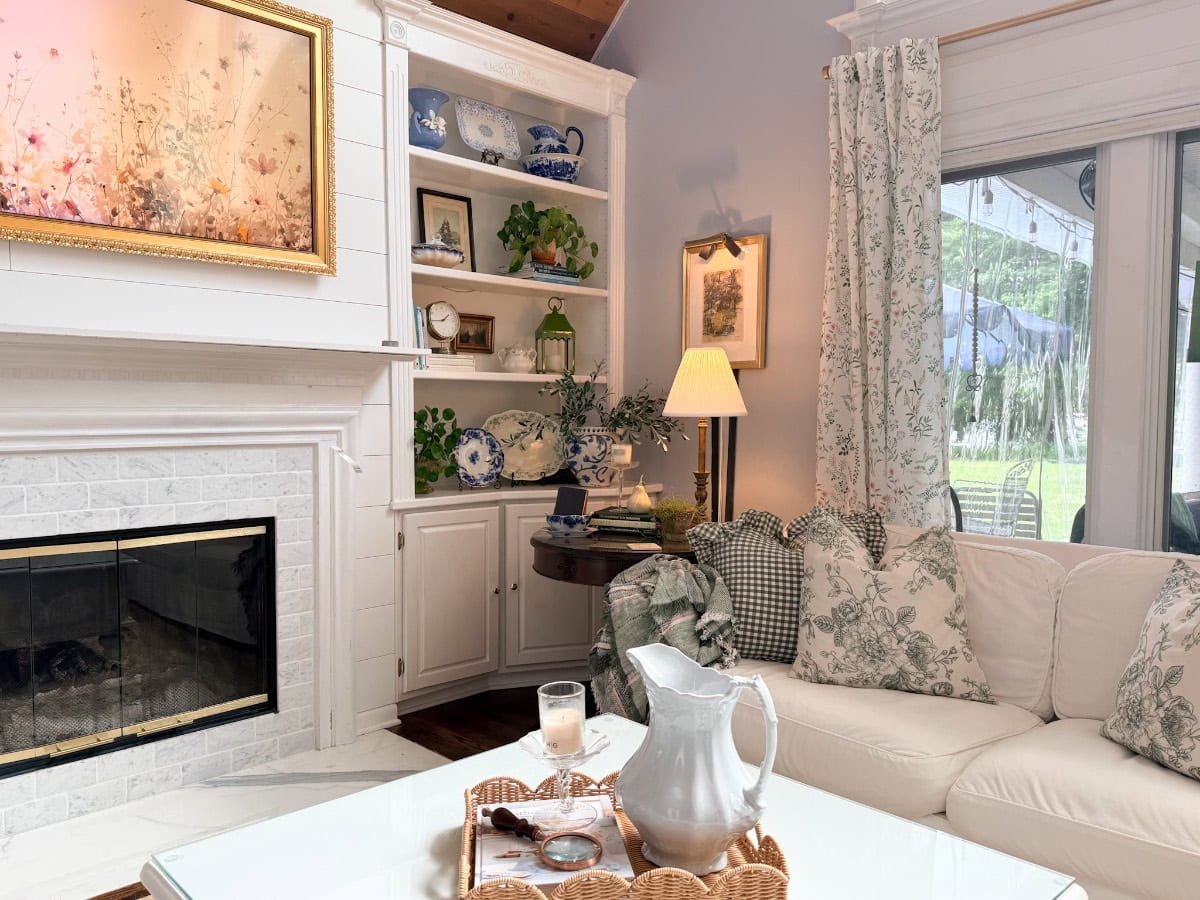
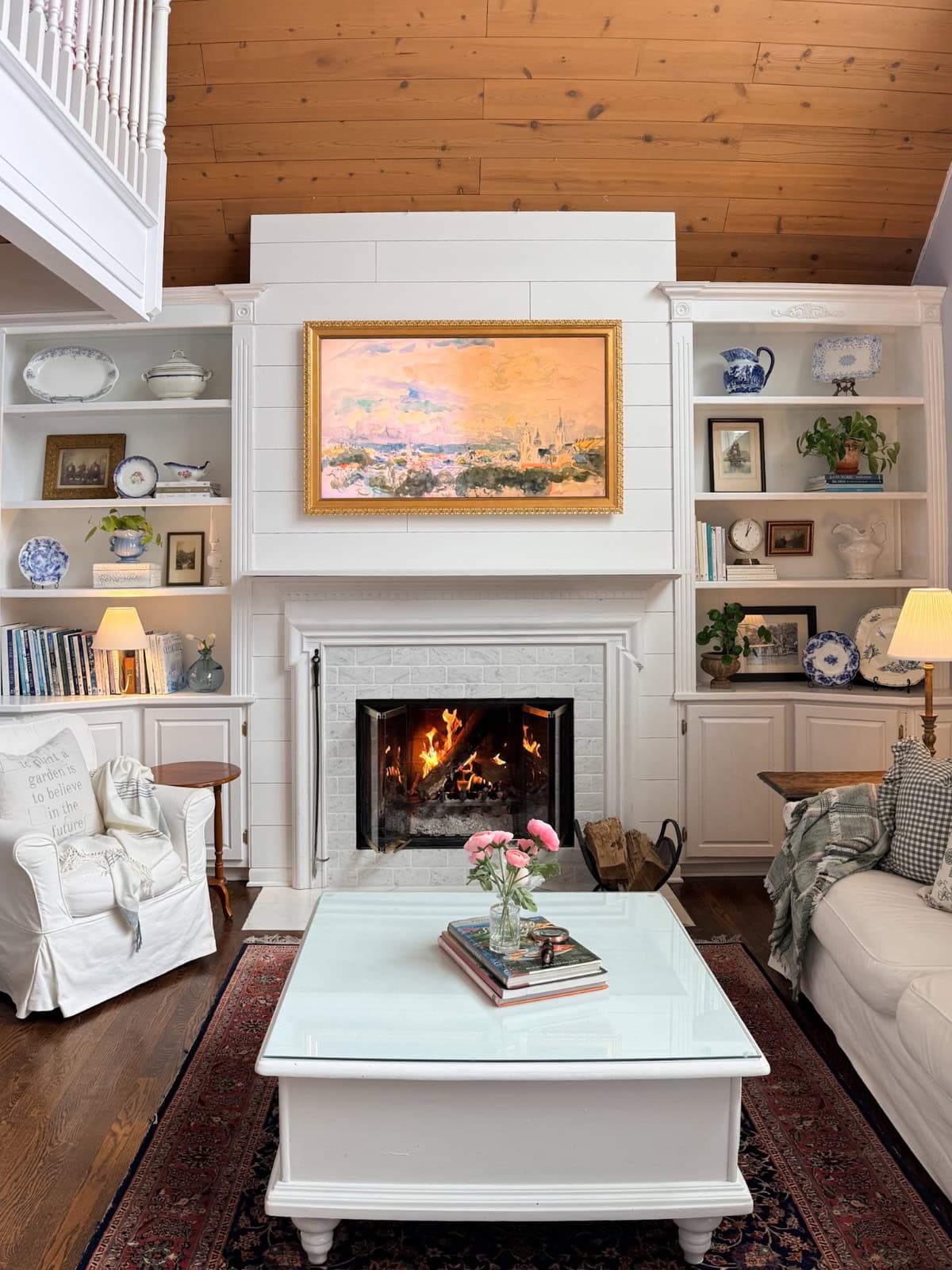
There is not one original wall in this home. Every floor cover has been replaced with hardwood (tile in the bathrooms). Our first big project was hardwood in the downstairs living area. At the same time, we added a fireplace and built-ins to one wall in the living room. This is still one of my favorite transformations. We have moved doors, rethought every room at least twice, and slowly expanded the life of this house well beyond its original walls.
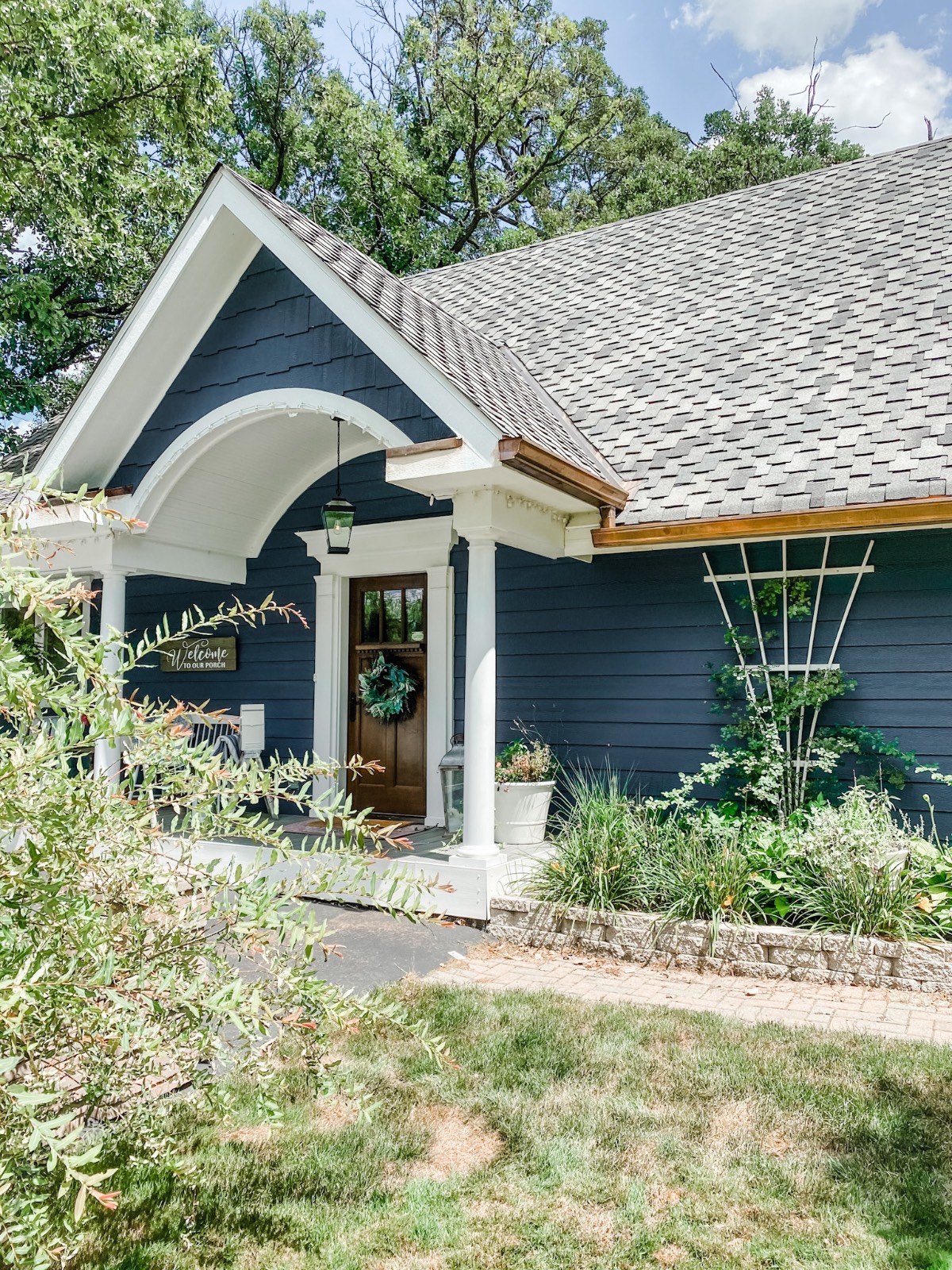
In 1999 we added the bump-out dormer on the second floor that took us from 900 to 1,300 square feet. In 2017 we tackled the outside with new siding, a new roof, new windows and doors, new insulation, and a big beautiful front porch that completely changed the whole face of our home.
What I learned over those 33 years about how to decorate your small house beautifully is something I wish someone had told me years ago. You do not need more space. You just need to be creative, and that is exactly what I want to share with you.

Small Home Decorating Is Not About Trends
The first and most important rule of decorating a small home is also the hardest one to follow: decorate with intention, leaning into the things you love, not toward what’s popular right now. Your home should be a reflection of you.
In a small space, there is simply no room to hide things that you don’t love. With a larger home, you might have a spare room or a basement for things you’re not using or in love with. In 1,300 square feet, everything is visible, and everything matters. That may sound intimidating, but I have come to see it as a gift. My small home has made me a more intentional decorator and organizer than I ever would have been otherwise.
When every inch is accounted for, you get very good at letting things go. You learn to purge with purpose rather than guilt and to bring things in only when they genuinely earn their place. It is a discipline that starts with decorating and quietly becomes a way of life.
Start With What You Love & Let Go of the Rest
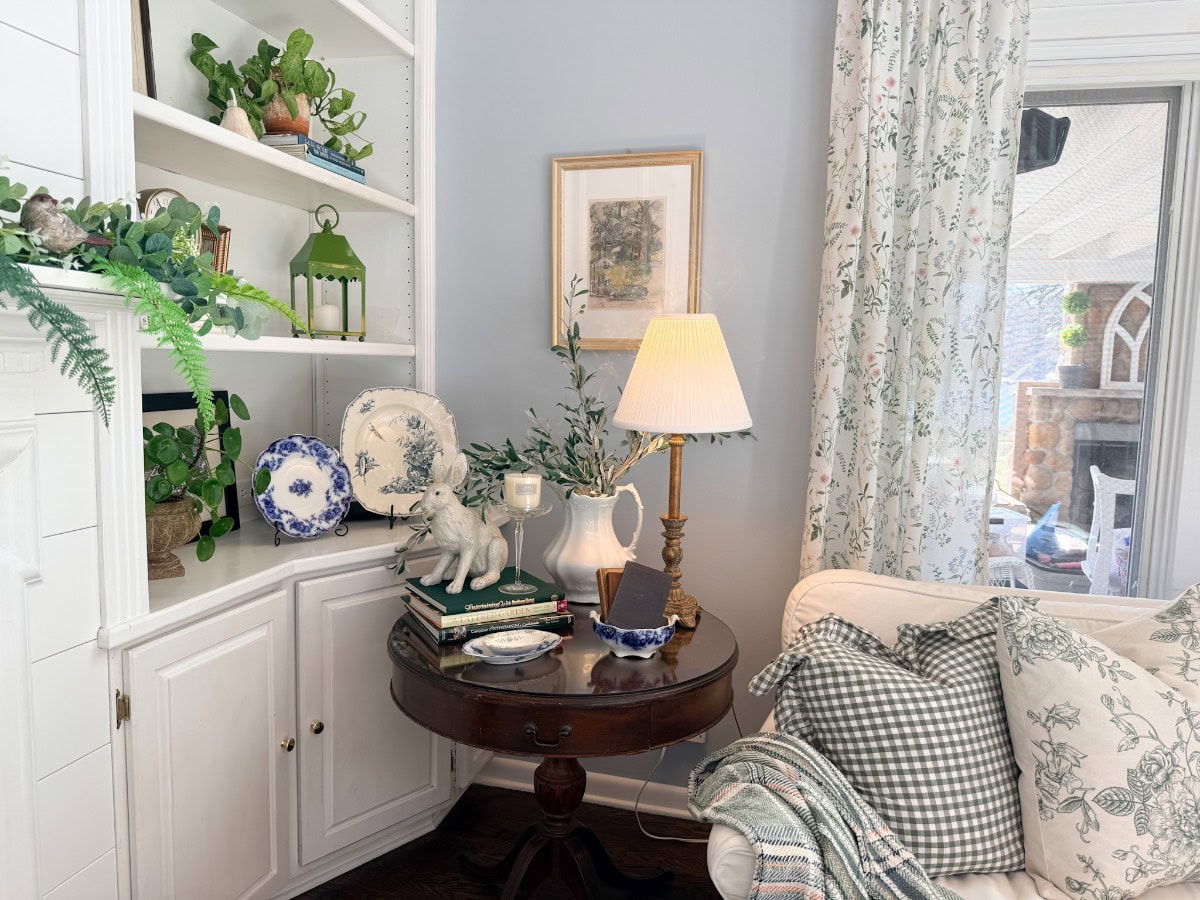
As our tastes change over time, so do the seasons of life; it changes the way we decorate. Our living room walls are proof of that. They have been beige, white, cranberry, yellow, and two different shades of blue. Each one is a version of me at the moment. The cranberry was squarely in the chintz and Waverly era, very on trend at the time. While dark and moody decor is in vogue again, and I do love it, it just doesn’t fit in my home. In a small home, it can feel heavy and closed in.
That era was a lesson: trends are designed for showrooms, not small homes. What works in a magazine spread can overwhelm a smaller space completely. I learned to trust my taste over whatever was popular that season, and I have never regretted it. I will sometimes make exceptions with trends when it comes to accessories. You can find one or two wicker, scalloped items around my house right now. 🙂
The question I always ask myself before anything comes into this house is simple: do I love it or just like it? In a small home, just liking is not enough.
Scale is Everything
If there is one thing my Interior Design degree taught me that I use every single day in this house, it is that scale matters more than square footage.
A room does not feel small because it is small. It feels small because the furniture is the wrong size for the space, or there is too much of it, or both. Get the scale right, and a small room feels intentional and cozy. Get it wrong, and even a large room can feel cramped.

When Big Works in a Small Space
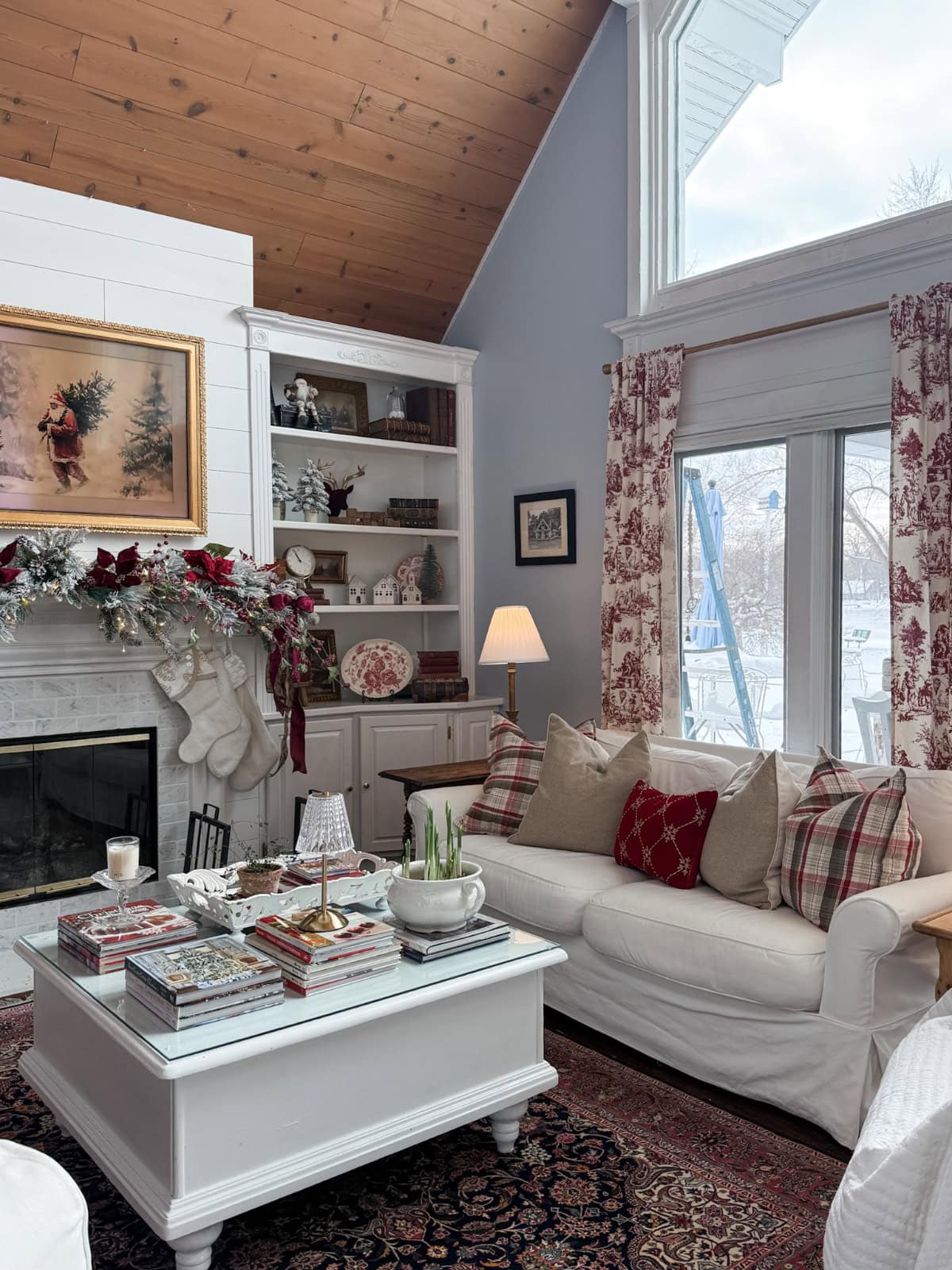
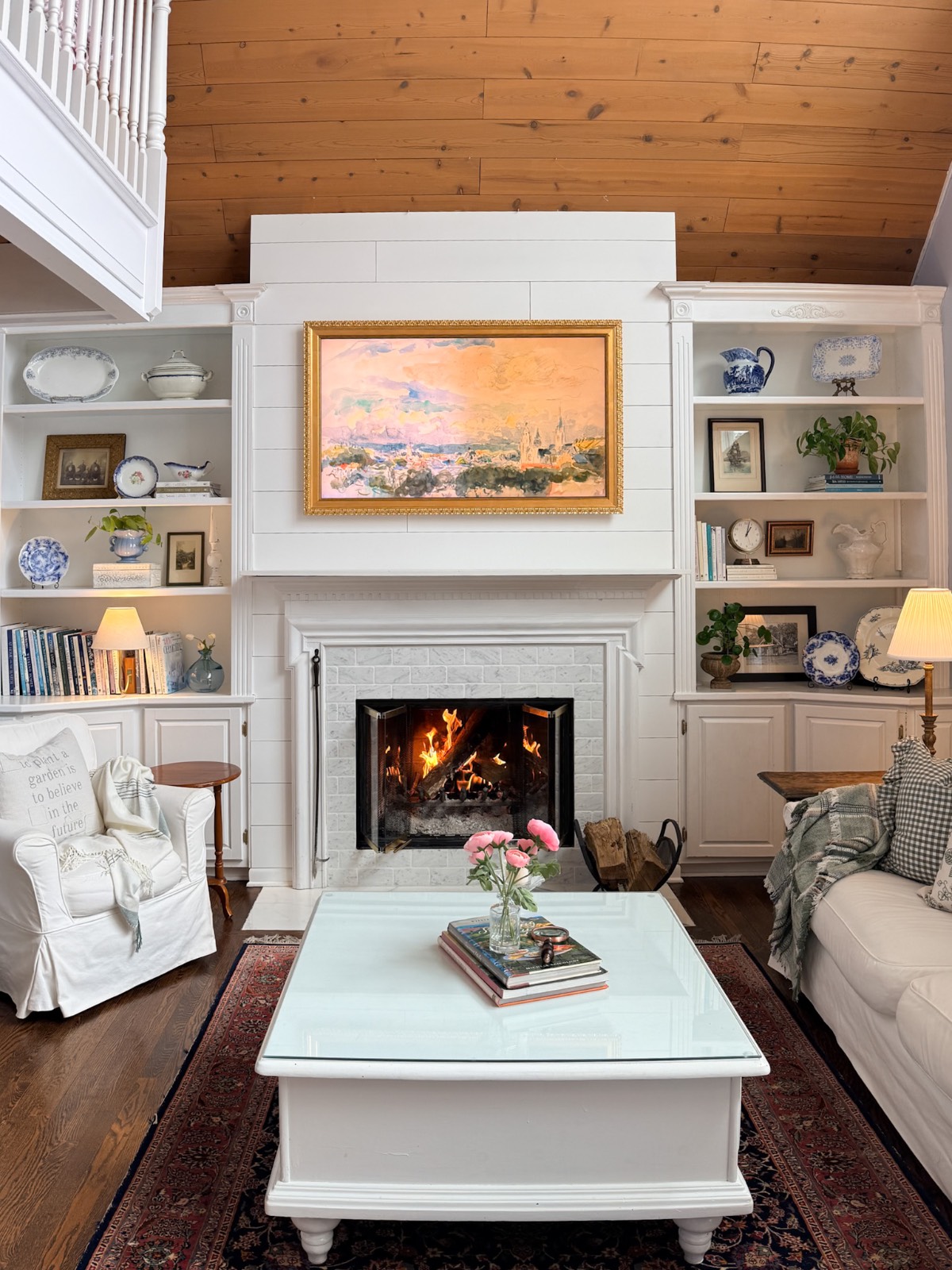
In our home, that means apartment-sized sofas and seating. However, scale is not a rigid rule depending on the piece. Our coffee table is large, and it works beautifully. It is proportional to the sofa, and more importantly, it has earned its place. The table has a very big drawer that houses all the games we play as a family. We use it as a game surface. On movie nights it houses a pizza box and becomes our dining room table. In a small home, a piece doesn’t have to be small to belong. It has to be right. And “right” means it pulls its weight in both scale and function.
When we shop for any new piece, not only do I have to love it, but it has to fit in proportion to everything around it. Proportion is the word I come back to again and again. A too-big armoire, a too-wide dining table, a sofa that swallows the room—any one of these things can throw off an entire space. In a small home, you feel it immediately. There is nowhere to hide a proportion mistake.
The other thing scale taught me is what to leave out. Every piece of furniture in a small space needs to earn its place. If it is not beautiful, functional, or ideally both, it doesn’t belong. That sounds strict, but it is actually freeing. It gives you permission to say no to things that are merely fine.
Build In Where You Can
The single most transformative thing we have done in this house, in every single room, is to add built-ins.

Built-ins do something that freestanding furniture cannot. They make a small home look intentional. They take what could feel like a limitation, not enough wall space, an awkward corner, or a wall that has to hold storage and turn it into a design feature. When you walk into a room with well-designed built-ins, you don’t think “small.” You think “considered.”
Every change in this house has started the same way. Keith and I sit down together and talk it out. Then we pull out our graph paper and sketch it out. Me thinking through the design, the proportions, and how it will feel to live with. Keith is thinking through the build, the structure, and what is actually possible. That partnership is behind every built-in in this house.
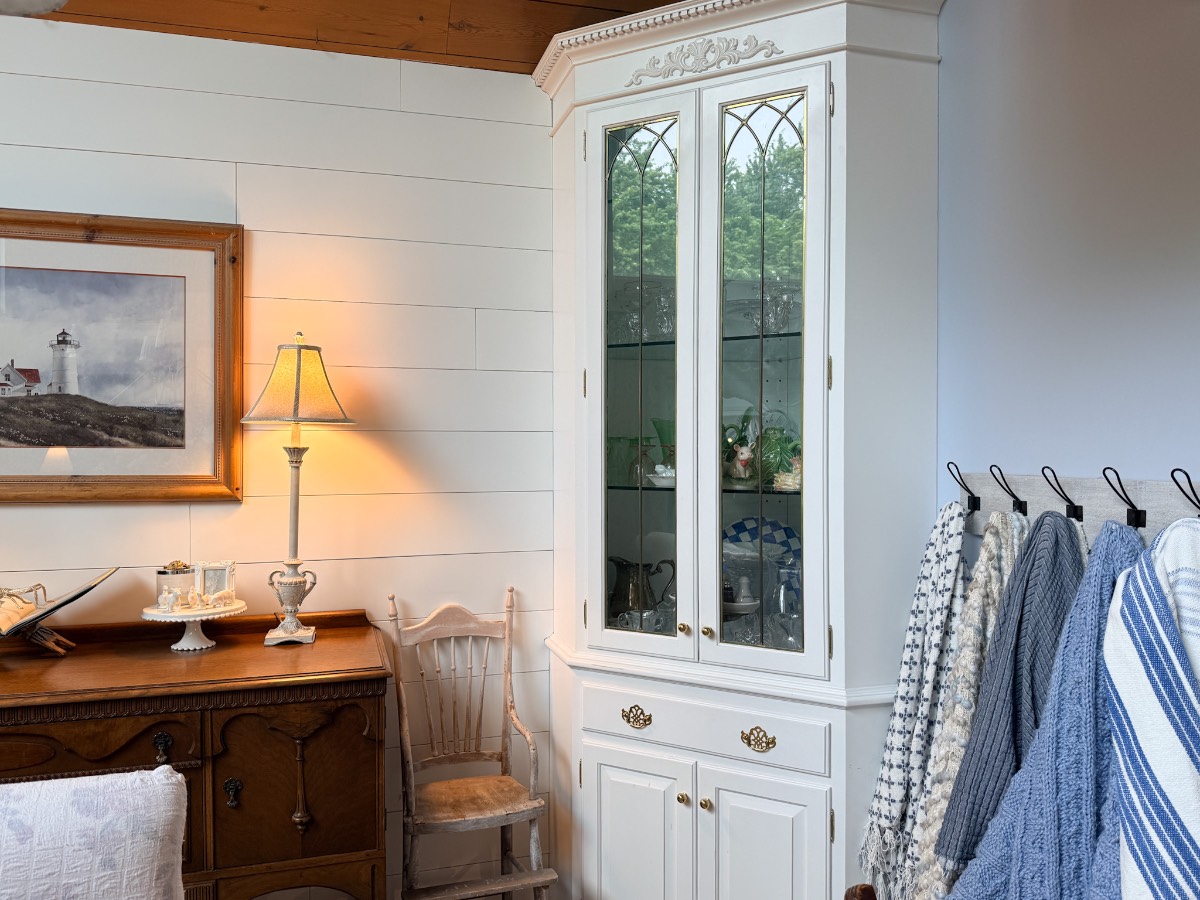
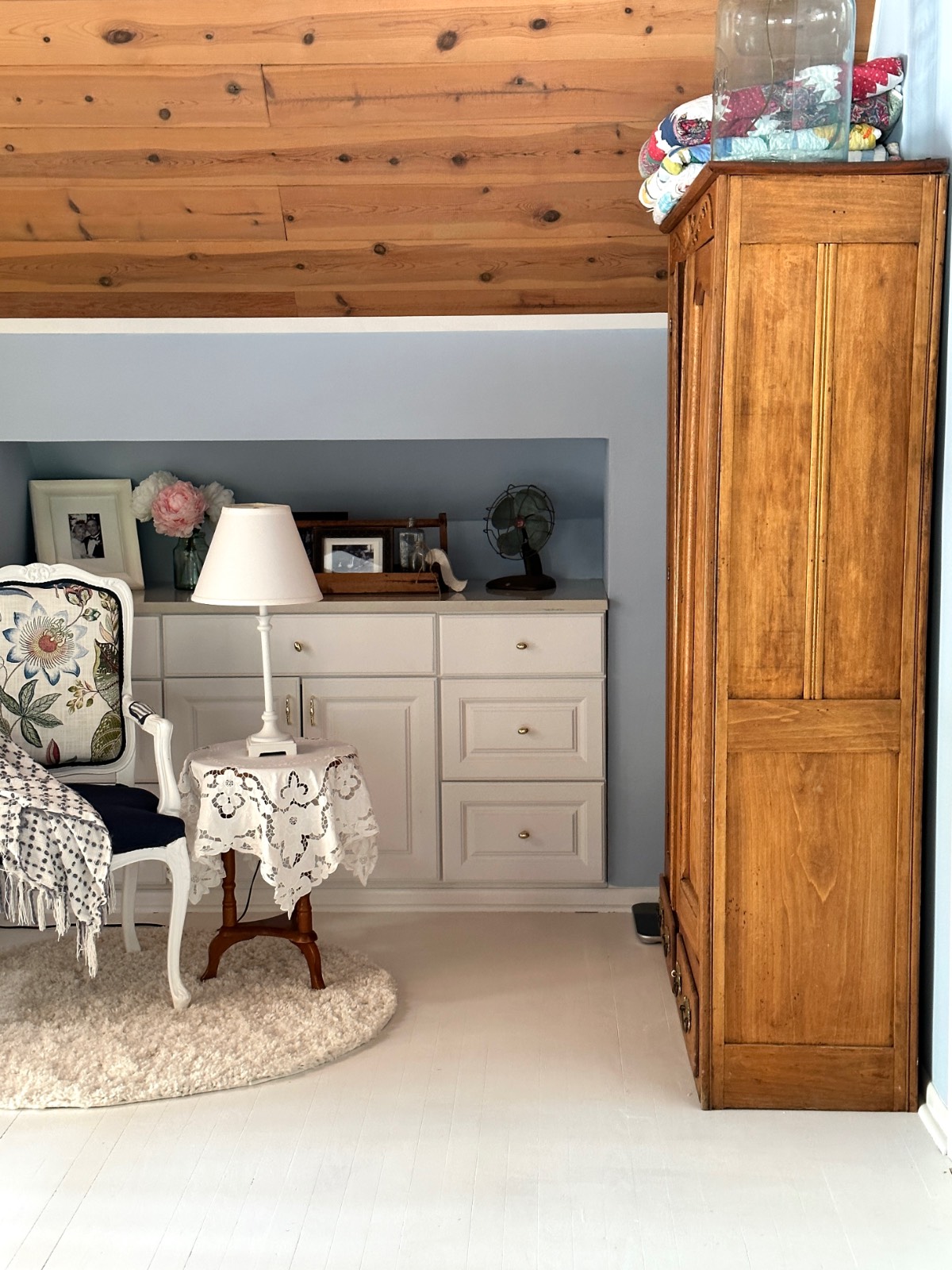
The fireplace wall in the living room was one of our very first transformations, and it remains one of my favorites. It’s a focal point that anchors the entire room, flanked by shelving that houses some of my prized possessions and also provides me with great storage. A fireplace single-handedly adds the cozy into a small home. In our dining room, built-in corner cabinets turned an awkward wall into one of the most functional and beautiful spots in the house. Two of our bedrooms have built-in bookshelves, and the primary bedroom has a built-in dresser that gives us storage without sacrificing a single inch of floor space to a freestanding piece.
How to Get the Built-In Look Without a Carpenter
Not everyone has a Keith (Handy). But the good news is you don’t need a master carpenter or a custom budget to get the look. With a little creativity, standalone cabinets can be transformed into something that reads as built-in. Flank a doorway with two matching bookcases, run a piece of crown molding across the top to connect them to the wall, add a base that matches your trim, and suddenly you have something that looks intentional and custom. IKEA Billy bookcases have been doing this job in homes for a decade. The molding is the secret, and it anchors a piece to the room while creating charm in your space. It looks like it was always meant to be there.
Use Color With Confidence
Color is the least expensive and most transformative tool available to any decorator. In a small home, it is also the most misunderstood.
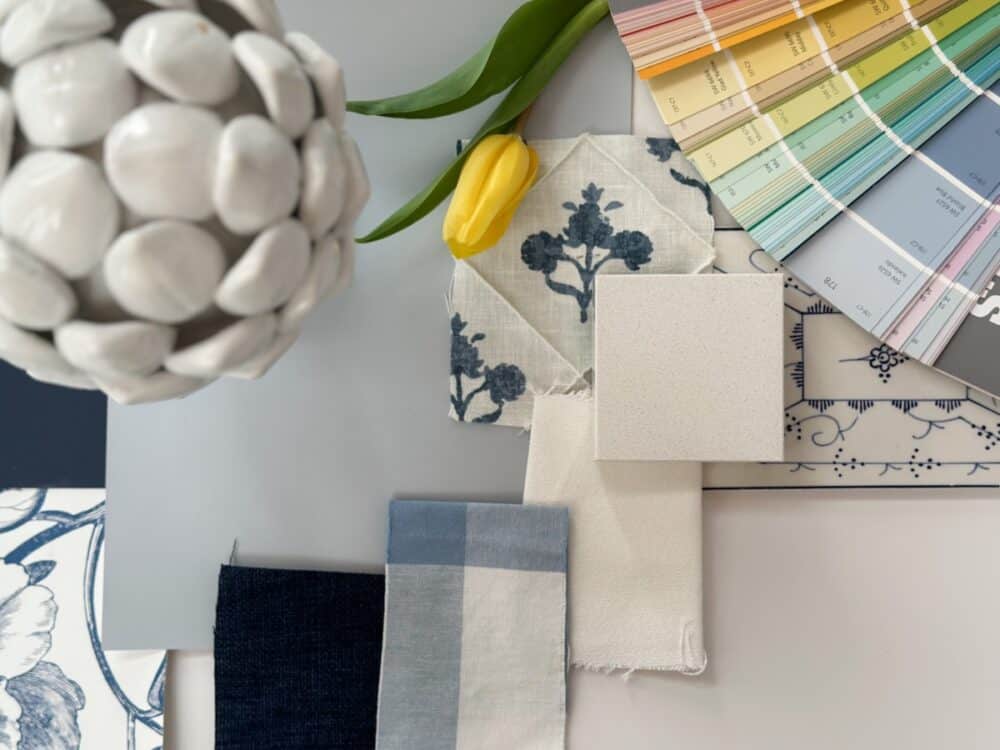
Common advice is to keep small spaces light and neutral with light walls and pale everything. Nothing bold or the room will close it in. I understand where that advice comes from, but it is not the whole story. I know because I have lived inside every version of it over 33 years.
As I mentioned before, my walls have been the gamut of colors. Now they are Sherwin Williams: SW6239 Upward. This was Sherwin Williams Color of the Year in 2024. When I saw it, I knew immediately it was the blue I had been looking for. Less gray than the blue we were covering. It is more true and clear. It is on the walls in our living room, dining room, kitchen, entryway, down a hall, and up our stairs. I love it more than any color that came before. What I know now is the goal is not to avoid color. The goal is to use it with intention.
Do You Have to Keep It Neutral?
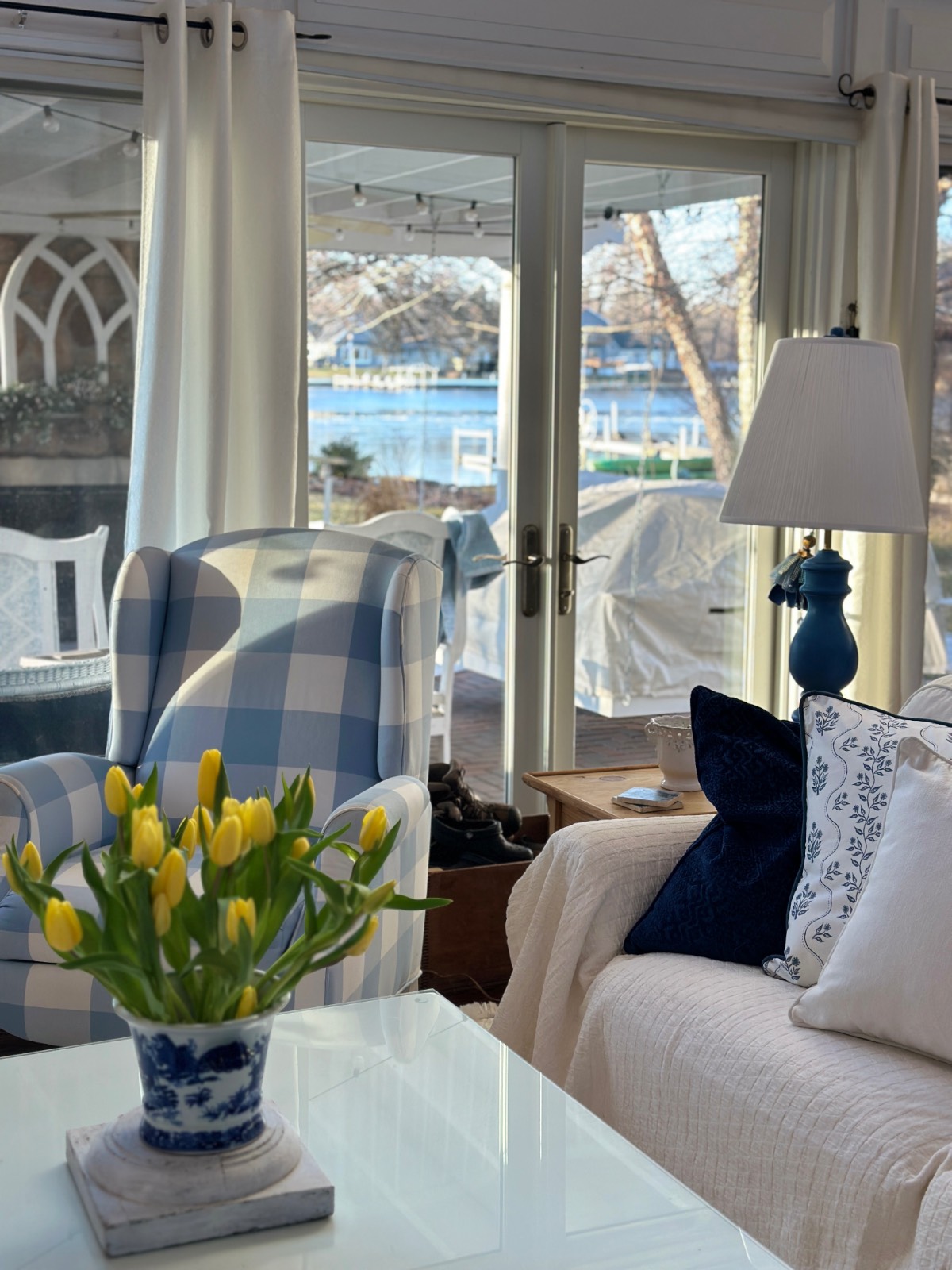
I do believe in a neutral foundation for the pieces that need to stay flexible. My sofa and matching chair are slipcovered in a white duck cotton. Keeping these pieces neutral allows me to change out pillow covers and throws with the season without starting over from scratch. But “neutral” does not mean “colorless,” and it is certainly not a rule. I also have in this space a blue and white gingham wingback recliner (Handy’s Chair) that I love. It brings both pattern and the cottage charm that I want in my home. It works because everything around it gives it room to breathe. Having a calm backdrop lets the pieces that you love most do the talking.
One more thing about color: I always paint my trim, and I believe it is one of the most underrated finishing details in a home. Crisp, painted trim sharpens every room and makes the whole house feel more intentional without costing much at all. I recognize that for some people, painting wood trim feels like a decorating crime. For some historic homes, it could be. If you are someone who likes your wood natural, I understand completely. But if you have been on the fence, I will tell you from experience that it completely transforms a room. It’s worth considering!
Layering Vintage into the Mix
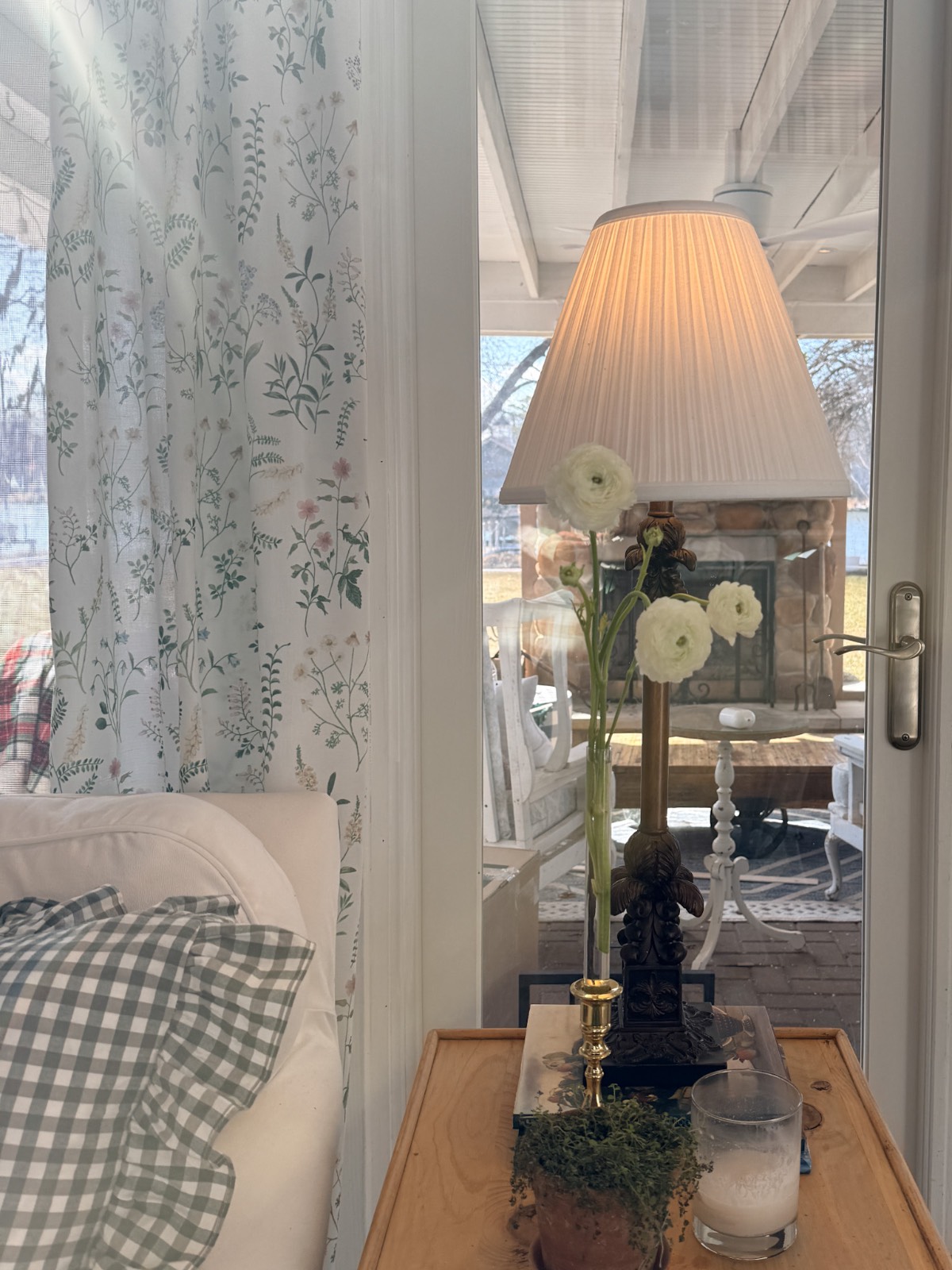
I have always loved old things. There is something about a piece with a history. Maybe it’s the patina earned over decades or the story you might know. These are things that new pieces cannot replicate. In an era of disposability, I also look at my collecting of old pieces as my recycling contribution to the earth.
Buy New Where It Counts, Buy Old for the Charm
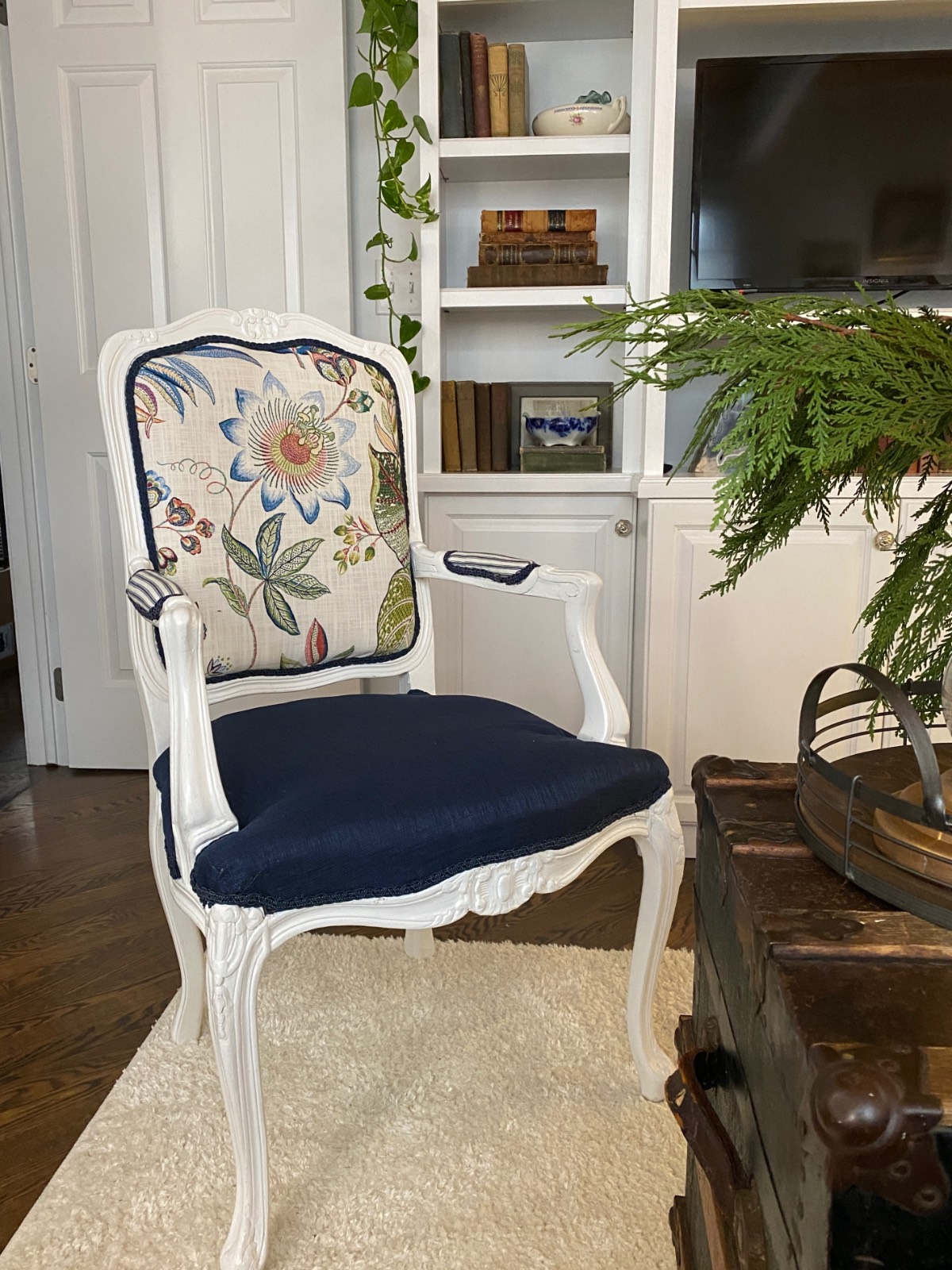
What I want to be clear about is what this means in practice because the “mix old and new” advice that gets handed out everywhere is not specific enough to be useful. Here is how I think about it. New furniture for pieces that need to be comfortable and last. I choose those with a cottage or old-world feel so they don’t read as stark or modern, but they are new and built for real life. Then antique pieces for the things that don’t bear the brunt of daily use. End tables. A side chair that I recovered in three complementary fabrics. Decorative pieces can earn their place through character rather than function. Buy new where it counts and is practical. Buy old for the charm and curated look.
My Favorite Collections
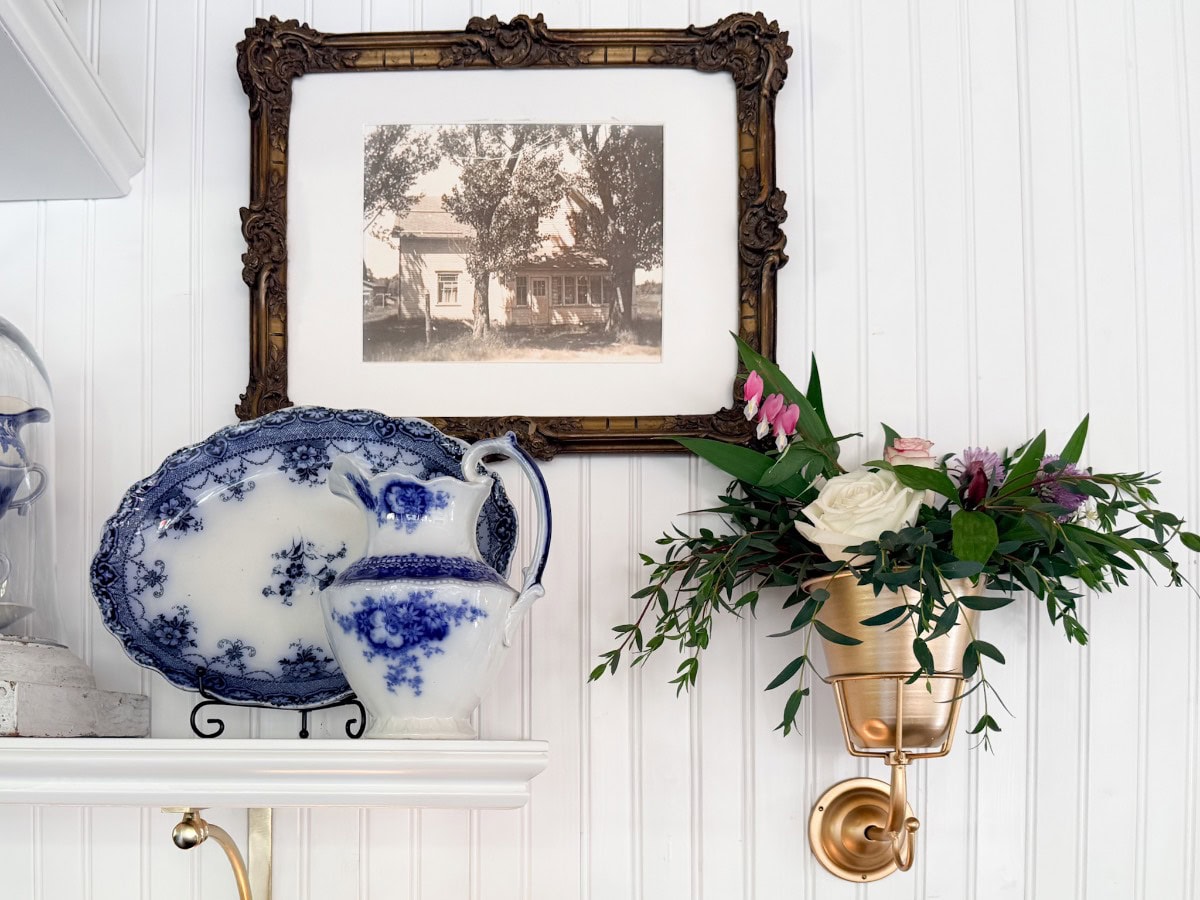
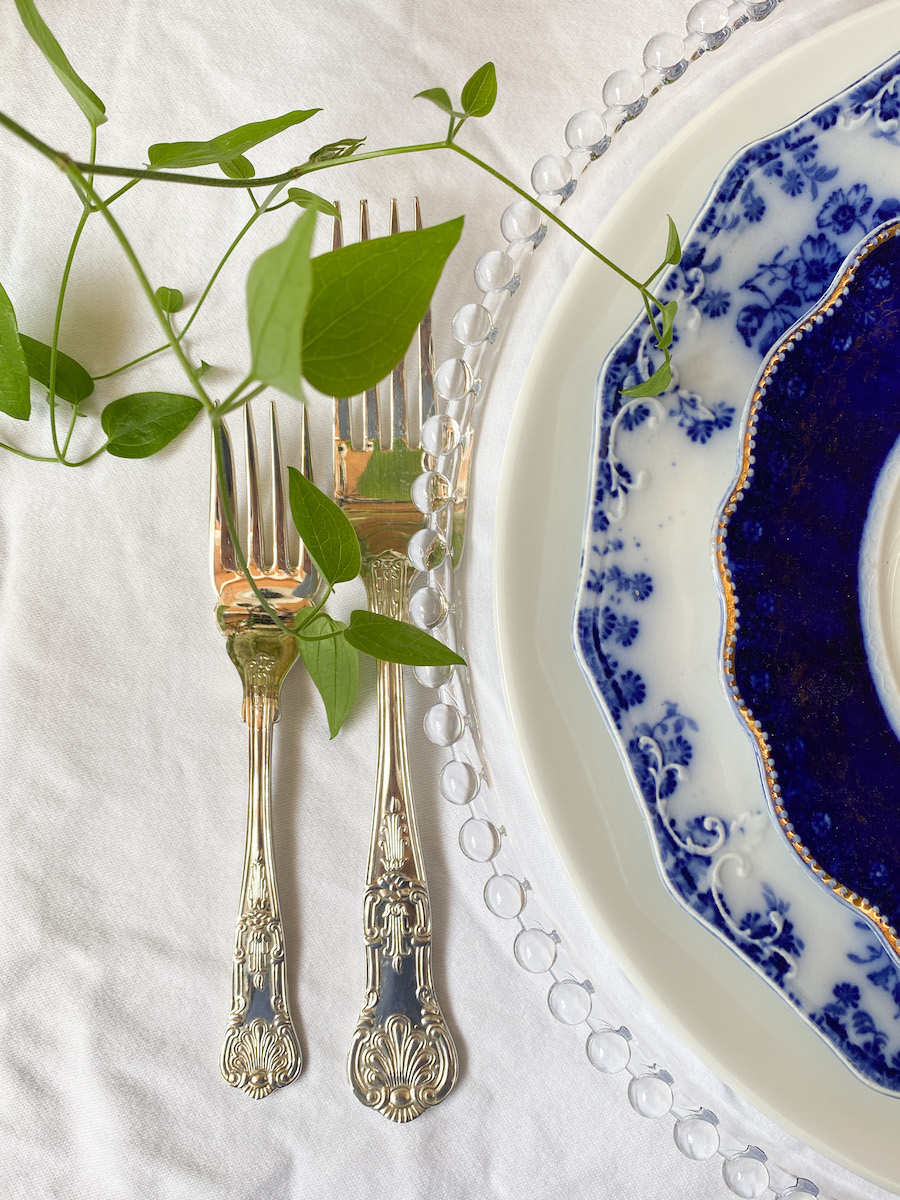
My collections over the years have included ironstone, vintage books, antique art and frames, English advertising pots, transferware, and architectural salvage. I’m obsessed with antique crystal and china. About ten years ago I was introduced to flow blue, and it has become my favorite collection of all. If you are not familiar with it, flow blue is antique transferware with a distinctive blue and white pattern where the color bleeds softly at the edges during the firing process. It is beautiful, it is collectible, and it connects in the most natural way to the blue palette throughout our home. I did not plan that connection; it evolved the way the best things in a home always do.
I have edited some of my collections down over time. Not because I stopped loving them, but because vintage in a small space requires discipline. Too much, and it tips from collected to cluttered. The rule I follow now is pretty simple. I look for things like pitchers, which can not only be a focal point on my shelf; I can fill them with flowers for a centerpiece. I love when things can serve double duty.
Every Room Has to Work Hard
In a small home, no rooms get to have just one job. And as the season of your life changes, so does the way you use your spaces.
This isn’t a limitation. I’ve always looked at it as an interesting creative challenge. Twenty years ago, when this house was filled with kids, our living room had a sleeper sofa in it and doubled as the guest room. Not ideal, but it’s how we made do in that season. Our dining room table had to serve as a place to eat, a homework station, and a craft station. I’ve had a desk in every room in the house.
Every room was doing double and triple duty because that was the season of life we were in. Now that it is just Keith and me, those same rooms have shifted again to a quieter and more refined space. It’s designed for two people who love to entertain. A spare bedroom is an office and a den that can be converted into a quiet guest room. The other spare bedroom is a charming little suite for our grandbaby and his parents. The house has changed with us every step of the way.
The Kitchen: 20 Years in the Making
The kitchen tells the story most dramatically. For 20 years I sketched and dreamed about what it could be. Our original kitchen was a 9′ x 9′ box. It was tiny, closed off, and frustrating to cook in. In 2013 we finally transformed it by using some untapped space where we had moved the front door years ago. The result was a kitchen with a 10-foot island that now divides and connects the kitchen and the great room. We brought in a kitchen designer to review our plan, and while he didn’t change much, his refinements made all the difference. That is a lesson in itself. Know when to bring in a professional eye, even when you have your own.
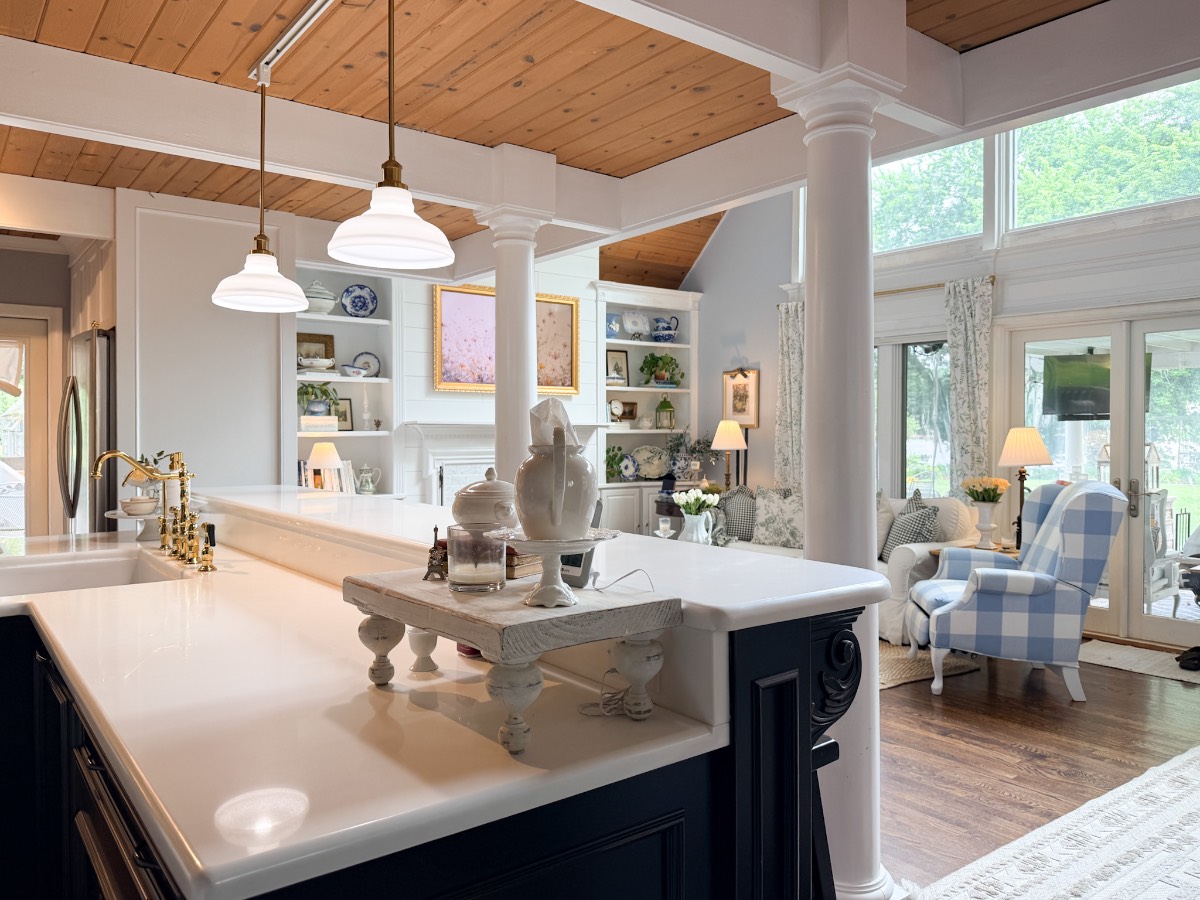
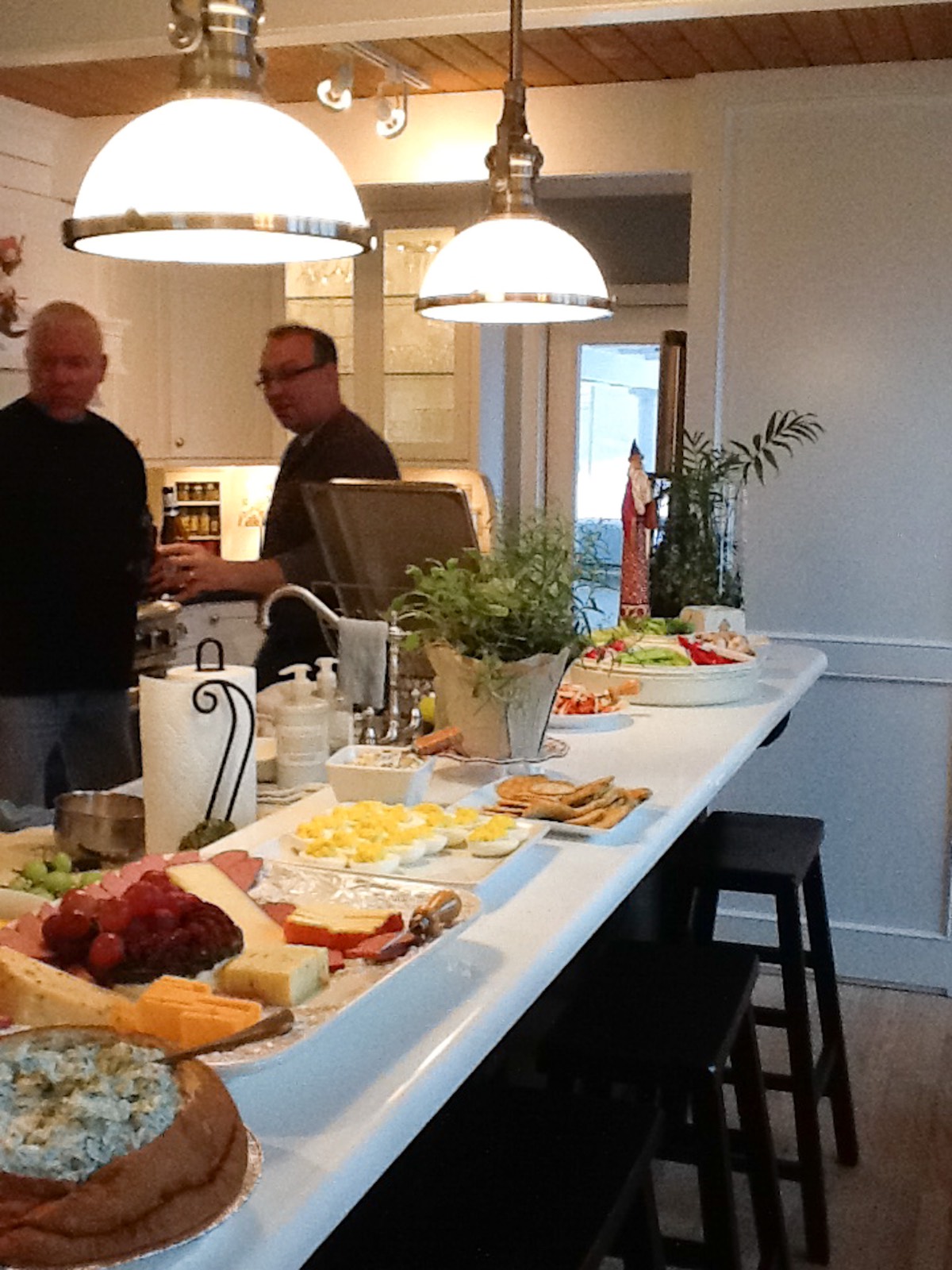
The island changed how I entertain. The kitchen was always where people gathered, even when it was tiny. That never changes. But now I can host not only sit-down dinners but also larger gatherings with a beautiful buffet setup that feels intentional and generous. The island is the heart of the house in a way the old kitchen never could have been.
And then there is the question I want every small homeowner to ask themselves. Where does your living space end? For us, the answer is not at the back door.
Creating Great Outdoor Living Spaces on 1/4 of an Acre
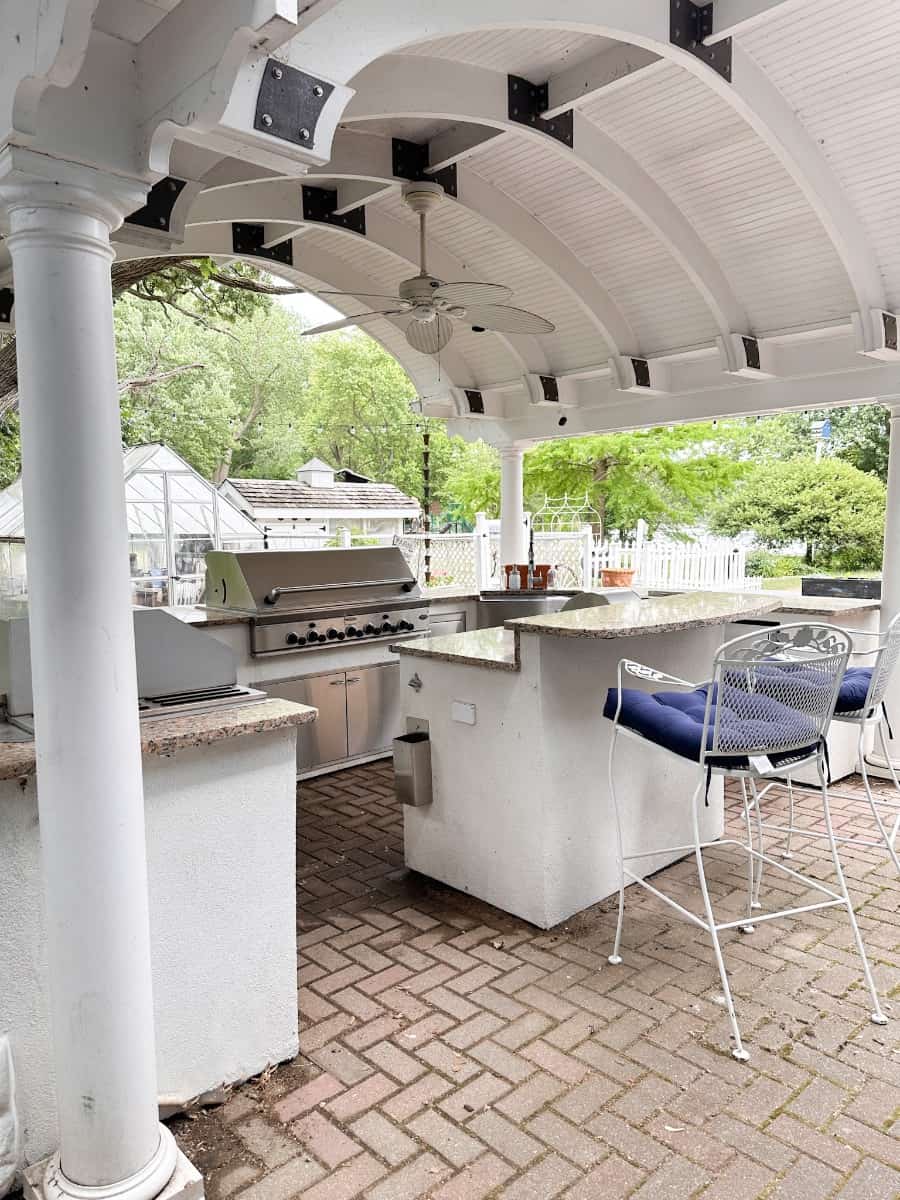
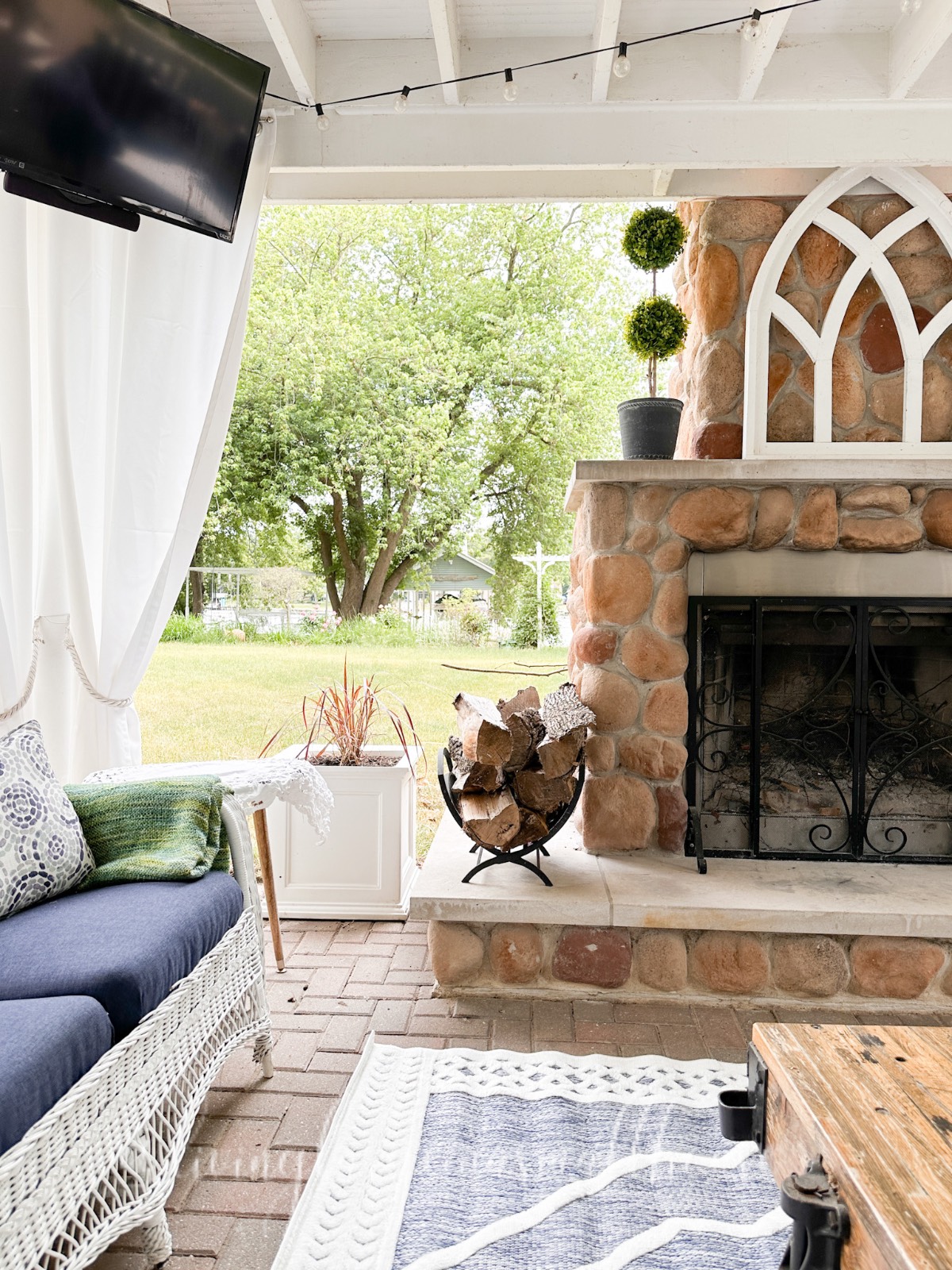
While our lot is not big, we have deliberately and intentionally expanded our home’s livable footprint outdoors over many years. It started with an outdoor kitchen because of our love to entertain. Then we added an outdoor living room, complete with a fireplace, so the gathering space extends beyond the French doors in our great room. Somewhere in there we built our first greenhouse and a chicken coop. Later, when a city sewer line came into our village, it required us to abandon our septic tank; Keith found himself redesigning the outdoor kitchen. That was just about the last straw for me. I was still cooking in my 9′ x 9′ kitchen, and he was on his second outdoor kitchen. It was time for my dream indoor kitchen. The stars aligned, and I was able to get my new kitchen, complete with a commercial stove.
The Greenhouse: Built With Salvage and Soul
The greenhouse has had its evolution too. Our first was a custom-modified kit greenhouse that served us well for years. Last summer we rebuilt it on the same footprint, but this time entirely with salvaged materials. Vintage windows and French doors that Keith made work together perfectly into white painted frames. Hanging from the beamed roof is a beautiful crystal chandelier that I found on Facebook Marketplace.
What started as a place for plants to winter over is now one of the most stunning spaces on the property. A room in every sense of the word, that doubles as an entertaining space, unlike anything inside the house. It is the greenhouse I always imagined and proof that the best spaces are the ones that are built slowly, with intention, and with materials that add to the story of our home.
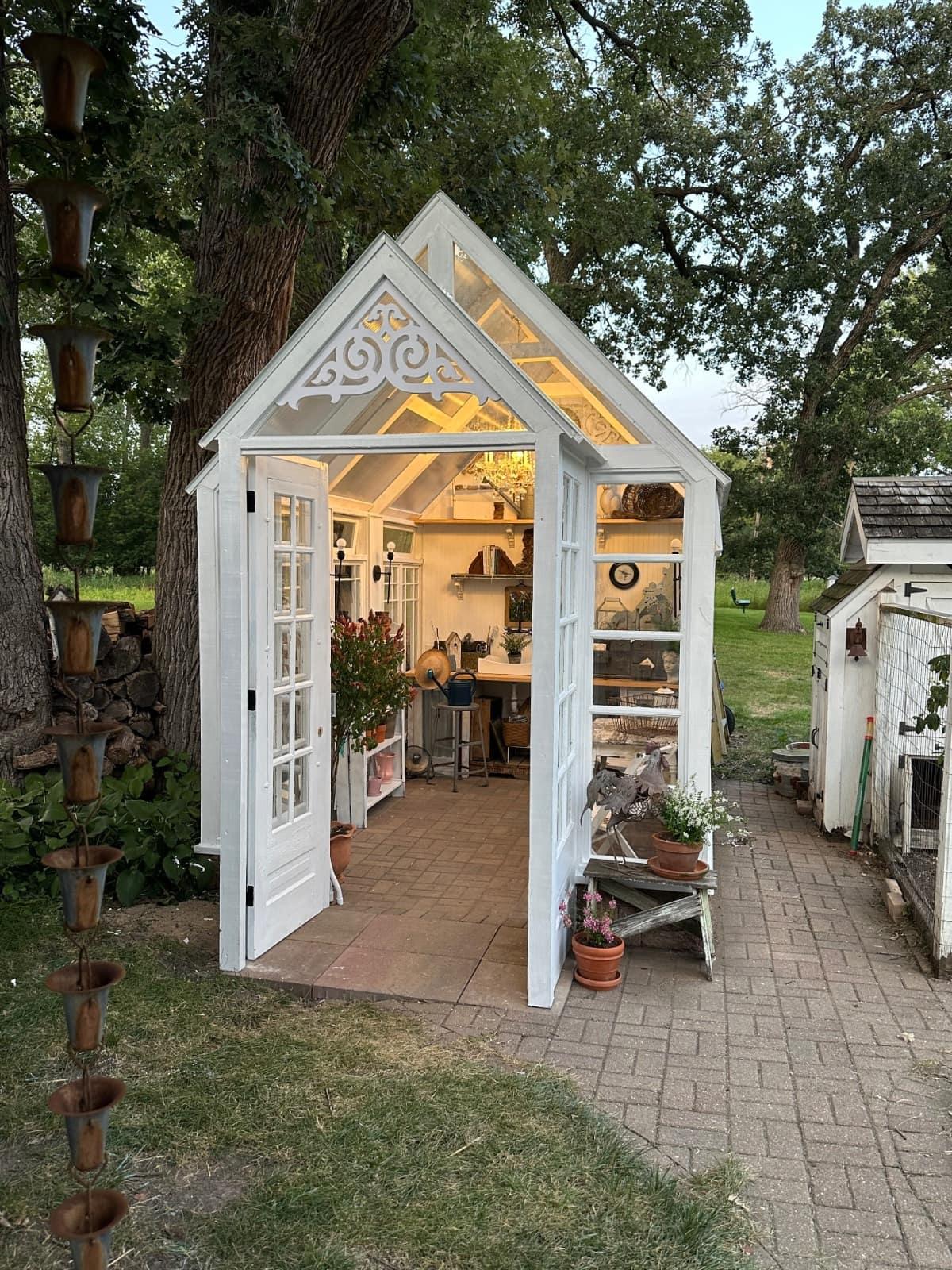
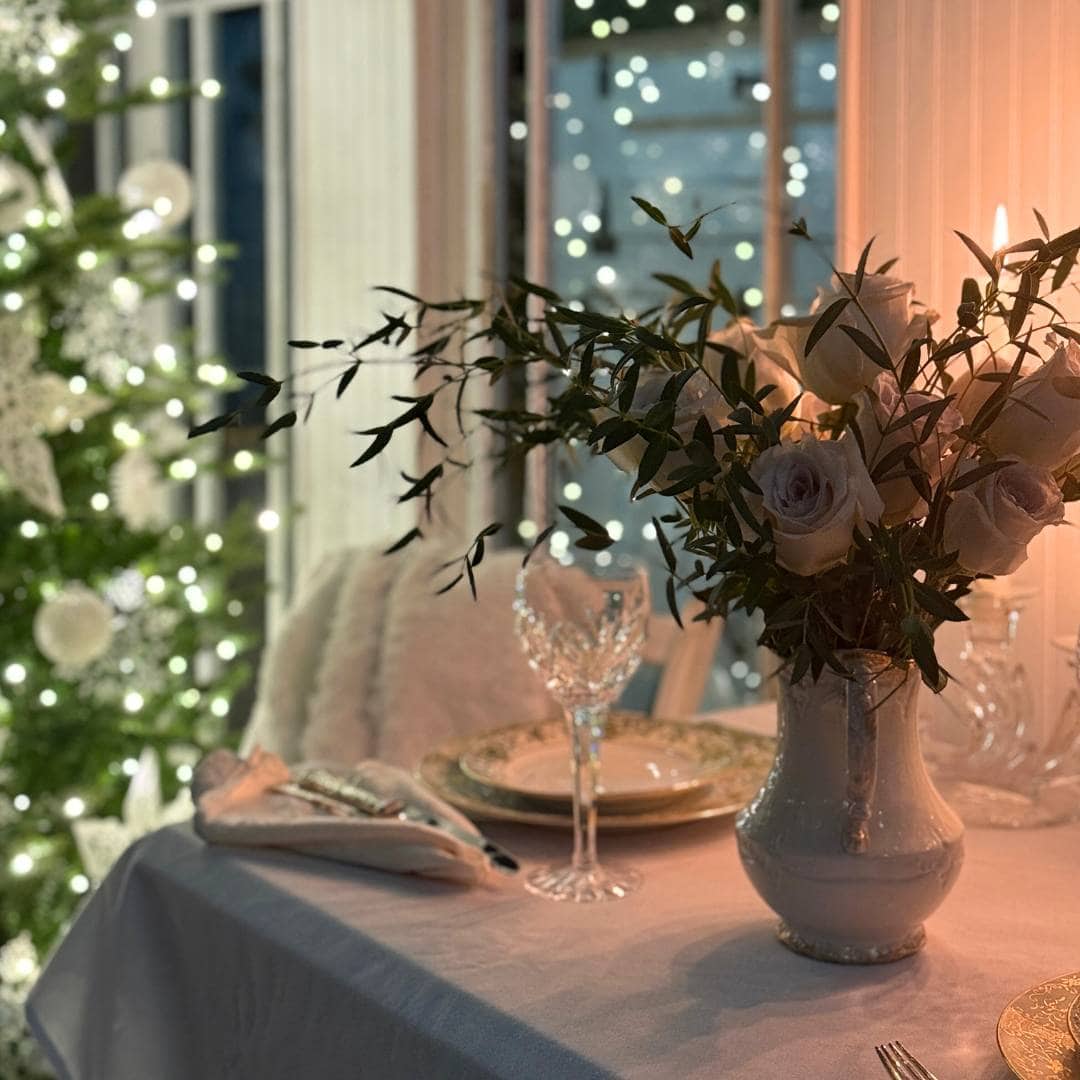
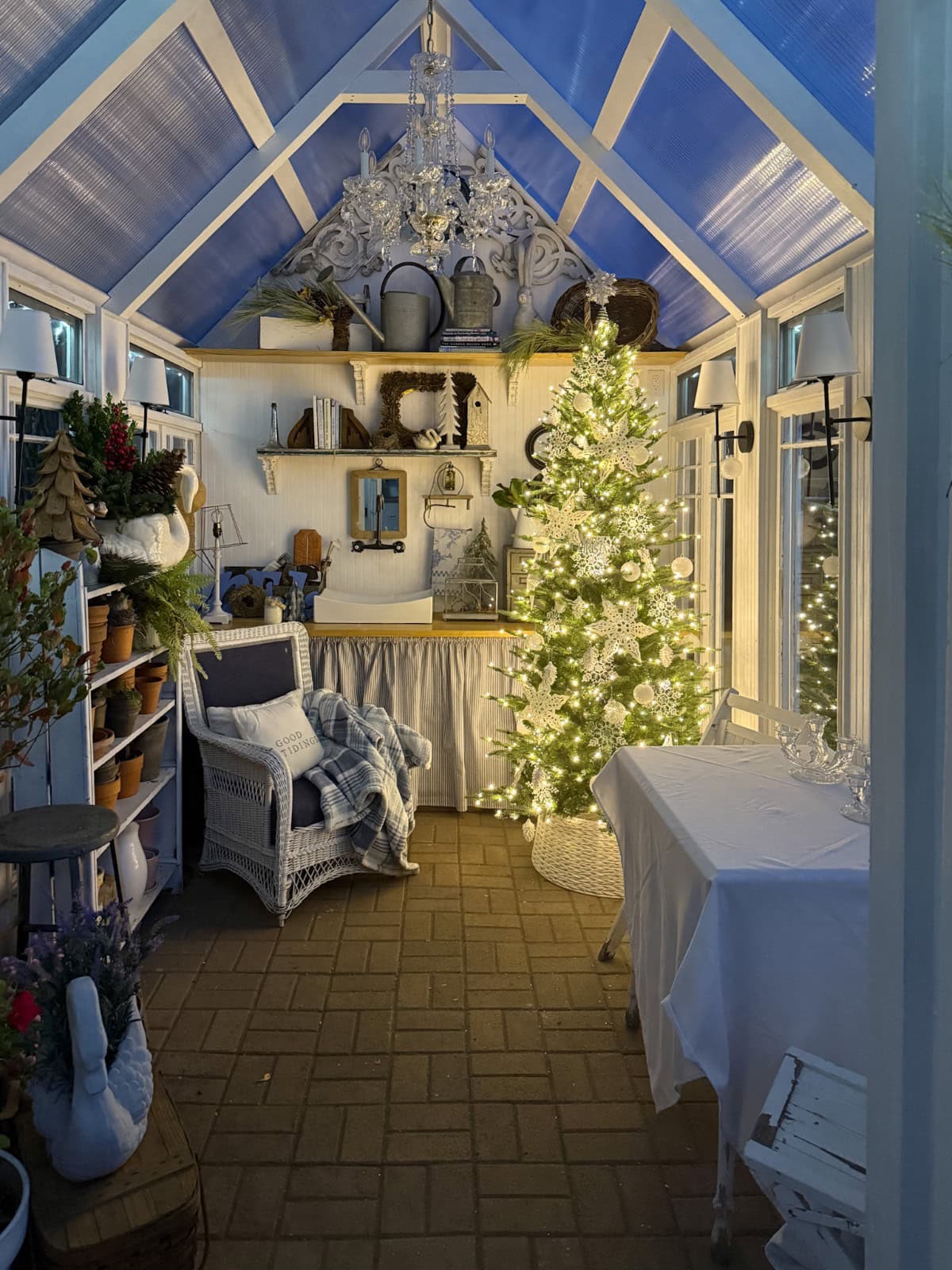
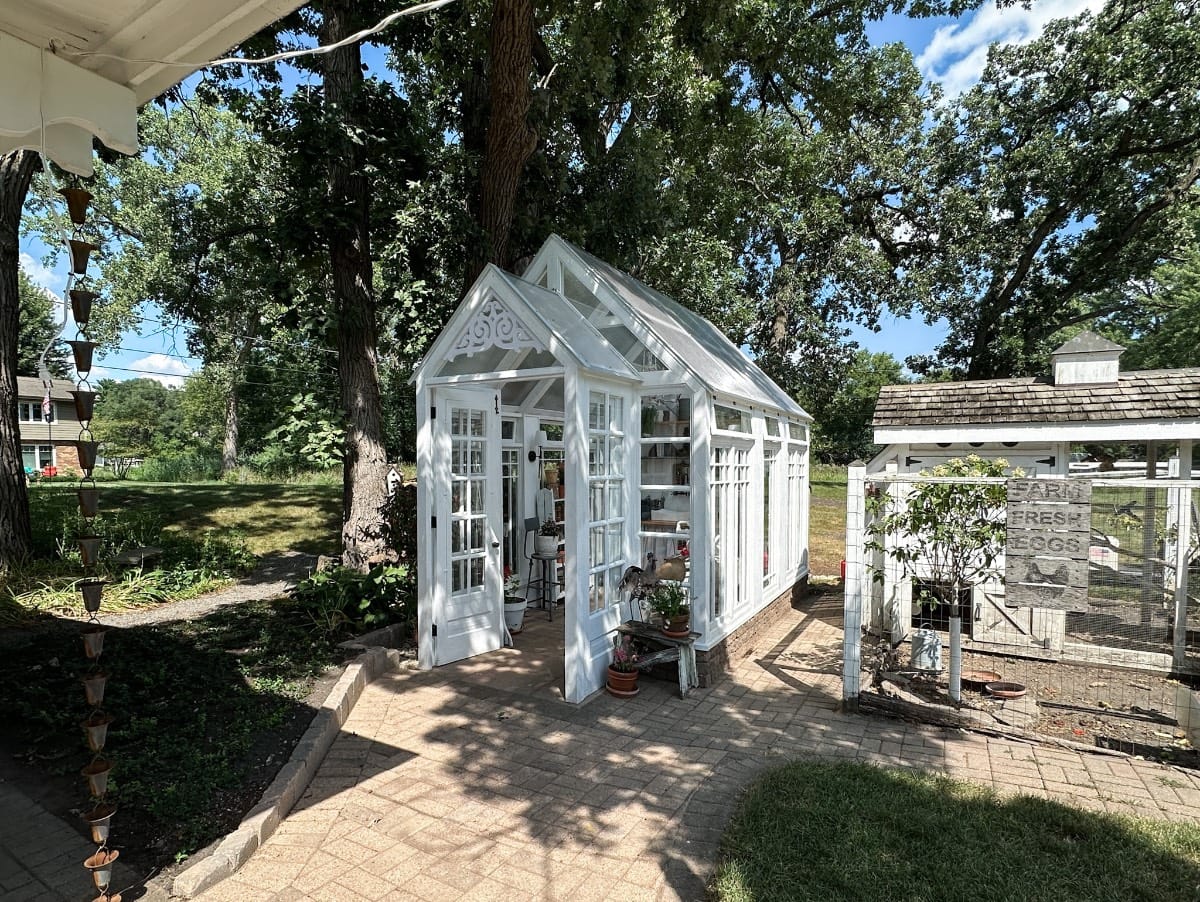
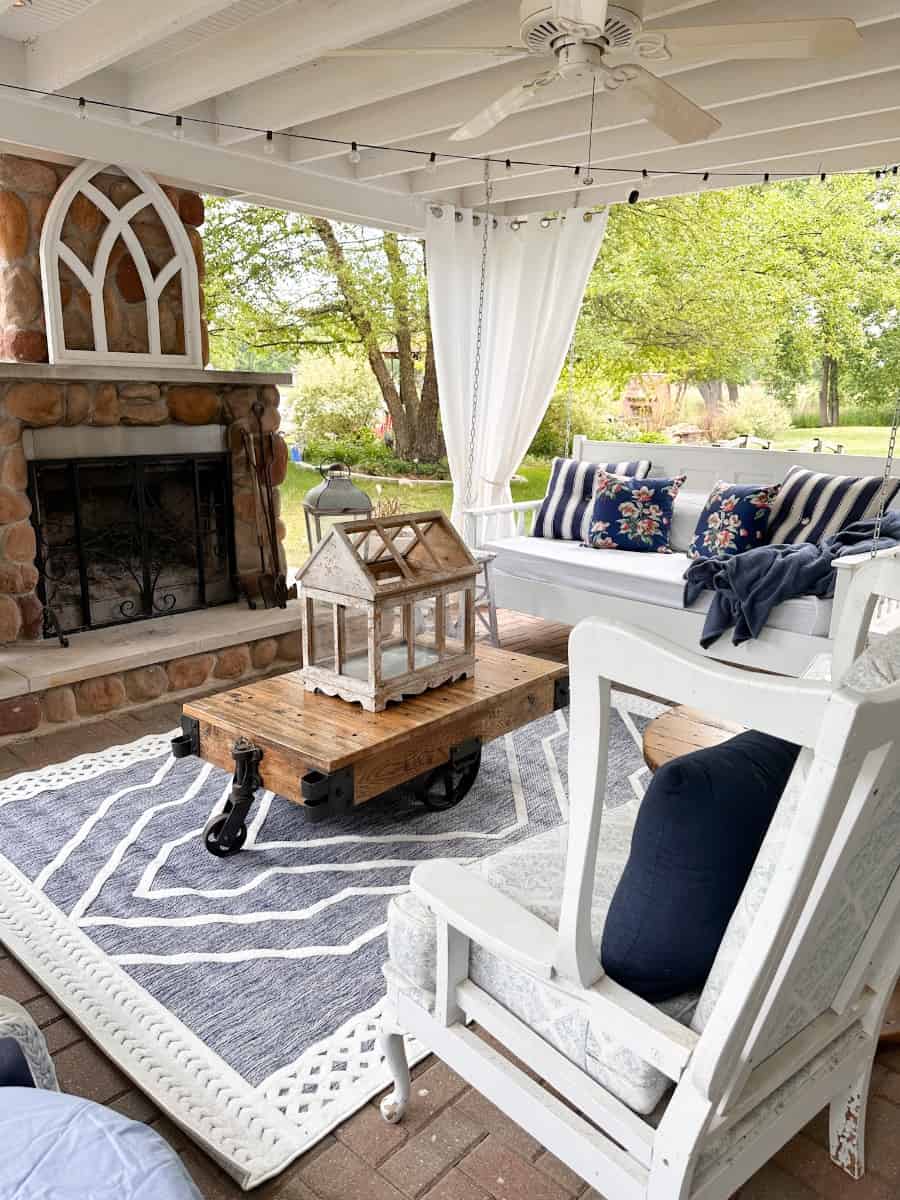
Today our outdoor space is fully optimized for living. It is not a yard we look at from inside the house. It is an extension of our home. A place to cook, to gather, to entertain, to grow beautiful flowers and vegetables, and to sit by a fire with people we love. When you add up the outdoor kitchen, the living room with its fireplace, the greenhouse, and everything in between, the footprint of how we actually live on this property is far larger than 1,300 square feet. That is the real secret to living large in a small house. You build out, not up.
The Seasonal Refresh
One of the questions I get asked most often is how I keep our home feeling fresh without constantly renovating or redecorating. The answer is simpler than most people expect: I let the seasons do the work.
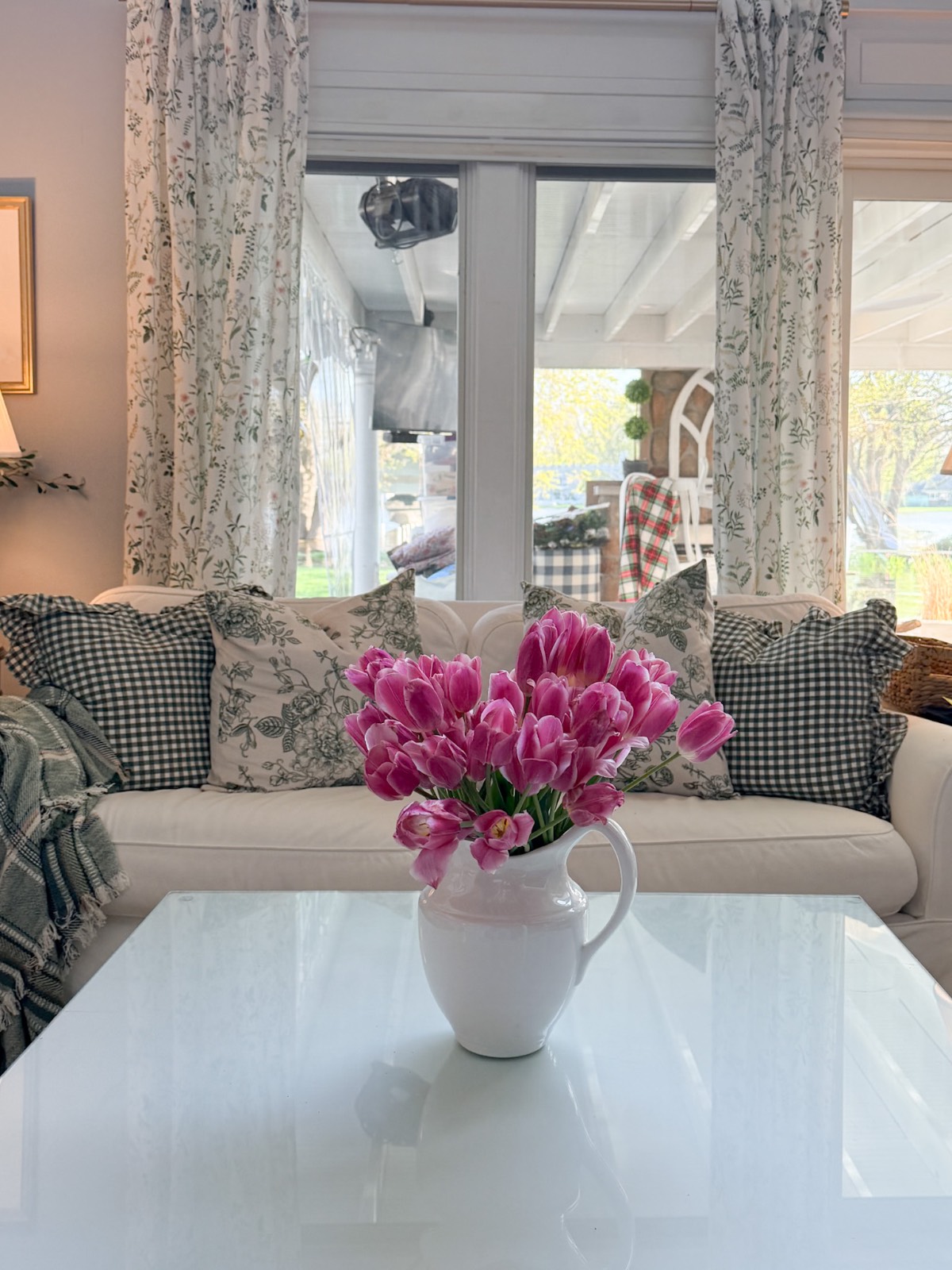
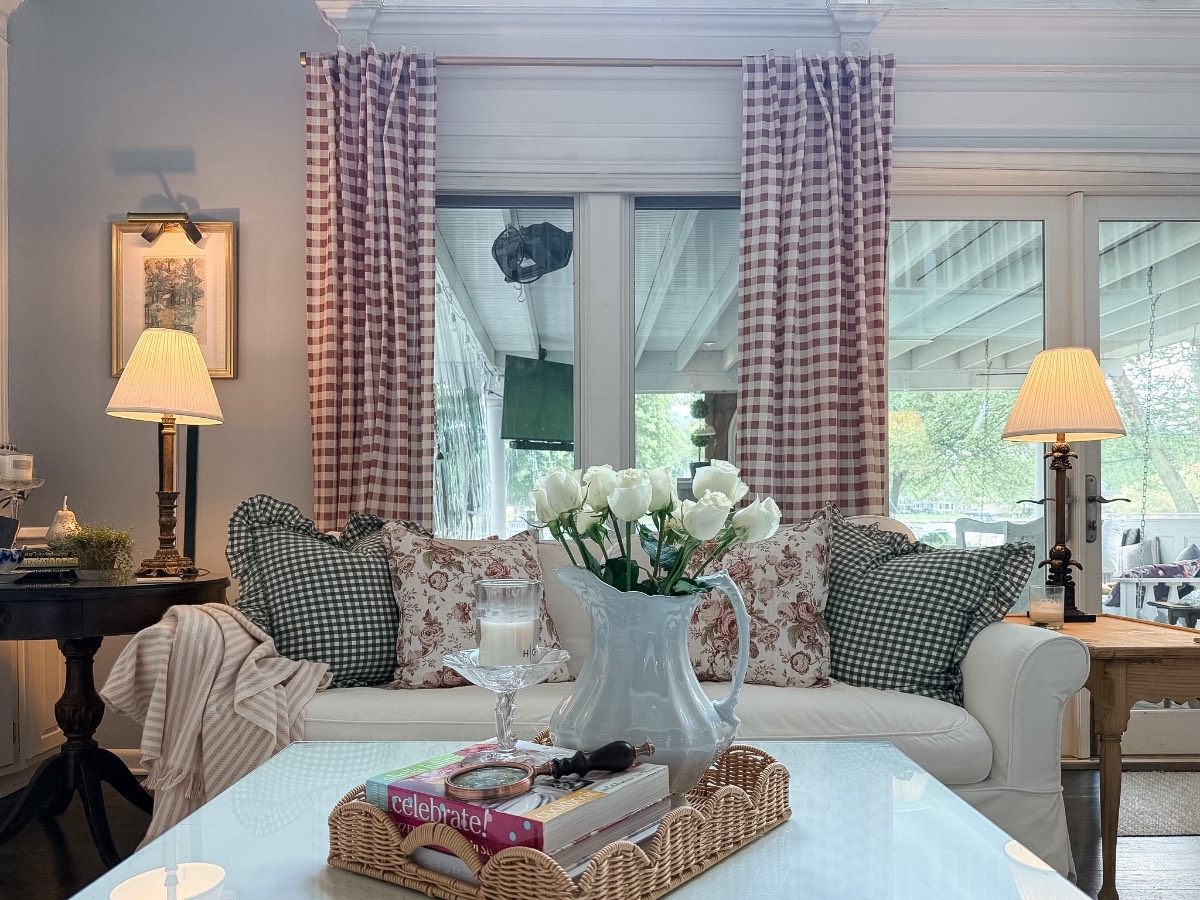

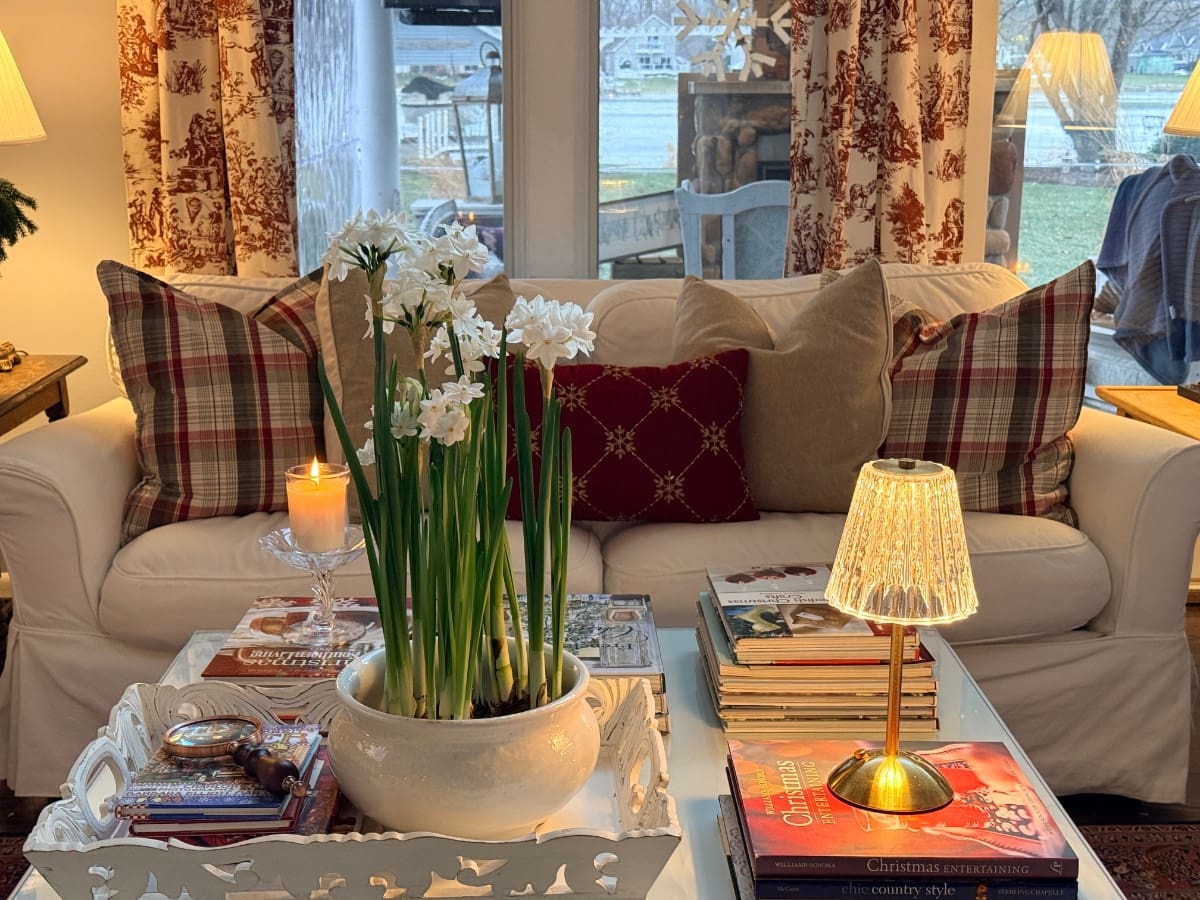
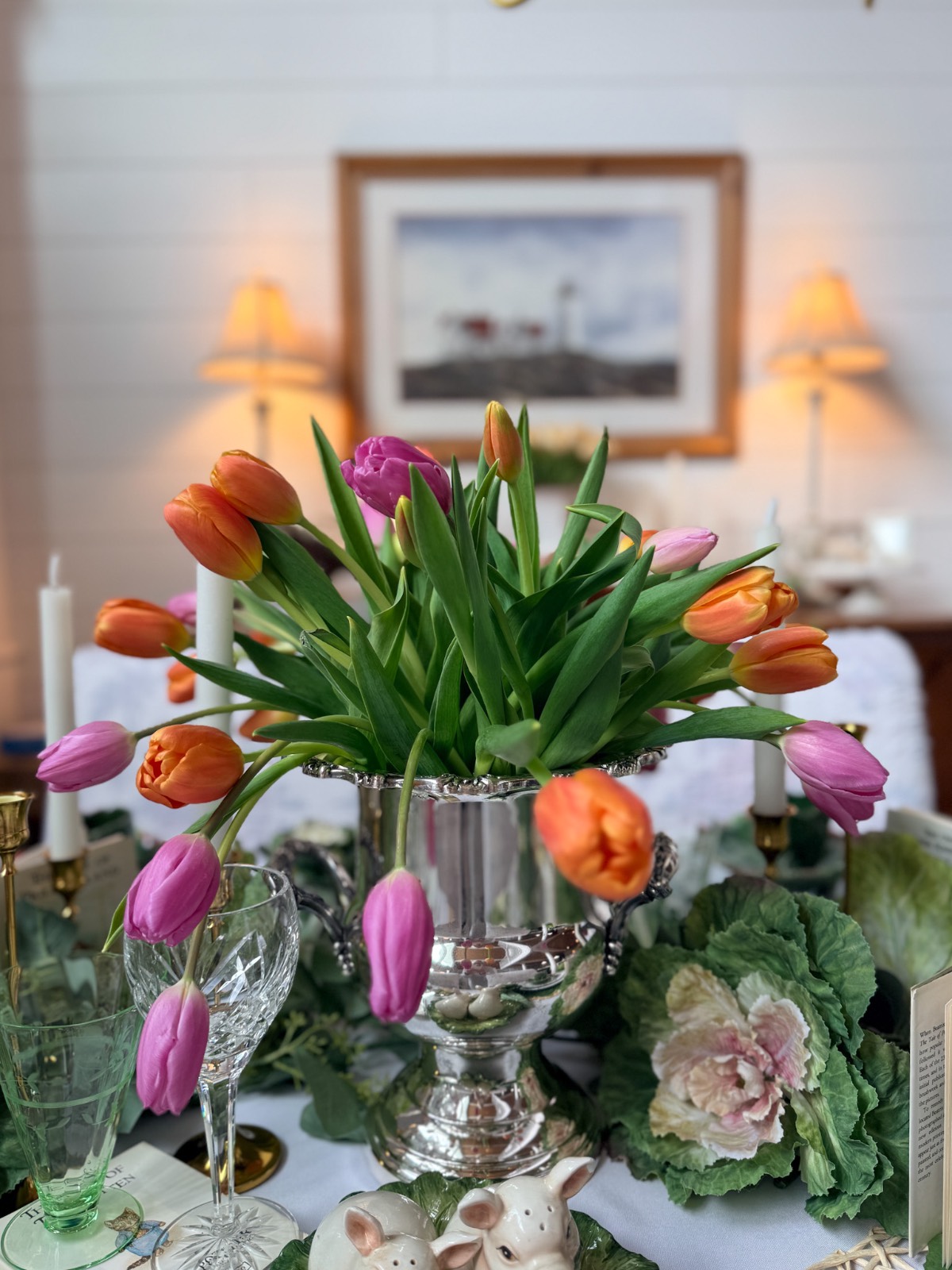
Four times a year, without fail, this house changes. Not the bones, not the furniture, (although I might rearrange it), not the paint, not the built-ins. Those stay, and what I change is the layers. The pillow covers and the throws, sometimes the curtain panels. The knickknacks on the shelves and tabletops. The flowers and greenery, which in a home that backs up to a river and extensive gardens are never in short supply. Small homes respond to seasonal decorating faster and more completely than large ones because there are fewer rooms to change, and the impact of these changes is felt throughout the whole house.
I keep my seasonal decor edited for the same reason I keep everything else edited: in 1,300 square feet, there is not much storage room to spare. The one exception being Christmas. I manage to decorate six trees in this house. (Yes, six—one in nearly every room). I do edit my holiday decor each season and ask myself if I still love it, and if it no longer earns its place, it goes.
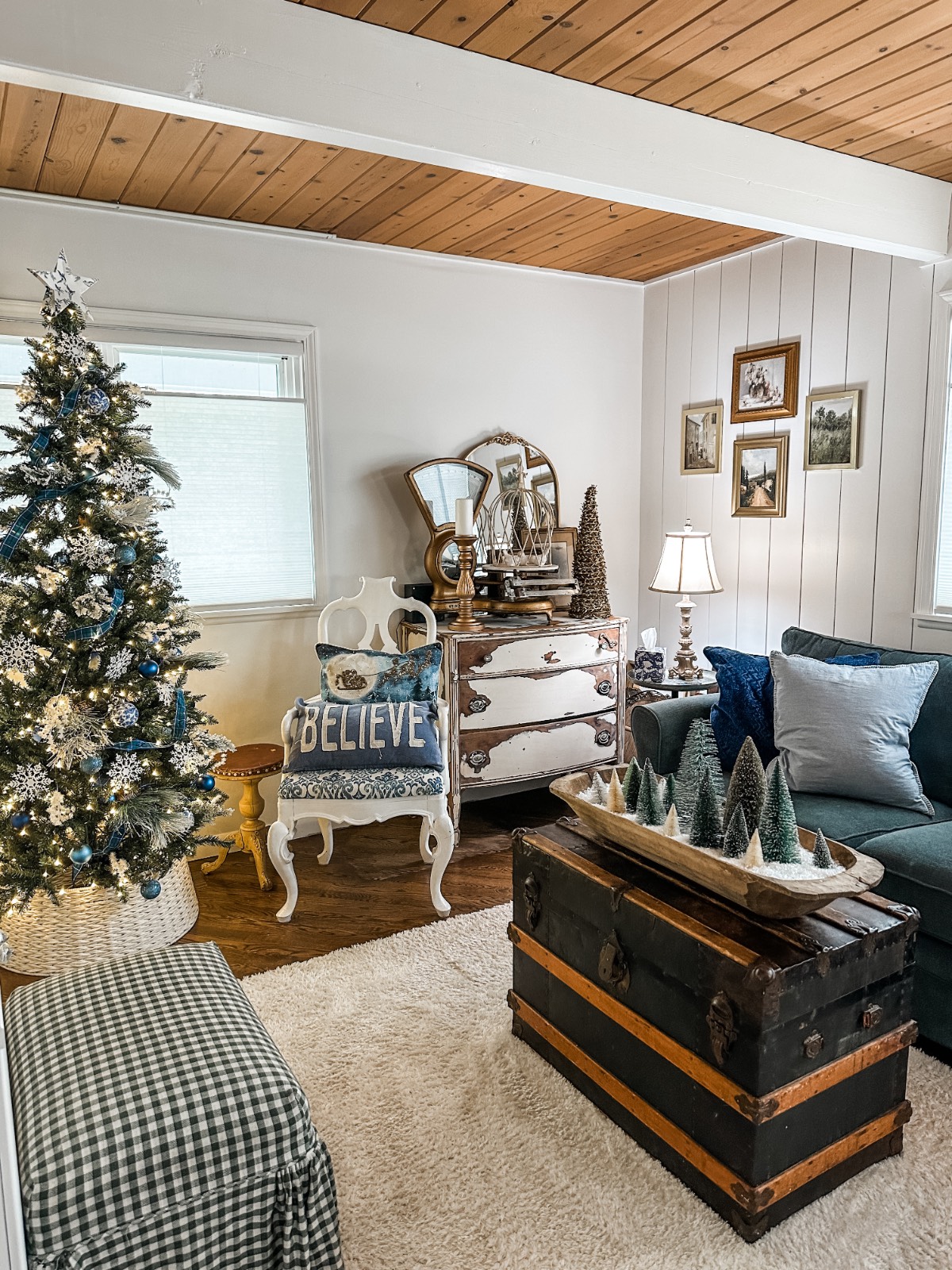
The other thing seasonal decorating does for a small home is give it a sense of change that larger homes sometimes struggle to achieve. People walk into our home in October, and it feels completely different from July. Same house, same rooms, same furniture, just different layers. That is the magic of a small home done well. The canvas is contained enough that small changes make a big difference.
Room-by-Room: The One Lesson Each Space Taught Me
Every room in this house has taught me something. Here is a short version.
The Living Room
A strong focal point, in our case the fireplace and built-ins, is one of our very first and still favorite transformations. The fireplace mantel with the Frame TV is the center of our home.
The Kitchen
Right off the living room is my kitchen, which was designed for how we actually live. Yours should do the same thing. Don’t design a kitchen around how you think it should look; make it a place that reflects your real life. I redesigned mine around the way that I cook and entertain. No matter the size of your kitchen, you can make it the heart of your home.

The Dining Room
The built-in corner cabinets have transformed a very plain space with no good storage into one of the most functional and beautiful rooms in our home. The star of the show is the table that “Handy” handmade to fit our space. Never ignore corners; they are almost always underused.

The Entryway
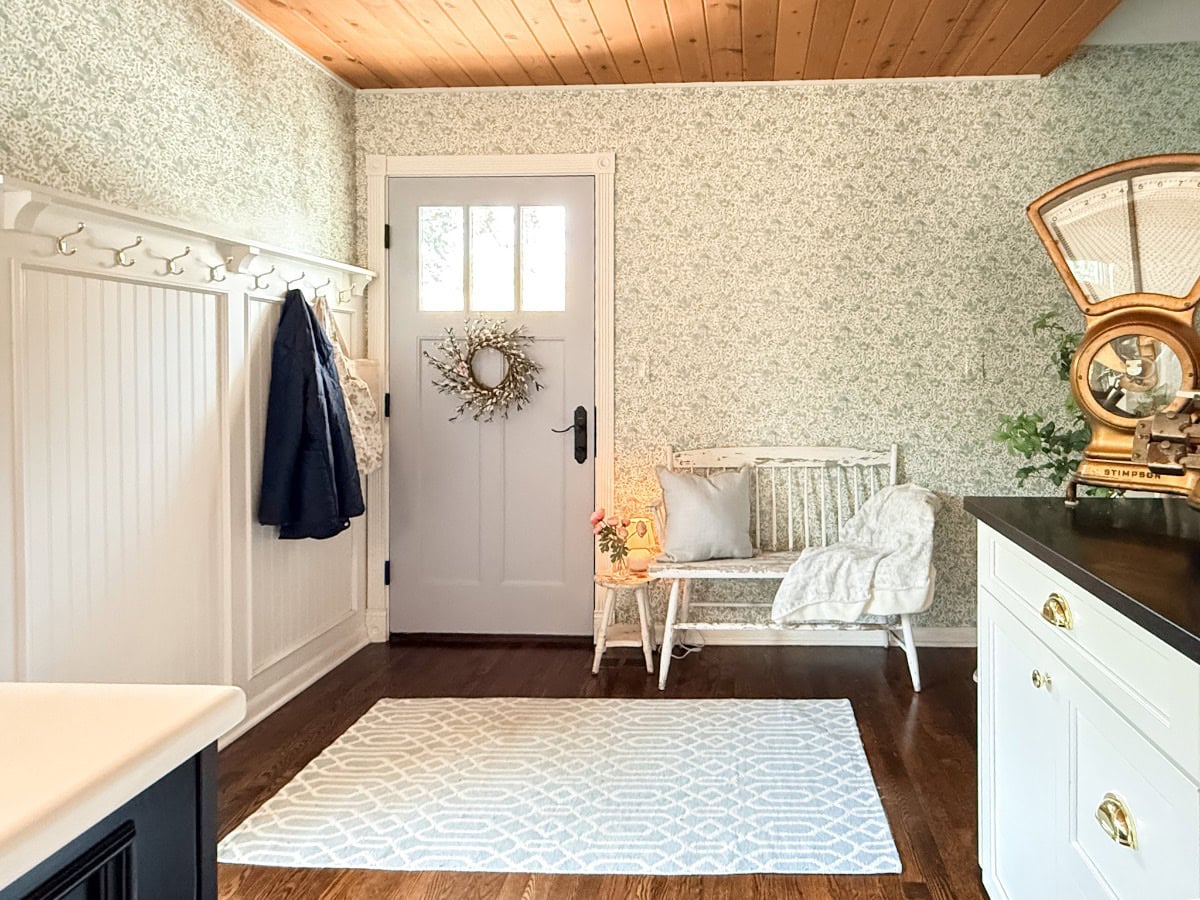
When you want people to feel welcome when they walk into your home, even a small entryway deserves to have its own little hug for you and your guests! When our kitchen expansion encroached on the entryway, wallpaper gave that small space its own personality and defined it as the true beginning of our home.
The Office
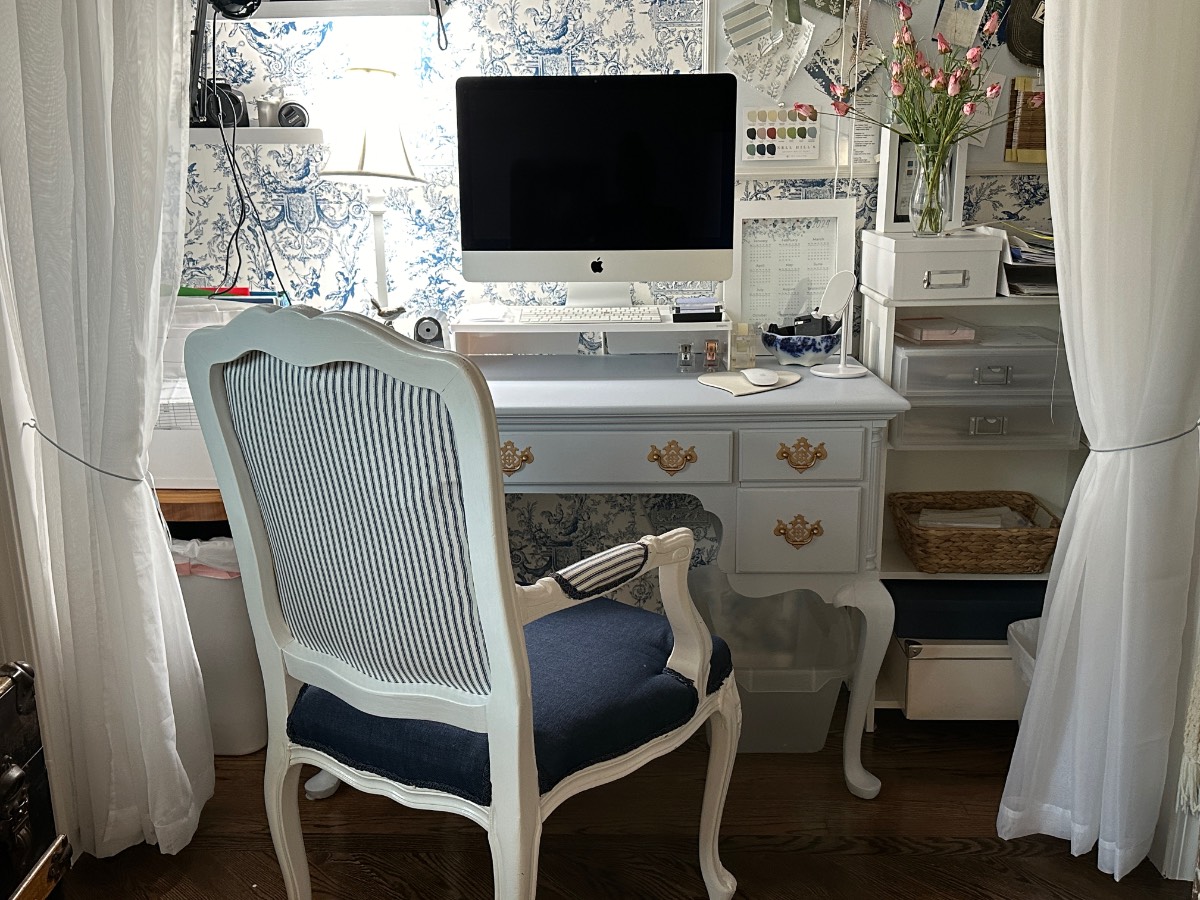
We transformed the only bedroom on the first floor from our primary bedroom to one of the kids rooms, to my office, back to one of the kids rooms, to finally my office, our den, and a guest room. This room has proved to me that a room in a small house can have triple duty.
The Laundry Room
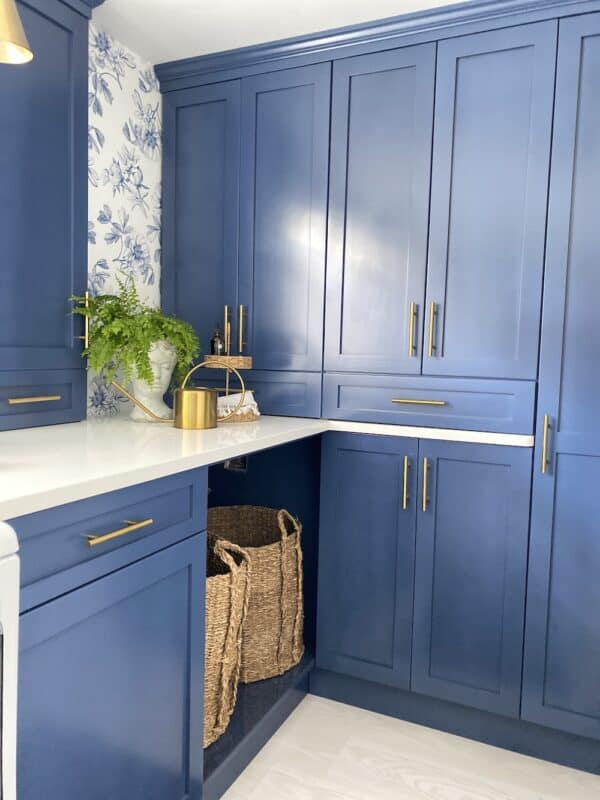
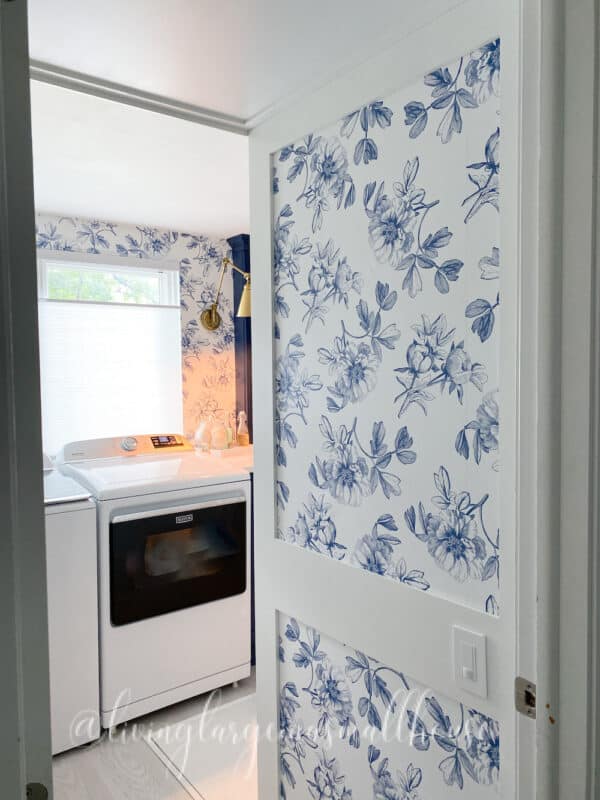
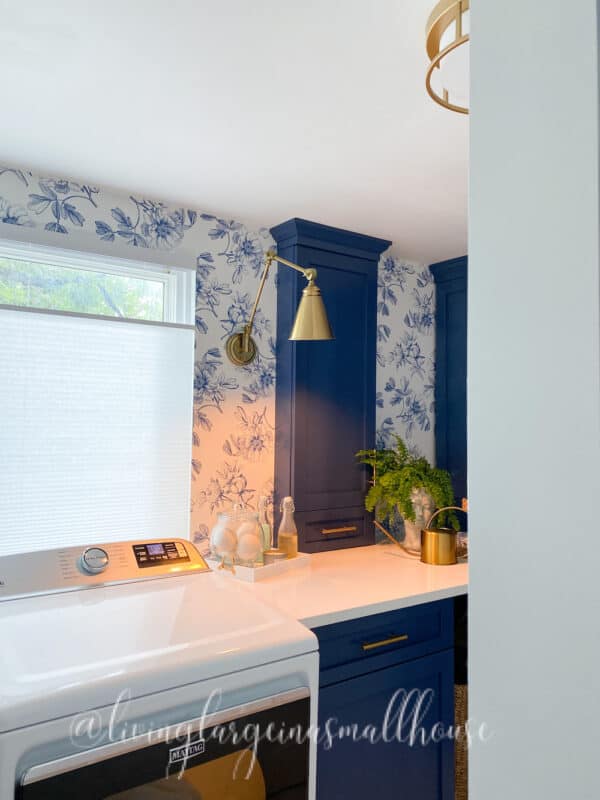
Our laundry room was a pretty ugly space. It not only had our washer and dryer in it; we also had the furnace, water heater, and electrical panel. Keith and I went through many design ideas to come up with our now beautiful, functional laundry room. We also had our custom cabinetry painted a blue color that I hated when they arrived and had to go back and get repainted. Paint from a chip can be tricky. I wrote a post about how to choose the right color paint. It’s a good read if you’re thinking of painting.
The furnace got tucked into a closet we created. That closet also houses the tankless water heater, and a small sink in addition to some hanging space and shelves for storage. Custom cabinetry handles the rest of the storage needed in our laundry room. A narrow custom box with a cabinet door front that goes from a countertop to the ceiling hides the electrical panel completely. New waterproof LVP flooring replaced the tile floor. Now when you walk in, it is a laundry room that makes you smile when you’re washing clothes.
Primary Bedroom
When we added the dormer onto our house, we moved from downstairs (the room that is now my office) upstairs into a much bigger space. We got the additional 400 square feet; both upstairs bedrooms got more floor space, and the primary got a walk-in closet. It’s more of a stand-in closet, but it’s such a huge storage upgrade from what we had.
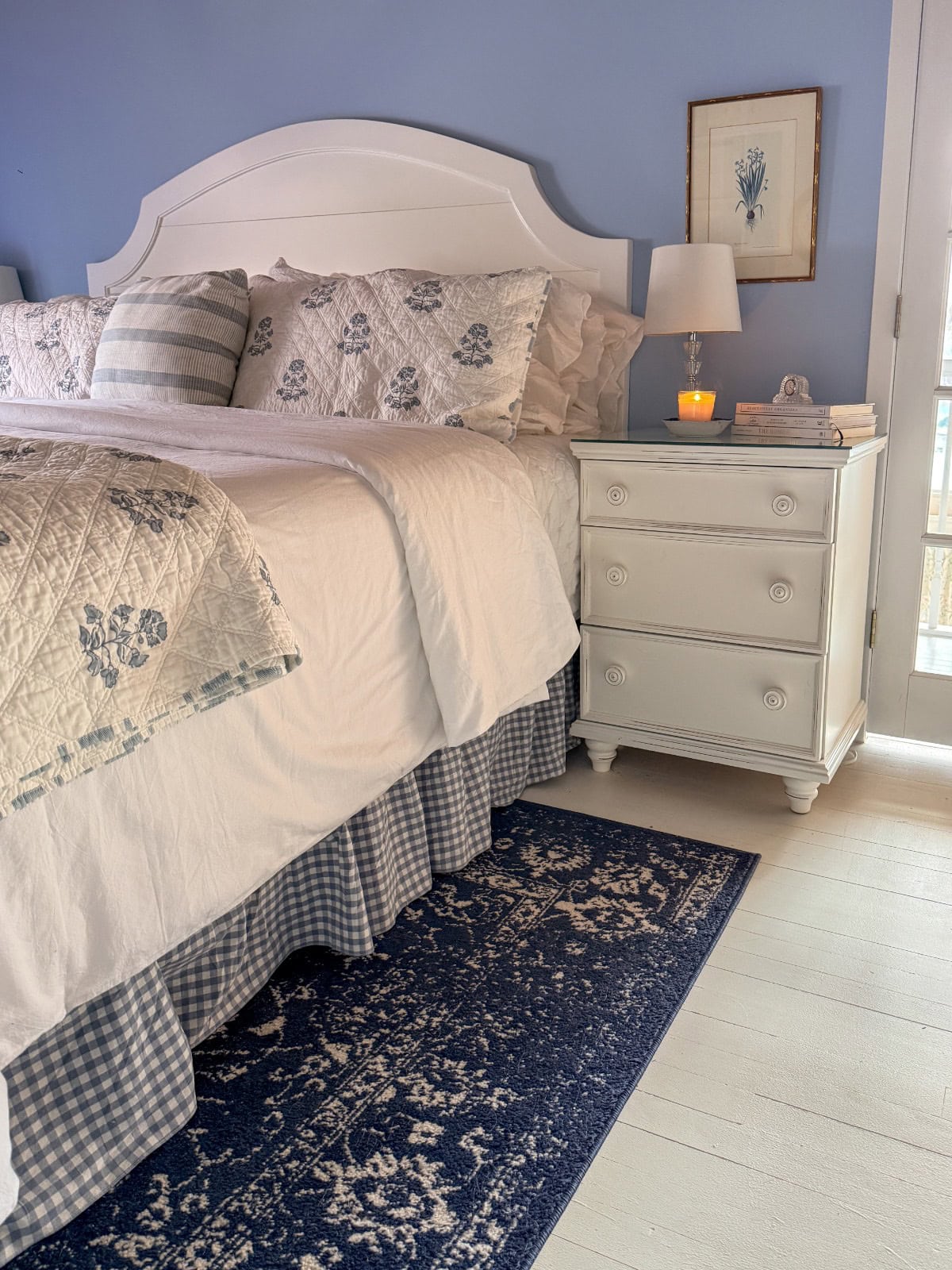
The room also had a patio door flanked by two windows that went out to a balcony that overlooks the great room. We took out the two windows to gain more wall space and swapped out the patio door for French doors. A major upgrade. Our balcony used to have square wood slats in the railing, and we upgraded it to white traditional turned spindles with a traditional white top rail.
The floors in our bedroom are the only wood floors that haven’t been refinished, so a few years ago we painted them white. A highly controversial decision. Keith and I actually talk about it on a podcast episode.
The Outdoors
An outdoor kitchen, an outdoor living room with a fireplace, a greenhouse built with salvaged vintage windows and French doors, a chicken coop, and beautiful gardens—each one adds livable, enjoyable square footage to this property without touching the house. Your backyard is not separate from your home. It is part of it. Treat it that way.
Small Home Decorating Starts With What You Love
After 33 years in 1,300 square feet, I can tell you with complete confidence that the size of your home is not what determines how beautiful it is, how well it functions, or how much you love living in it.
What matters is intention. Knowing what you love and editing ruthlessly towards it. Keeping things organized, getting the scale right, getting creative with storage, and building in where you can. Use color with confidence. Let the seasons keep things fresh. Designing every room for how you actually live in it, not how a floor plan assumes you will. And looking beyond your four walls to every inch of the property that could become part of how you live.
Creativity and intention take time to develop. I am still developing mine. In life, nothing ever stays the same, and I have the same idea about my home. Call me nuts, but I would be so bored with my home if I wasn’t continually looking for something to refine and make better. The house is never quite finished, and I don’t want it to be.
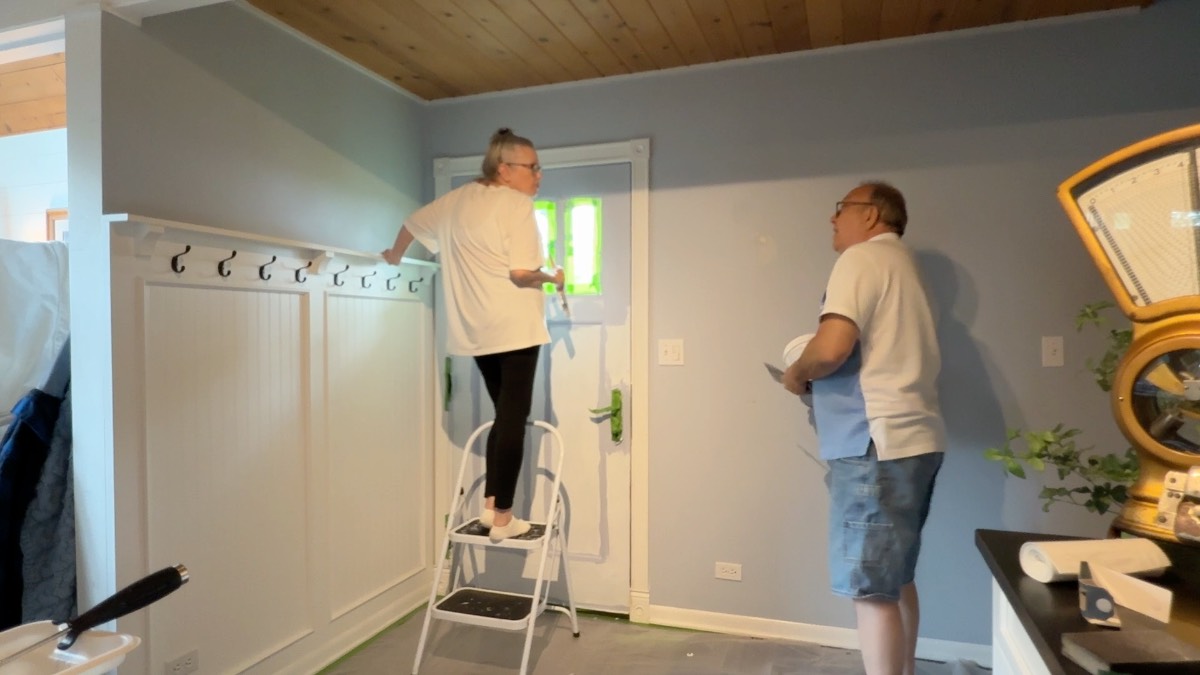
And don’t be afraid to ask for help. Even with my degree, I always ask for second opinions, even if it’s from my grown daughters, who both have a great eye for design. I’ve made some mistakes along the way, and so it’s nice to get another perspective. A good designer does not replace your vision; they help you sharpen it.

Become a Friend of Living Large
Be the first to see affordable decorating ideas, gardening tips and tricks, along with great organizing, entertaining ideas and easy recipes
Where to Find Your Starting Point
If you are just starting out in a small home, have decided to downsize, or are just wanting to refresh your small home, I hope something here gives you a place to begin. Start in one room. Ask yourself what do you love and what you don’t. Get rid of what you don’t and start to work around the things you do love. Get the scale right. Add one thing with history. Paint the trim—or don’t. Mostly just make it your own.
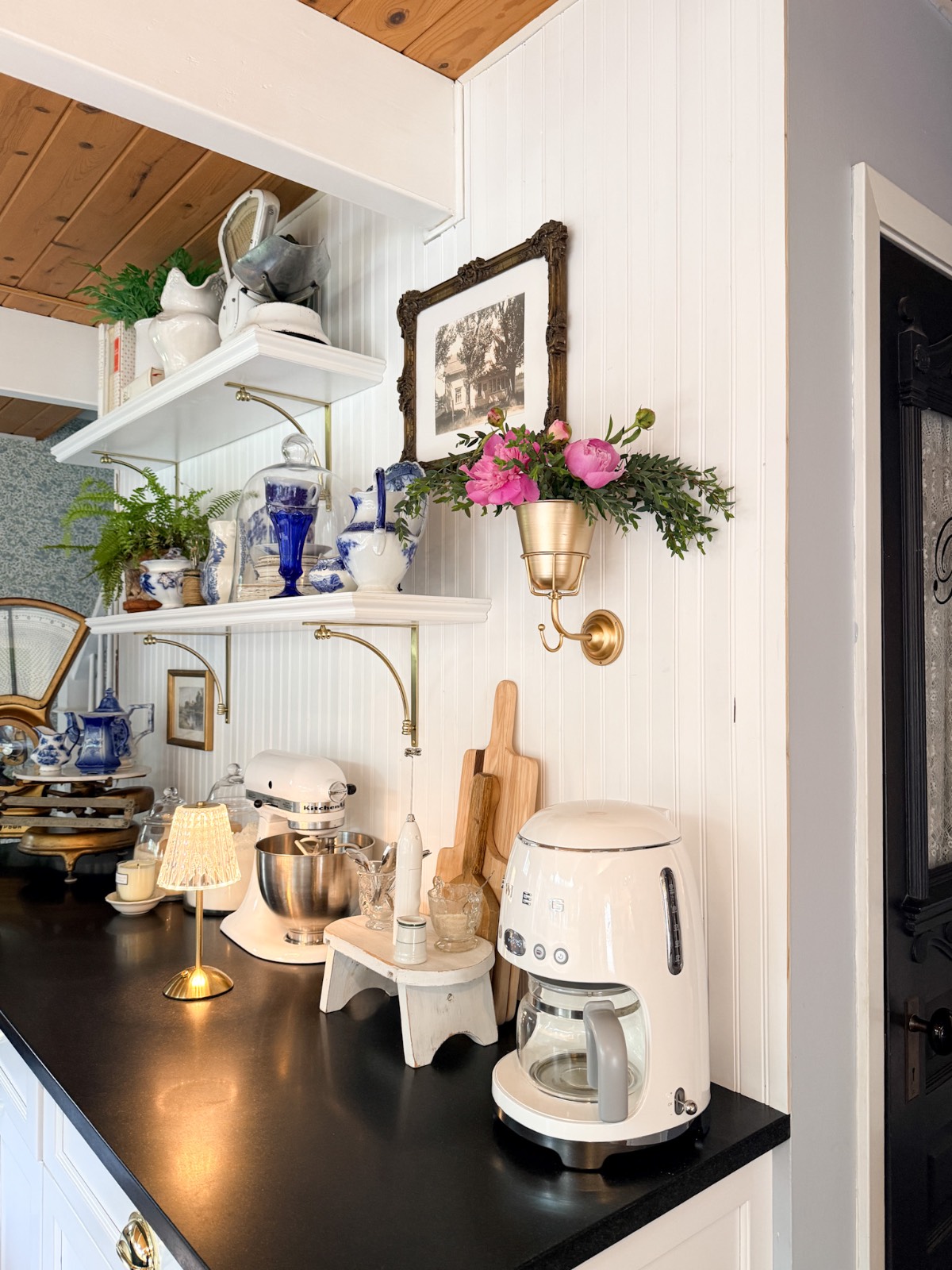
You don’t need more space. You just need to start looking at the space you have with a more creative eye.
Peace, Love, and Happy Decorating,


A great way to save this idea is to add it to one of your Pinterest boards. You can find the pin button on the top left of the photo when you click on it. Also, don’t forget to follow me on Pinterest
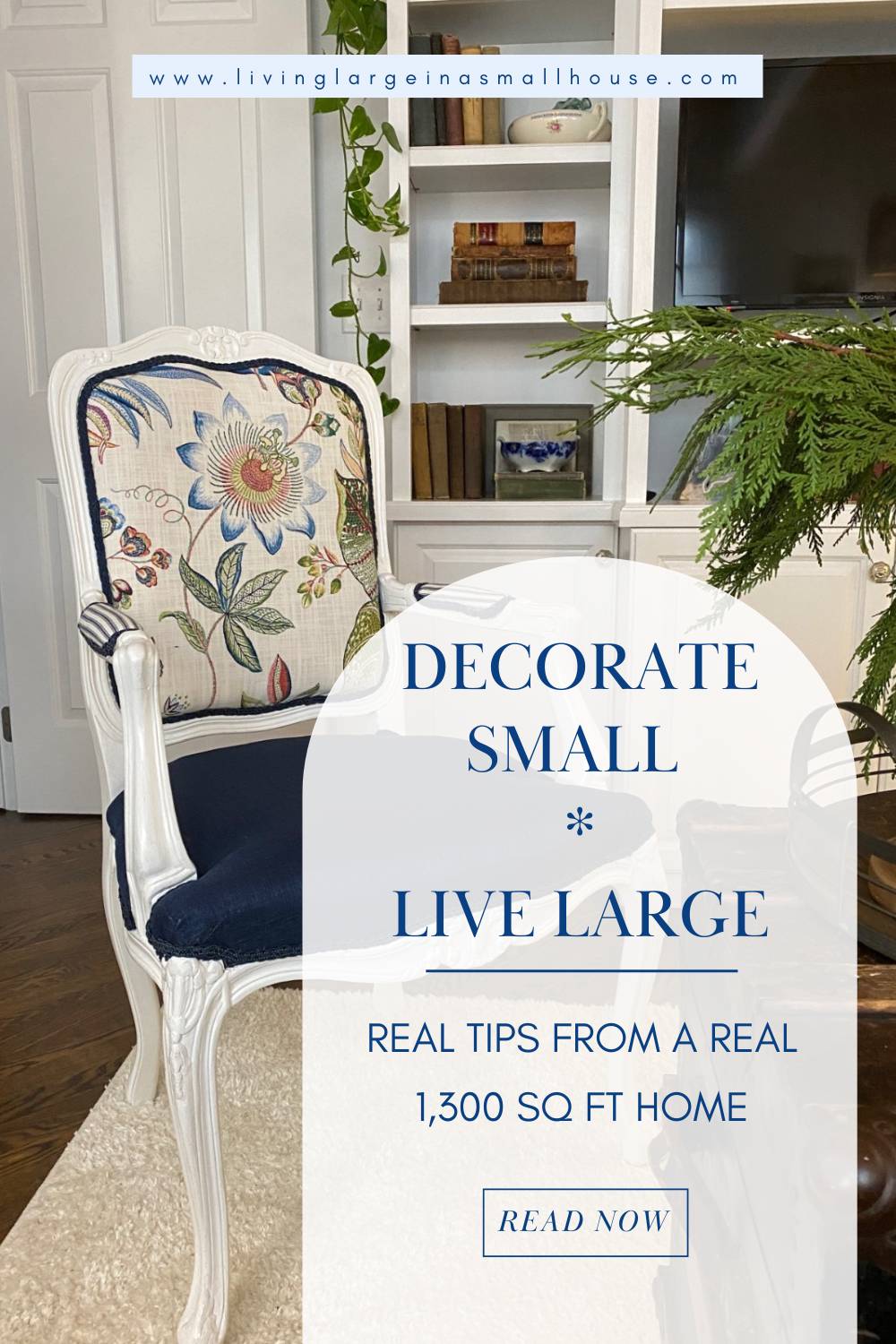
Would you like to save this?


Meet Me
My name is Lynn. I live in the suburbs of Chicago in a 1,300 sq. ft. home with my Handy husband, Keith.
I’m an open book about my life on my blog. You can find out more about me by visiting my “About Me” page.
Featured












“Have nothing in your house that you do not know to be useful, or believe to be beautiful.”
William Morris
Your home and style are beautiful!
Thank you for the kind words Linda and thank you for being here!
GREAT article Lynn! So many questions answered. So many great ideas.
Thank you my friend! My first cornerstone piece!
Absolutely the best article I have ever read–not just on this webpage but on any website! Thanks for sharing all your ideas gained over the years and through your experiences.
Dianne, That is so lovely of you to say! You warmed my heart and reminded me that I have the best readers in the whole world!