
Bucatini Pomodoro: A Fun, Underrated Pasta Everyone Should Try
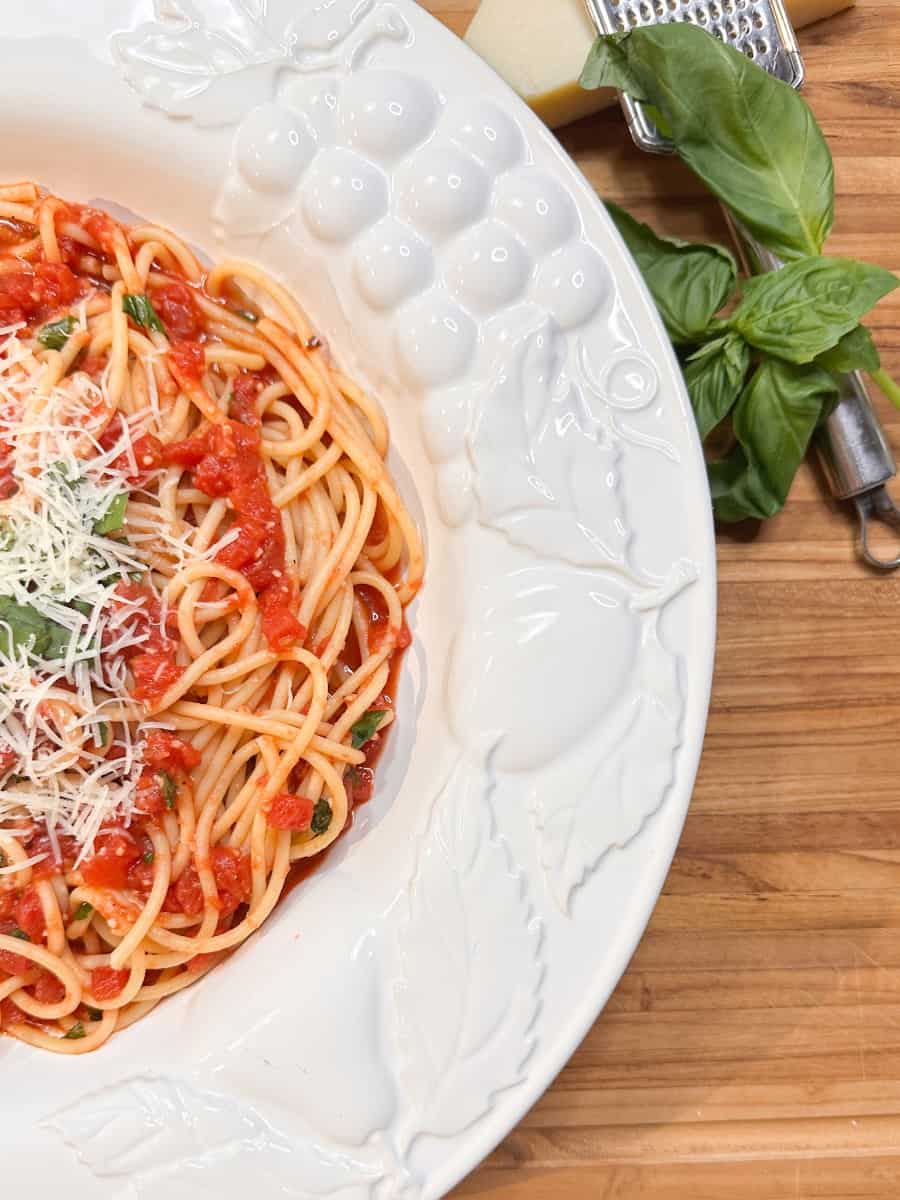
Pomodoro sauce is a simple, light tomato sauce with just a bit of a kick. Pairing it with bucatini instead of ordinary spaghetti is the easiest upgrade you can make to a weeknight pasta dinner. Bucatini is a long, tube-shaped noodle with a hollow center running straight through it, and it gives this dish a chewier bite and a little more presence on the plate than thin spaghetti does. It’s still not something you see on every table, which is exactly why I love cooking with it. It’s a fun, underused pasta that makes a five-ingredient tomato sauce feel like something special.
Handy is a meat and potatoes guy, and he needs a little more bulk to call something a real dinner, so I’ll often add some of the homemade meatballs that I keep in the freezer to his bowl. Either way, this comes together in well under an hour.
On my blog Living Large in A Small House, I may sometimes use affiliate links, which means a small commission is earned if you make a purchase via the link. The price will be the same whether you use the affiliate link or go directly to the vendor’s website using a non-affiliate link. You can find my full Disclosure Policy HERE
What Is Bucatini Pasta and Why It’s Worth Trying?
Bucatini is a thick, spaghetti-like noodle with a hole running through the center. Think of it like a fat, flexible straw. That hollow center is what sets it apart. It gives the noodle a springier, more substantial chew than regular spaghetti, and the shape lets a light sauce cling to both the outside and the inside of the noodle.
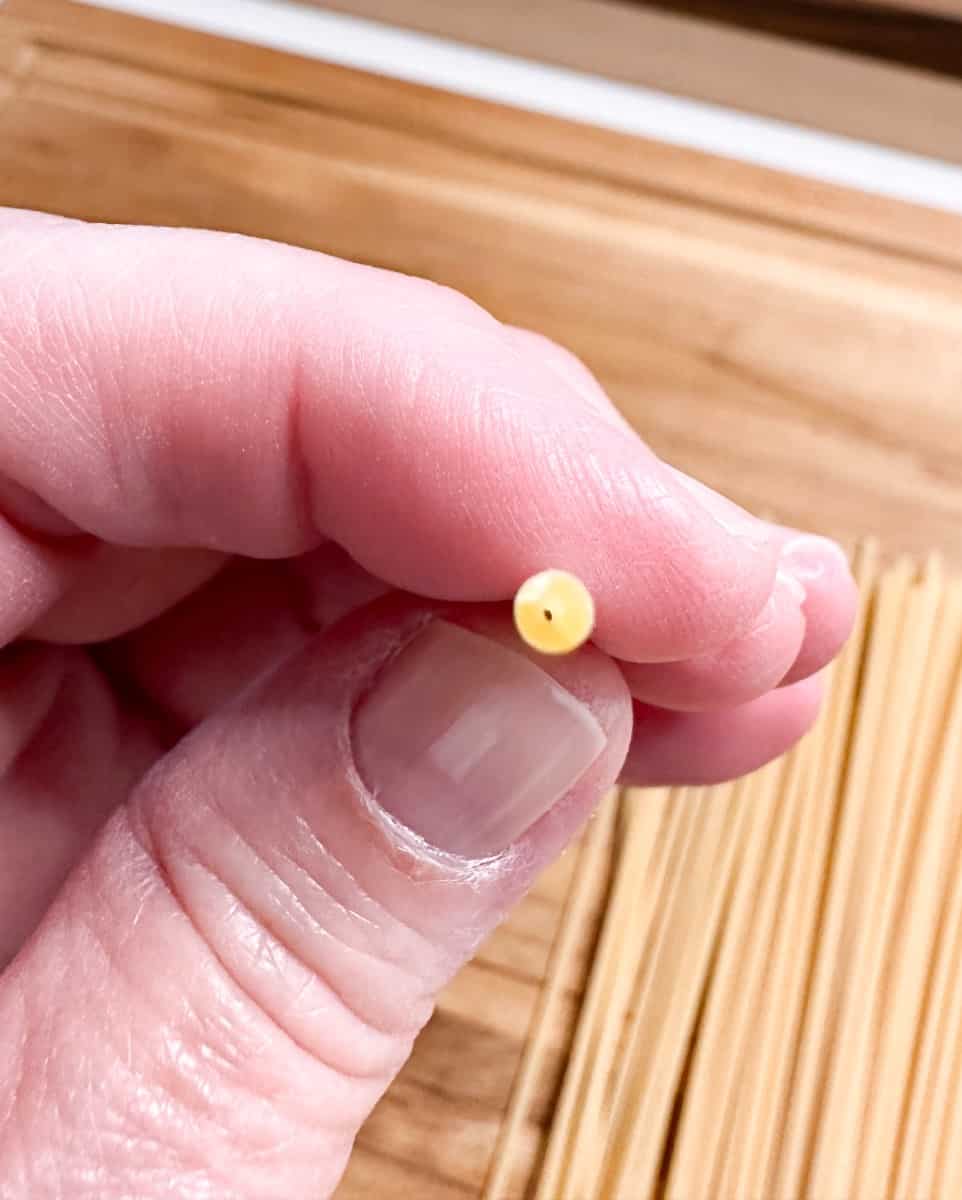
It’s a traditional pasta in Roman cooking, most famous in dishes like bucatini all’Amatriciana, but it works beautifully with a simple pomodoro sauce too. If you’ve never cooked with it before, this is a great, low-stakes place to start. Any grocery store that carries a decent Italian pasta selection should have it, and if you can’t find it, regular spaghetti or linguine will still work fine. See the swaps below.
Pomodoro Sauce: Simple Light, With a Little Kick
Pomodoro quite literally means “tomato” in Italian, and like all tomato sauces, my version may be a little different from the way other people make theirs. Some recipes call for puréeing the tomatoes in a blender or food processor first. I don’t bother with that. My way is faster, and it still has amazing flavor.
Some people put their tomatoes into a blender or food processor to make puréed tomatoes. Making it the way I do is easier and quicker and still has amazing taste.
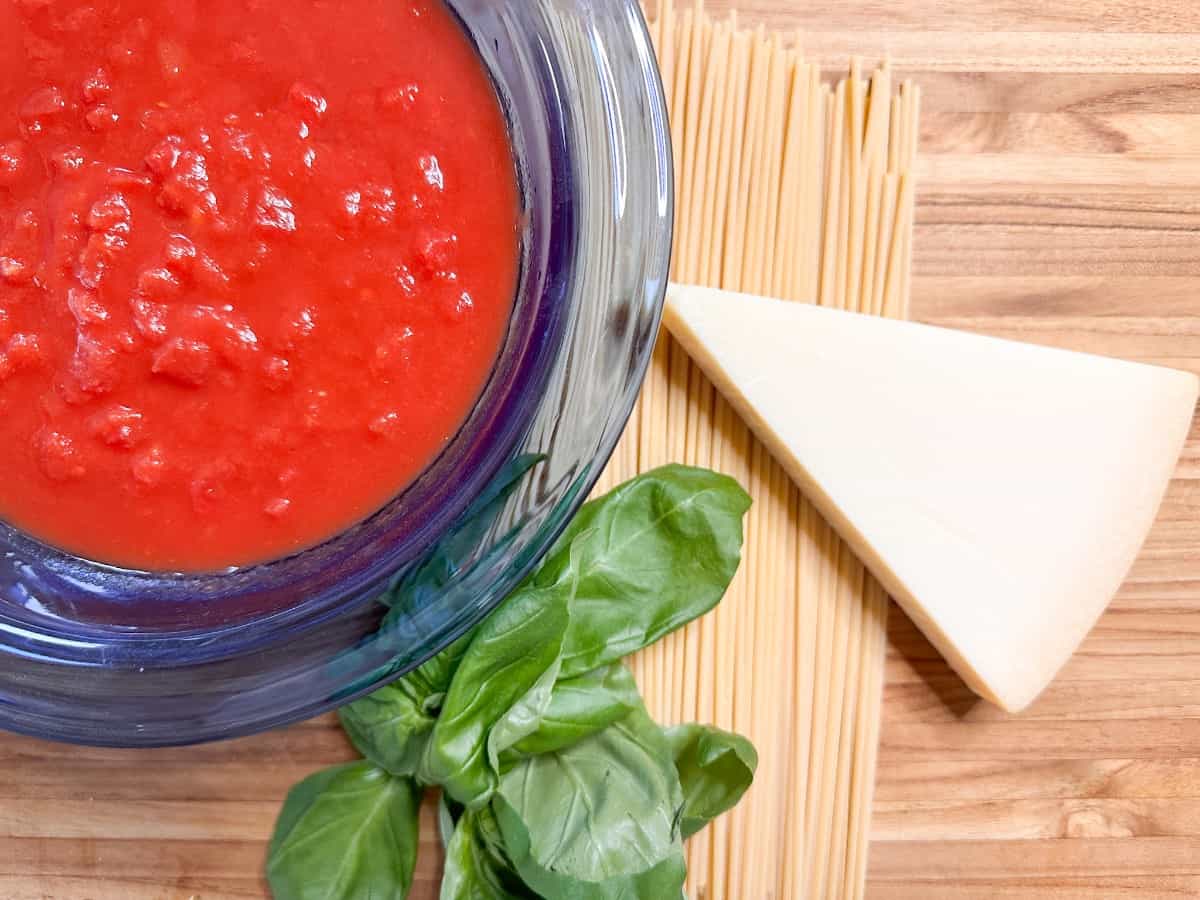
The sauce itself uses a short ingredient list: garlic, tomatoes, red pepper flakes (optional, for a little kick), fresh basil, and salt and pepper. Some recipes stir parmesan right into the sauce, but I prefer to keep the sauce light and serve the cheese on the side instead.
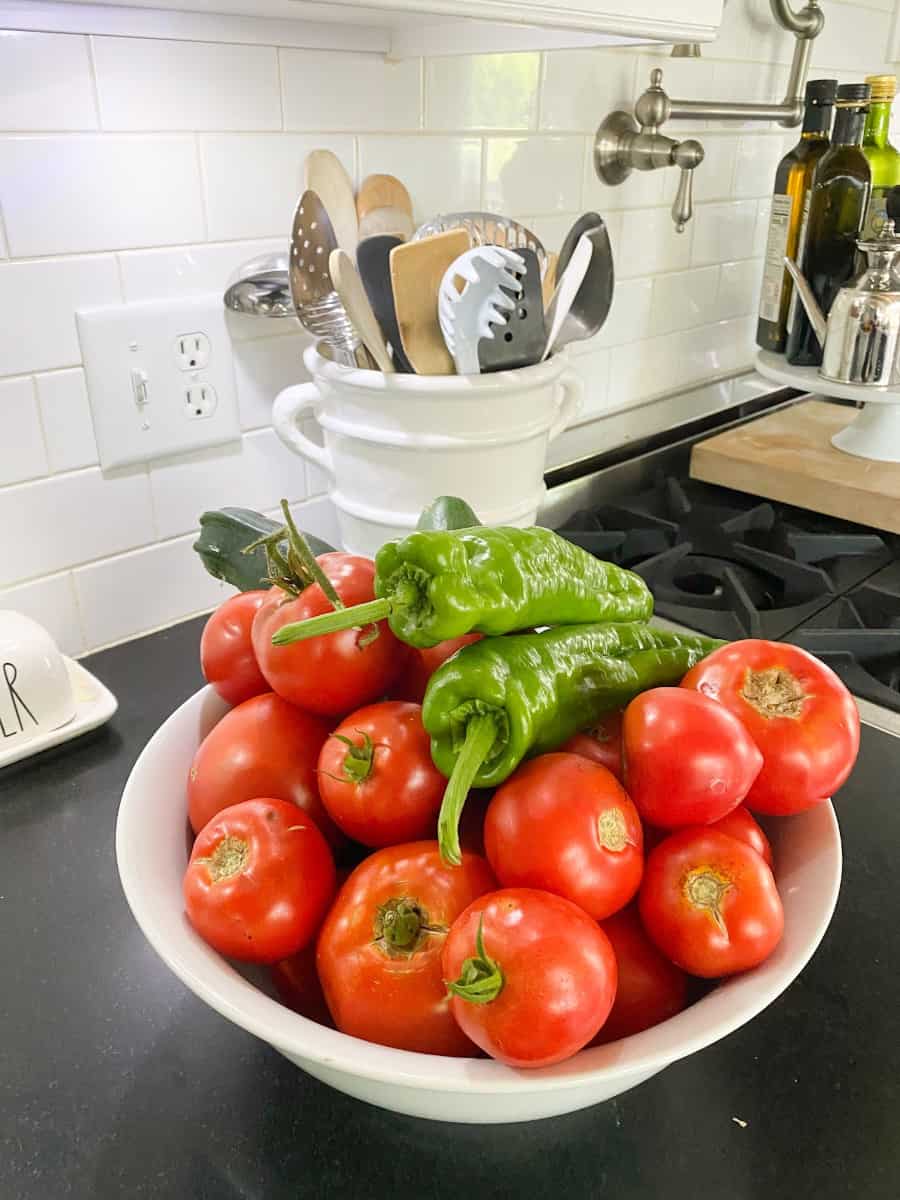
I used my own diced tomatoes that I preserved from my garden, but you can use canned diced tomatoes from the grocery store. My favorite brand is Cento diced San Marzano in puree. Cherry tomatoes can also be used in this recipe. They add a hint of natural sweetness that balances the red pepper flakes nicely.
How to Make Bucatini Pomodoro
Start the sauce while the pasta water is coming to a boil, and the two will finish around the same time.
- Cook the pasta: Bring 4-6 quarts of salted water to a boil and cook the bucatini for 10-12 minutes. The package usually says 7 minutes for al dente, but I like mine cooked through, so I let it boil a little long. Cook yours to whatever texture you prefer.
- Build the sauce: In a large skillet, sauté the minced garlic in olive oil for 1-2 minutes over medium heat. Add the tomatoes, red pepper flakes, salt, and pepper; bring to a gentle simmer. Stir in the chopped basil right at the end.
- Bring it together: Before draining the pasta, scoop out about 1 cup of starchy pasta water and set it aside. Add the drained bucatini to the sauce and toss to coat. I use tongs so I can grab the pasta and fold it into the sauce rather than stirring it. If the sauce looks too thick, add the reserved pasta water, one tablespoon at a time, until you get your desired consistency.
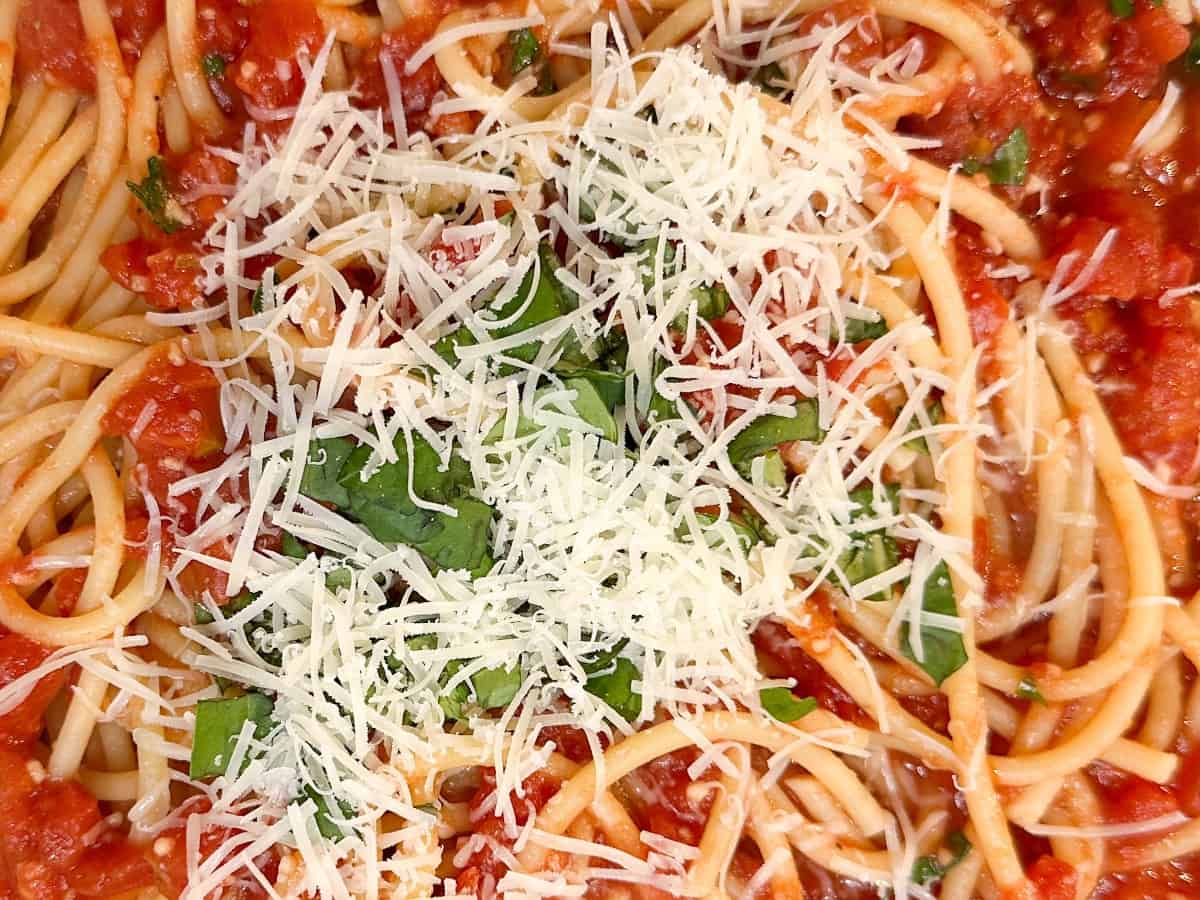
- You can add the parmesan at this point and toss with pasta if you’d like it melted into the sauce. I, personally, save it to sprinkle on top when serving.
Ingredient Swaps & Variations
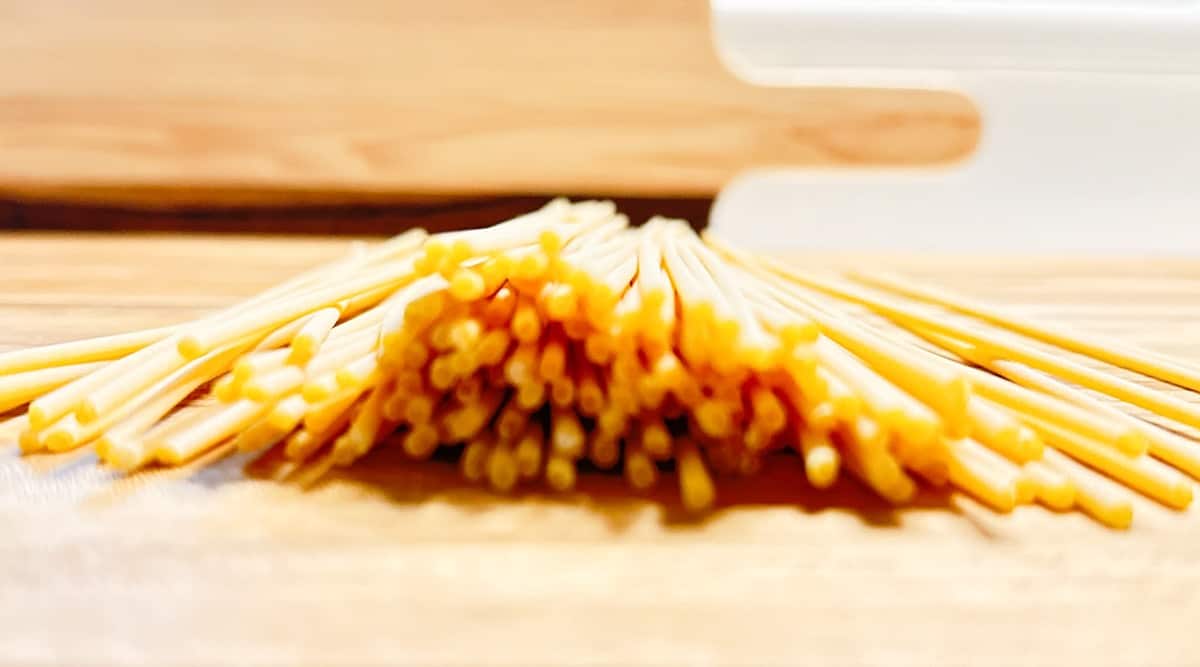
- Pasta: Can’t find bucatini? Regular spaghetti or linguine works just fine. Fresh pasta would be even better if you have more time on your hands.
- Tomatoes: Swap canned diced tomatoes for canned whole tomatoes (crushed by hand) or fresh from the garden regular or cherry tomatoes in the summer.
- Cheese: Parmesan is classic, but sliced mozzarella or a burrata on top would be delicious
- Heat: Omit the red pepper flakes if you want a milder sauce. Add more if you want your sauce really spicy.
- Protein: Do you want to add some protein to your sauce?
- Italian Sausage: Brown some up in your skillet after you’ve added the garlic and continue with the tomatoes.
- Cooked Meatballs: Put them into the tomato sauce to simmer until warmed through.
- Grilled Chicken: Grill some chicken breast and add the sliced piece to the top of your plated pasta
- Cooked Shrimp: Cook your shrimp through in a sauté pan with olive oil or butter and then add to the top of your plated pasta.
Pro Tips for Perfect Bucatini Pomodoro
- Always reserve a cup of pasta water before draining. It’s the easiest way to loosen a too-thick sauce without watering down the flavor.
- Toss the pasta into the sauce (not the other way around) using tongs so every strand gets coated.
- Add the fresh basil at the end so it stays bright and fresh instead of wilting into the sauce.
- Taste before you serve. Canned tomatoes vary in acidity; you may have to add an extra pinch of salt or pepper flakes.
My Favorite Kitchen Tools for an Italian Dinner

What to Serve with Bucatini Pomodoro
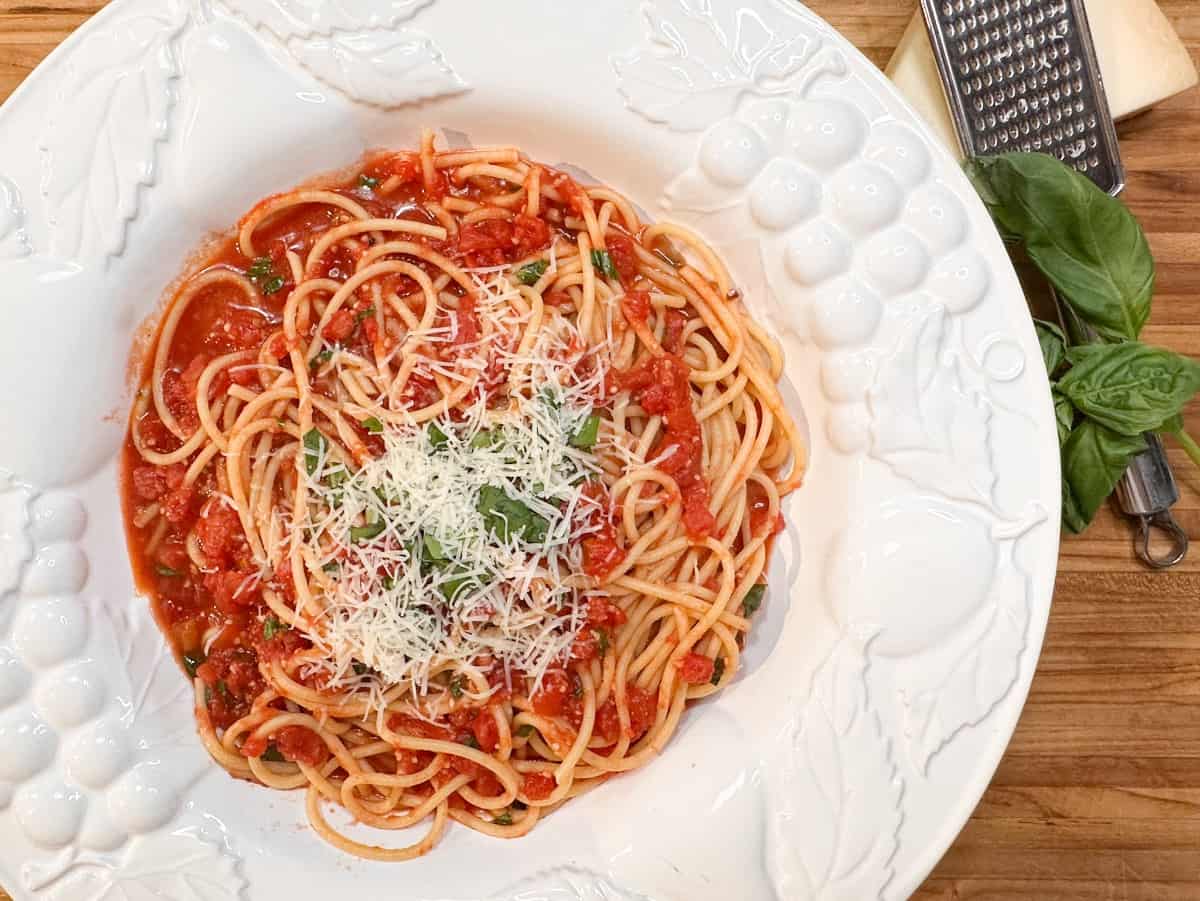
We like this pasta topped with plenty of freshly grated parmesan, a little extra chopped basil, and a pinch of finishing salt. French bread or garlic and a fresh side salad round out this meal nicely.
Bucatini Pomodoro
Ingredients
- 3 tsp kosher salt, divided
- 1 tbsp extra-virgin olive oil
- 4 cloves minced garlic
- 1 can 28 oz. diced tomatoes
- 1/2 tsp red pepper flakes
- 1/2 tsp black pepper
- 1/4 cup loosely packed chopped fresh basil, plus more for garnish
- 1/2 pound Bucatini Pasta
- 1/4 cup freshly grated parmesan cheese, plus more for garnish
- pasta water, reserved

Instructions
- Bring 4-6 quarts of salted water to a boil. Cook the bucatini for 10-12 minutes, or until done to your liking.
- At the same time as you are starting the water to boil, sauté the garlic in olive oil in a large skillet over medium heat for 1-2 minutes. (just until fragrant)
- Add the diced tomatoes, red pepper flakes, salt, and black pepper. Bring to a simmer.
- Stir in the chopped basil at the end of cooking the sauce. Right before you add the pasta.
- Reserve about 1 cup of pasta water, then drain the pasta.
- Add the pasta to the sauce and toss with tongs to coat, thinning with reserved pasta water if needed.
- Serve topped with grated parmesan cheese and additional chopped fresh basil.
Notes
Nutrition
Final Thoughts
RPM Italian is a restaurant in Chicago. It’s co-owned by celebrity couple Bill and Giuliana Rancic. When I was staying in the city for a convention many years ago, I was lucky enough to eat at this Italian restaurant.
I, of course, had to try Mama DePandi’s Bucatini Pomodoro, which RPM is known for. This is when I fell in love and started making my own version at home.
I hope you enjoy my recipe for Bucatini Pomodoro.
Peace and Love,


FAQ’s
What does pomodoro mean?
Pomodoro is Italian for ”tomato”. A pomodoro sauce is a simple, quick tomato sauce that is lighter and less cooked down than a long-simmering marinara.
Is bucatini the same as spaghetti?
No. Bucatini looks similar but is thicker and has a hollow center running through each strand, which gives it a chewier bite. Regular spaghetti is a fine substitute if bucatini isn’t available.
Can I make this ahead of time?
The sauce can be made a day or two ahead and reheated on the stove. Just cook the pasta fresh right before serving so it doesn’t clump or overcook.
How do I store and reheat leftovers?
Store leftovers in an airtight container in the refrigerator for up to 3 days. This can be reheated in the microwave or reheated gently in a skillet with a splash of water to loosen the sauce back up.

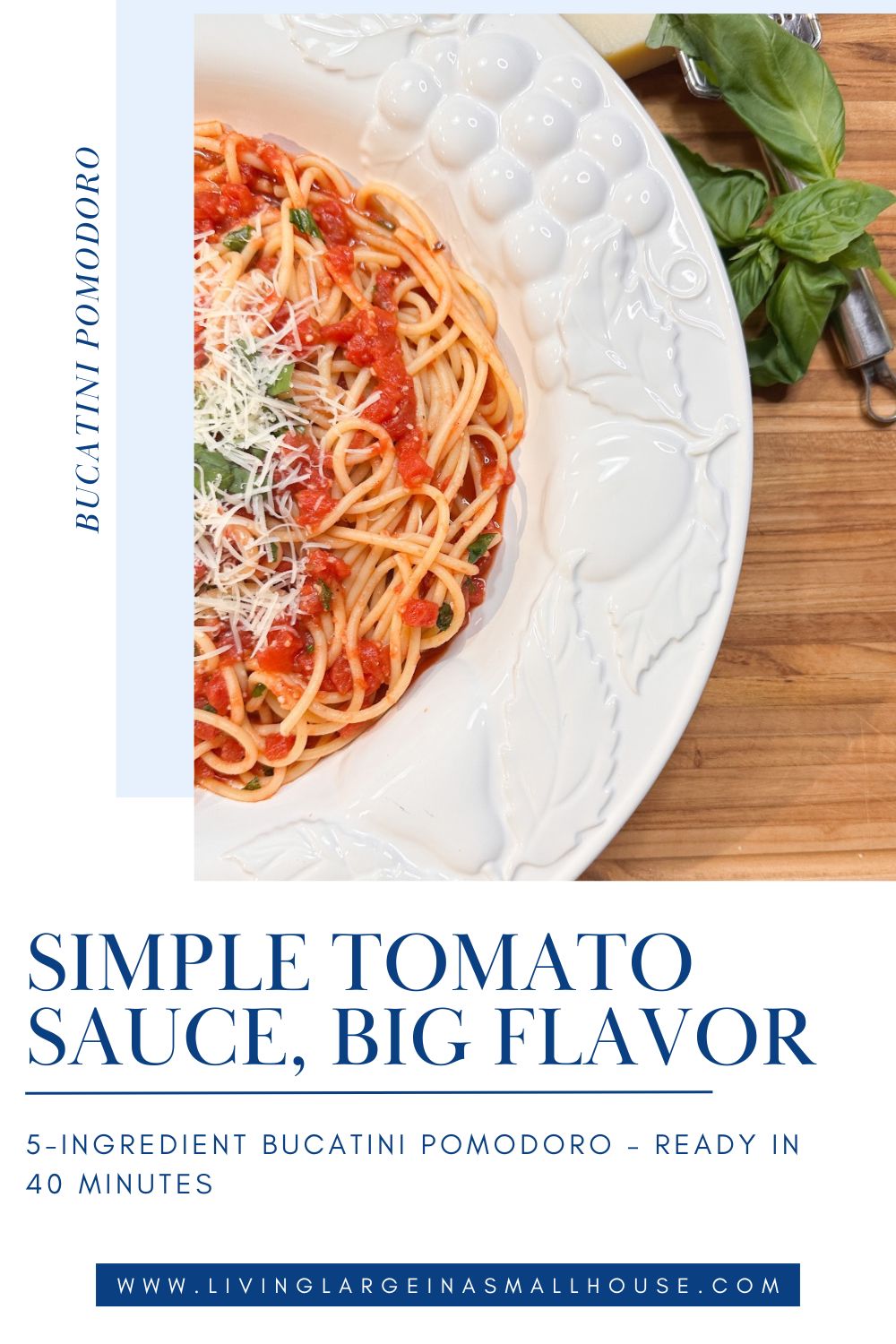
A great way to save this recipe is to add it to one of your Pinterest boards. You can find the pin button on the top left of the photo when you click on it. Also, don’t forget to follow me on Pinterest.


Meet Me
My name is Lynn. I live in the suburbs of Chicago in a 1,300 sq. ft. home with my Handy husband, Keith.
I’m an open book about my life on my blog. You can find out more about me by visiting my “About Me” page.













This sounds delicious, I cannot wait to try it.
It is really good and so easy to make.