
Vintage 1960s Home Decor & the Mid-Century Modern Comeback
This post originally started as part of a virtual book club, inspired by Kathryn Stockett’s book “The Help.” I found myself completely fascinated by the home decor of that era, the fashion, and the lives of the women living through it, and that became the spark for what I originally wrote.
That fascination never really faded. These days, mid-century modern design is having a serious resurgence, showing up on Pinterest boards, in furniture showrooms, and in homes far younger than the era itself. So here’s an updated look at vintage 1960s home decor and why so many of us are bringing pieces of it back into our homes today. My daughters are even adding touches of this trend to their homes.
On my blog Living Large in A Small House, I may sometimes use affiliate links, which means a small commission is earned if you purchase via the link. The price will be the same whether you use the affiliate link or go directly to the vendor’s website using a non-affiliate link. You can find my full Disclosure Policy HERE
Where Mid-Century Modern Actually Came From
“Mid-century modern” gets used pretty loosely these days, as a catchall for anything with skinny tapered legs. But it’s actually a specific design movement, generally dated from the mid-1940s through the late 1960s, and it didn’t come out of nowhere. It grew directly out of the upheaval of World War II and the massive economic and housing boom that followed. My father was a World War II veteran.
Its roots go back further than that, though, to the Bauhaus movement in Germany in the 1920s and early ’30s, which pushed designers toward function over ornament and toward furniture that could be mass-produced rather than handmade for the wealthy. When the war forced designers like Walter Gropius, Ludwig Mies van der Rohe, and Eliel Saarinen to emigrate to the United States, they brought that thinking with them, and it reshaped American design schools and, eventually, American living rooms.

Scandinavian designers pushed the look further still, softening the strict geometry of Bauhaus with more organic, sculptural forms. A 1954 exhibit called “Design in Scandinavia,” which toured American museums including the Brooklyn Museum, introduced many households to that softer Scandinavian sensibility, and it’s a big part of why so much mid-century furniture blends clean lines with curved, almost body-shaped forms.
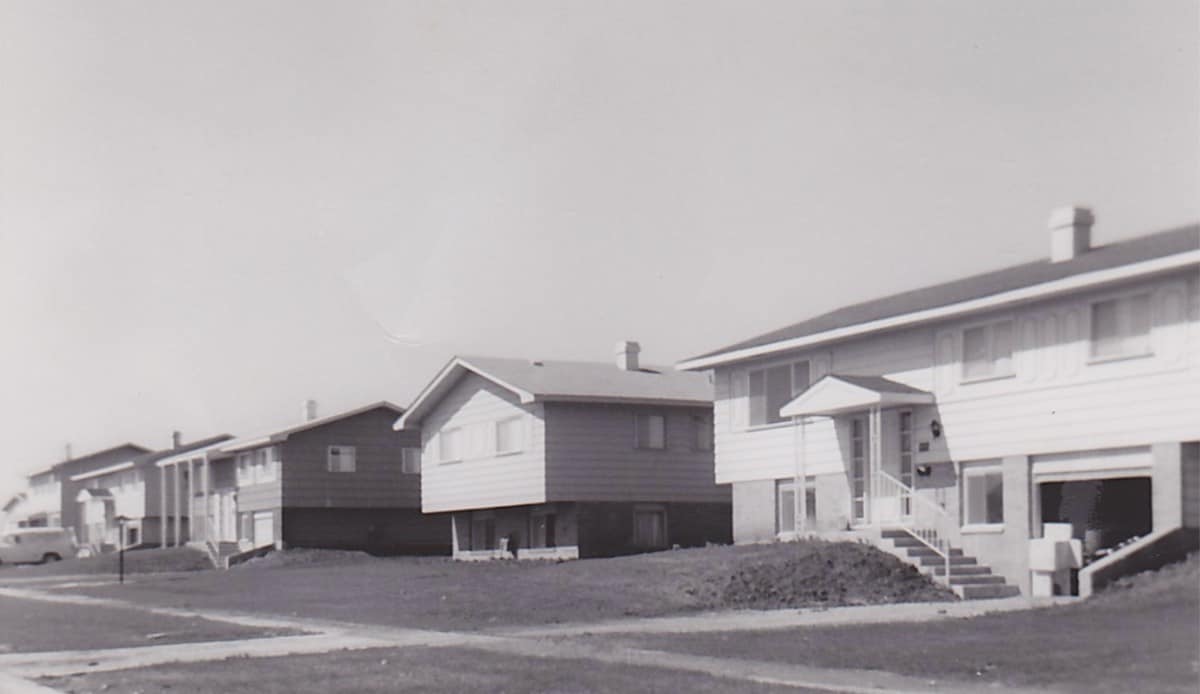
When my parents furnished their first home in Illinois in the early 60s, they embraced the Scandinavian mid-century look. Of course they didn’t call it mid-century modern. They just called it new! Their living room was filled with blond furniture made of ash, maple, or birch. The wood was left unpainted, so the grain showed. The same look continued into their matching bedroom suite of furniture. The wood furniture was paired with fabric in bold colors. I remember oranges, greens, and browns.
Here’s the funny part. The term “mid-century modern” didn’t even exist yet, not for another few decades. Design writer Cara Greenberg is generally credited with coining it in her 1984 book, Mid-Century Modern: Furniture of the 1950s, looking back at furniture that was, by then, twenty or thirty years old. My parents had no idea they were living inside a design movement that people would still be writing about seventy years later. To them, it was just the furniture you bought when you finally had a little money for a new home.
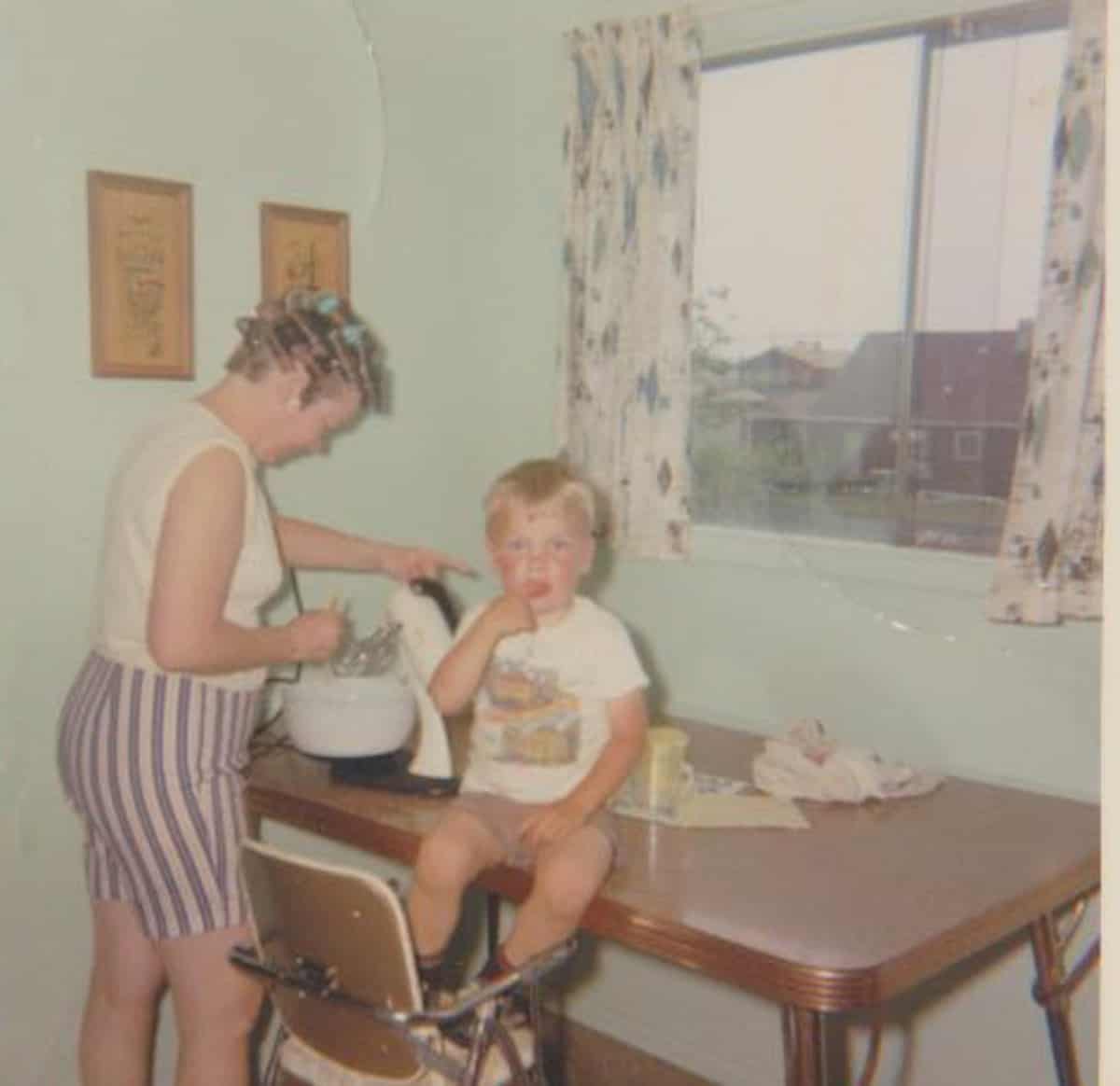
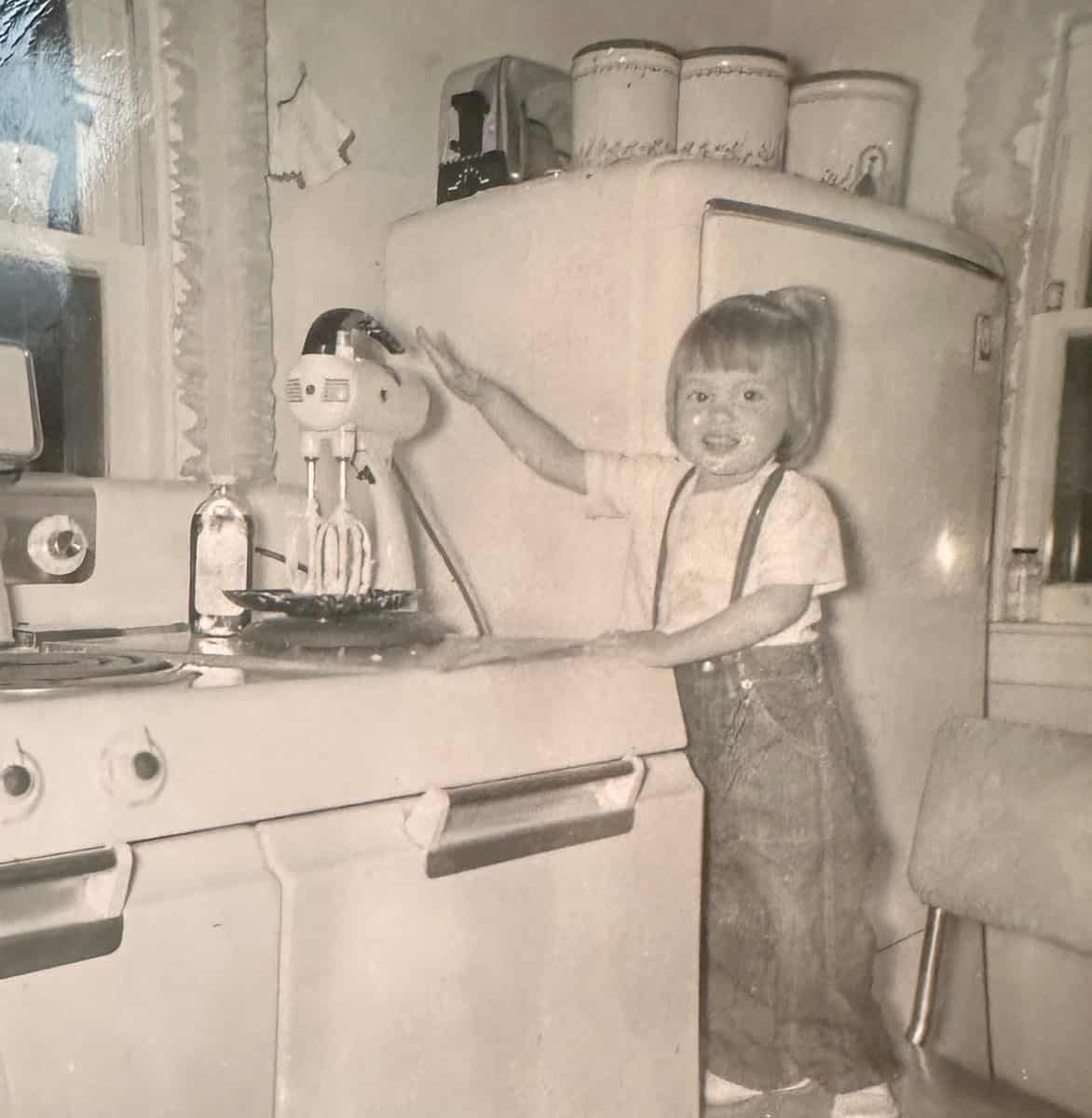
Our kitchen had a Formica-topped table with a metal frame and legs. The chairs were also metal with vinyl padded seats.
The Materials, Colors, and Shapes That Define the Look
Wartime had restricted many materials, but once the war ended, designers suddenly had access to things like molded plywood, fiberglass, aluminum, steel, foam, and plastic laminates. They went a little wild experimenting with them. The result was furniture that looked lighter and more sculptural than almost anything that came before it.
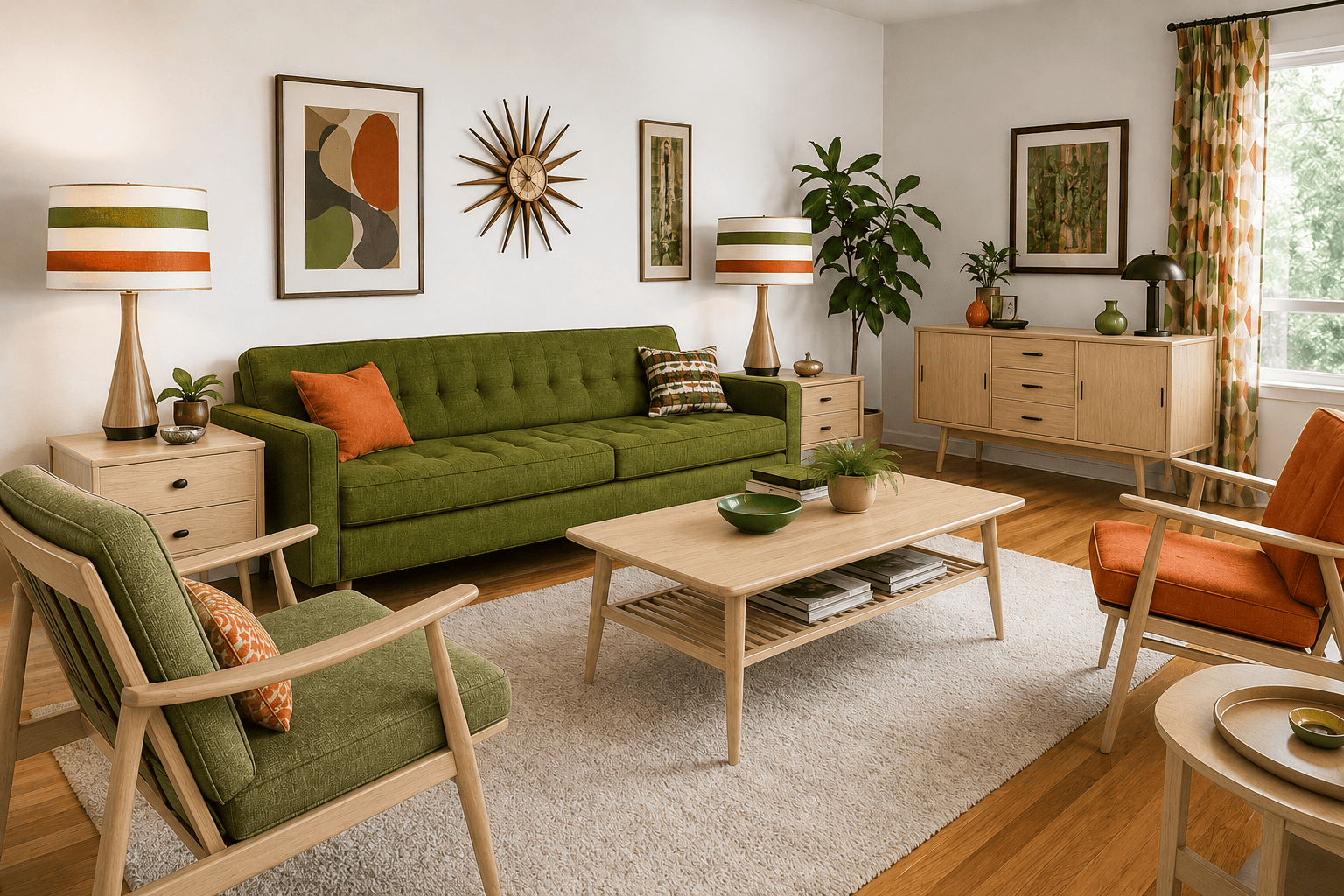
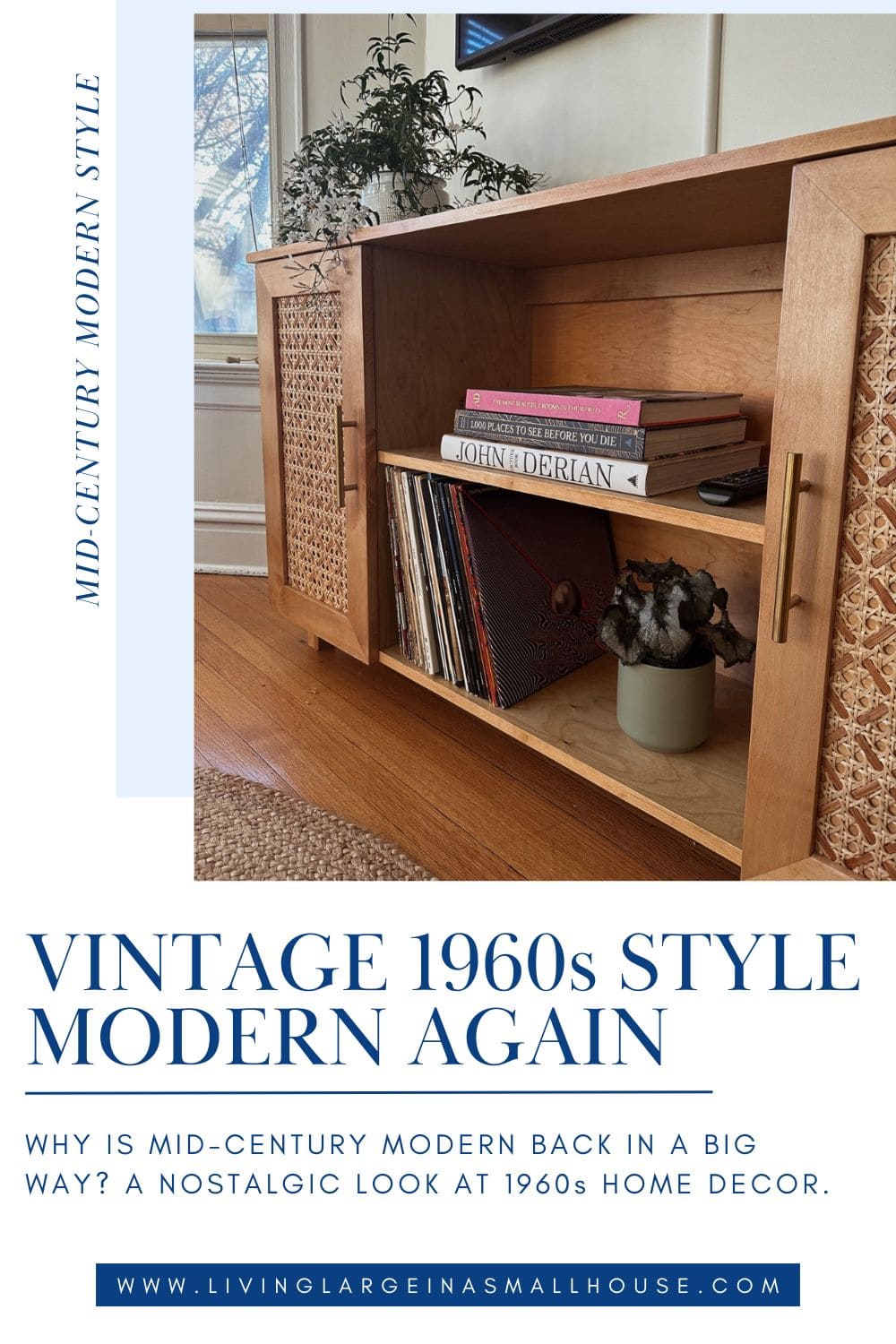
A few materials and details show up again and again and are still the fastest way to spot the style: light woods like ash, birch, maple, teak, and walnut, usually left with a natural or lightly stained finish so the grain stays visible. Tapered, often lightly splayed legs, sometimes called hairpin or dowel legs. And an overall low profile, with sofas, credenzas, and coffee tables all kept close to the ground so rooms felt more open.
The shapes lean into a mix of clean geometry and organic curves, boomerang forms, atomic starburst patterns, and egg- or shell-shaped chairs that all trace back to designers experimenting with what these new bendable, moldable materials could actually do. Ornamentation mostly disappeared. If a detail was there, it was frequently doing a job, not just decorating.
Color worked a little differently than you might expect. The furniture itself typically stayed neutral, all that pale, natural wood, and the color came in through fabric, art, and accessories instead: mustard yellow, avocado green, teal, burnt orange, and olive. Bold, saturated pops set deliberately against a calm, light background.
We had a record cabinet that was very popular in the 50s and 60s. Our family also had a TV. It was a monstrously big cabinet with a small black-and-white screen.

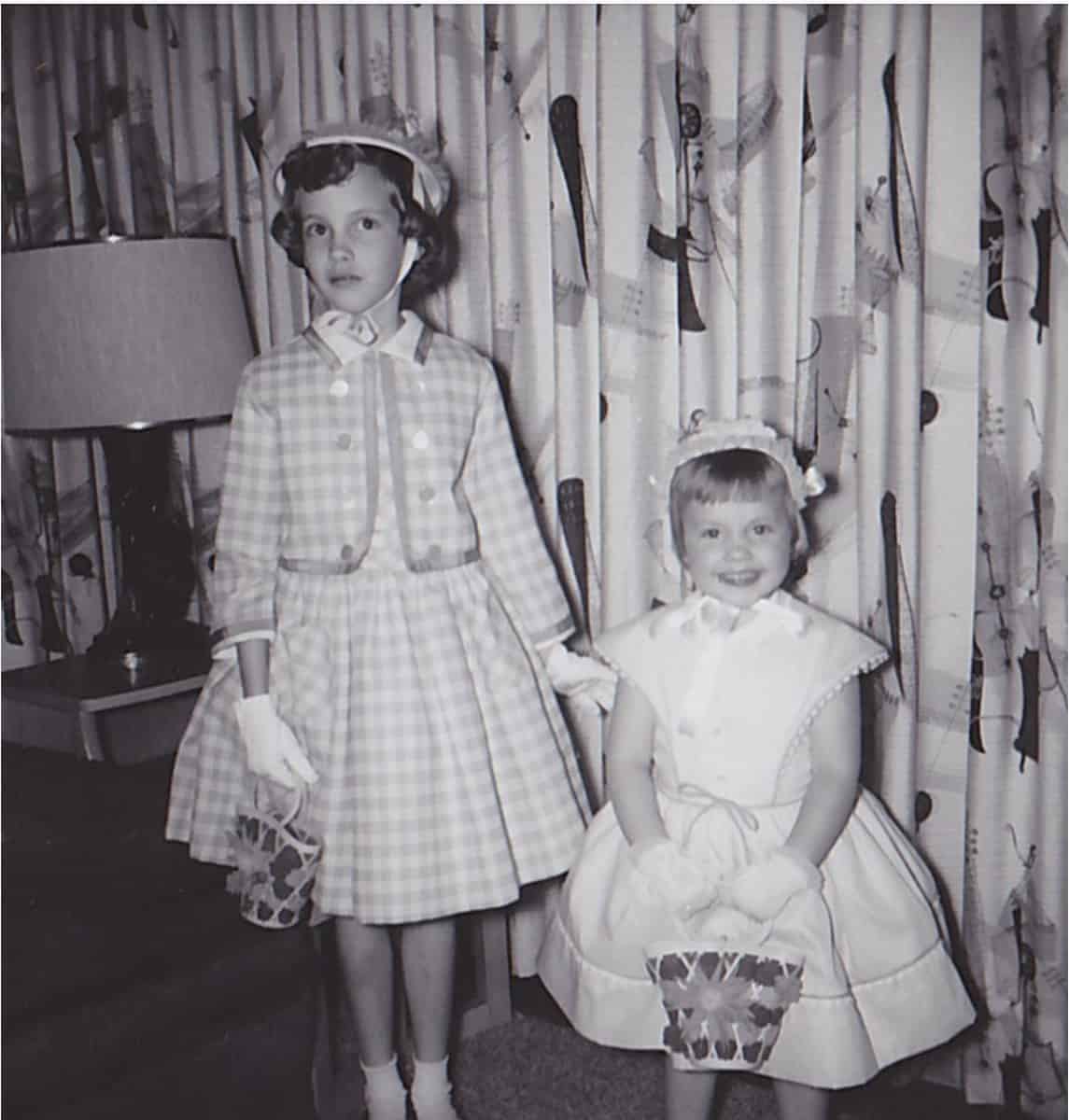
I recall a striped lamp we had in our living room. I think it was gold, orange, and white. What I remember most about it was that it was too big for the side tables that they sat on. As a kid I thought it was normal, but now with a design education, I see it was completely out of proportion, but I imagine it was pretty cool back then.
We also had a record cabinet, hugely popular at the time, and a TV cabinet that was huge compared to the tiny black-and-white TV screen that it housed. Another thing I clearly recall was a metal magazine rack that housed the latest issues of Better Homes & Gardens, Good Housekeeping, and Family Circle. Unlike most little girls, I loved thumbing through these magazines, looking at home decor.
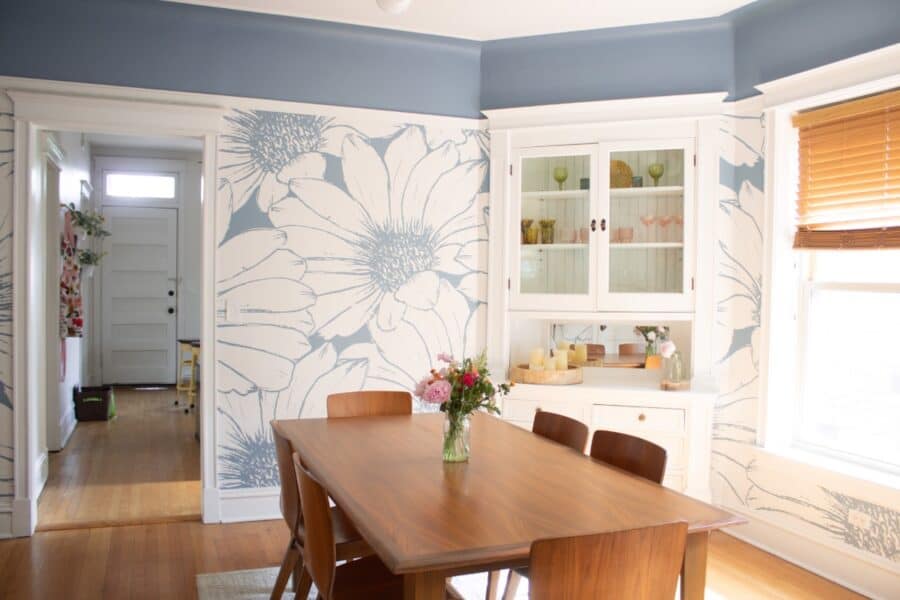
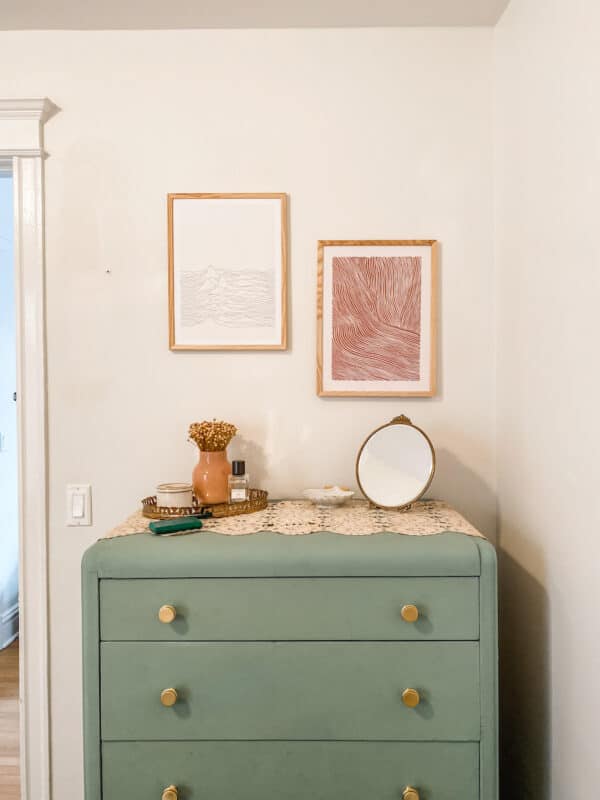

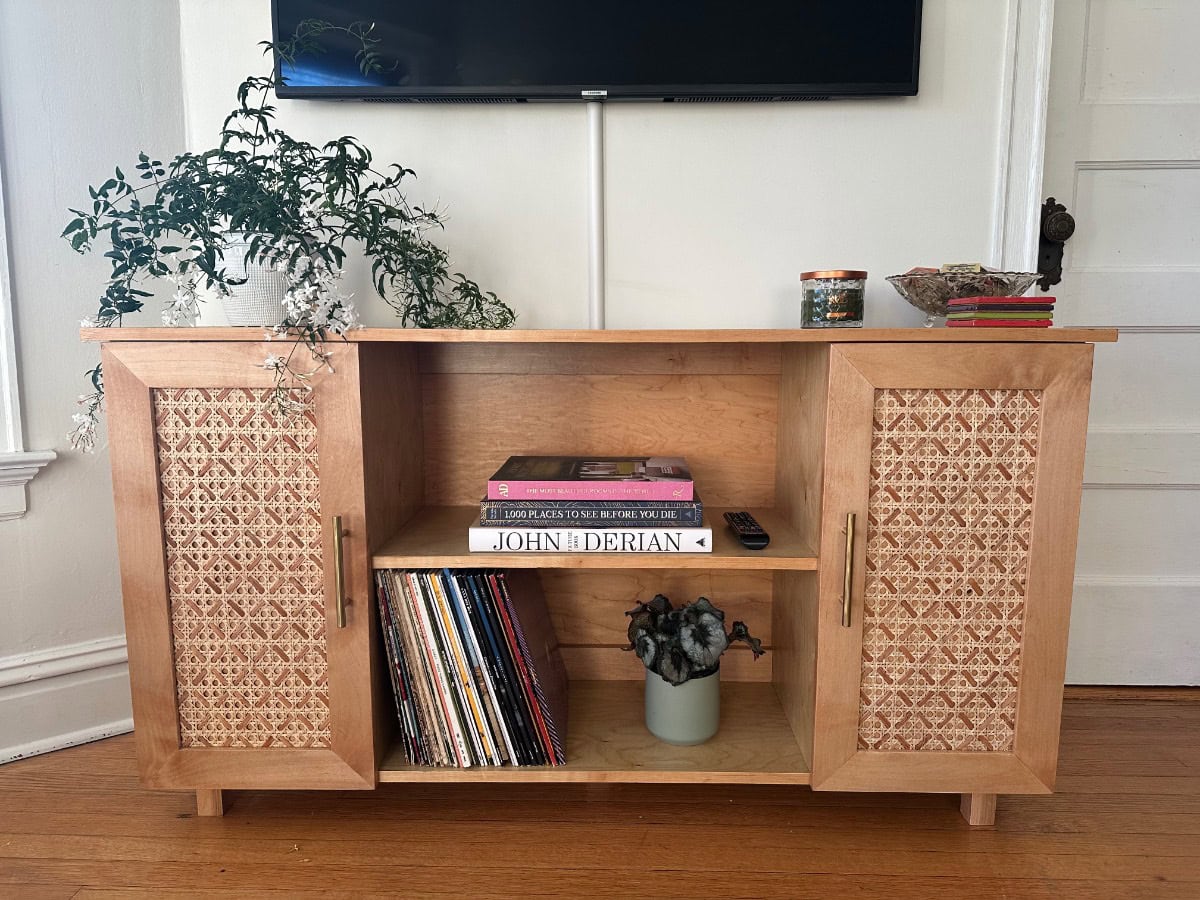
Our youngest daughter Emma’s apartment with an MCM/Boho vibe
Kitchens of the ’50s & ’60s
A modern kitchen in the ’50s and ’60s would have had cabinets made of wood or metal. Formica countertops and linoleum floors.
Kitchens ran the gamut from white cabinets to natural wood, pastel colors like soft pinks, and bold colors like candy apple red.
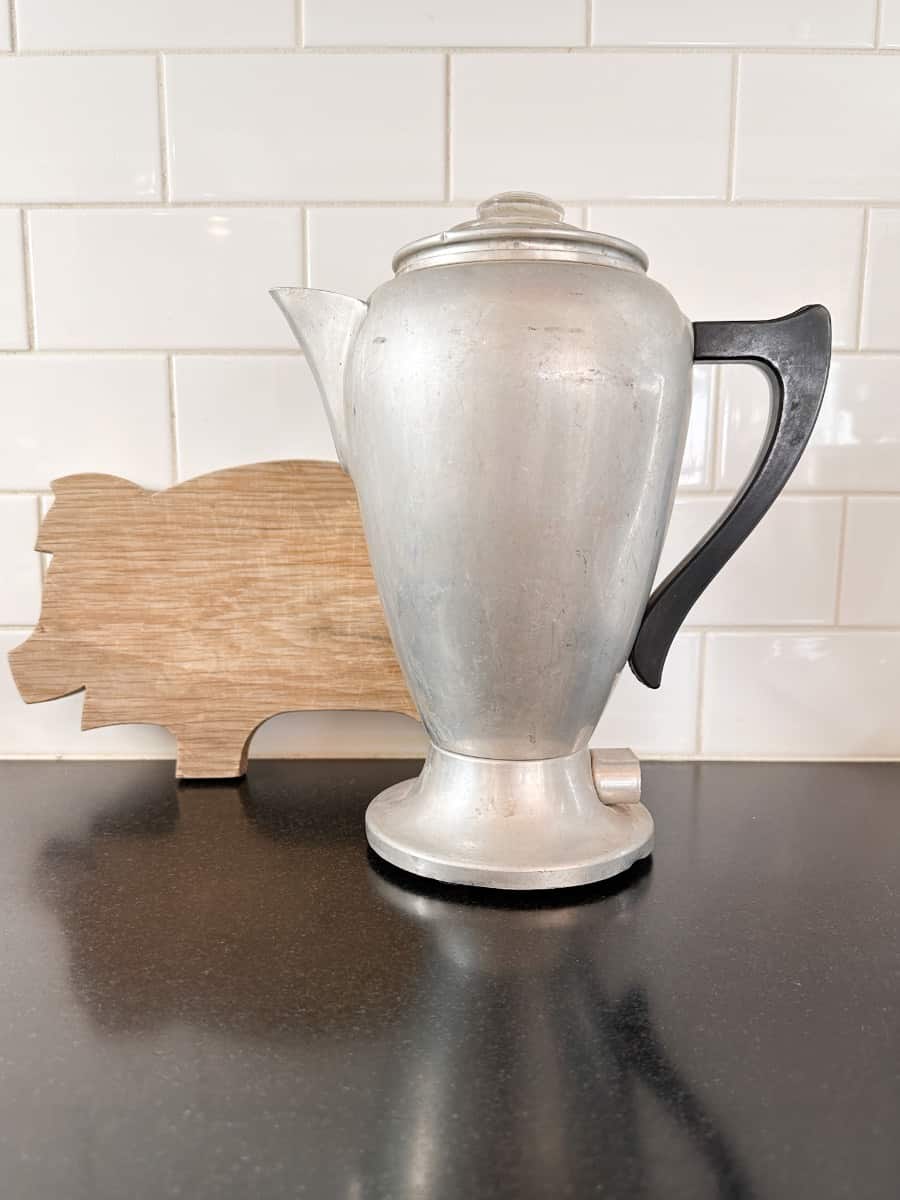
The kitchen decor featured the latest modern appliances of the day. Mixmasters, percolators, and toasters.
Mid-Century Modern Is Having a Moment Again
It’s a vintage style that’s back and more popular than ever, often now paired with a lightly more minimalist, Scandinavian-leaning twist that makes it feel sleeker than the original. Our youngest daughter Emma has that vibe, with a little boho mixed in, in her city apartment. She, of course, wasn’t even alive for the era that she’s decorating in. Annie is even leaning into this trend in her new loft apartment. That era of decor works well with her building’s architecture.
A few reasons keep coming up whenever I talk design with readers and friends: the clean lines and natural materials feel calming against a lot of today’s busier, more maximalist trends. I think even my cozy cottagecore style could handle a piece or two of MCM elements.
Vintage and vintage-inspired pieces tend to be better built than a lot of what’s sold new right now. The real wood and real joinery were made to last decades rather than a few years. Mixing eras feels more personal and less showroom than matching everything to one style. And there’s a straightforward nostalgia factor too. A lot of us grew up around these pieces or grew up around parents and grandparents who did.
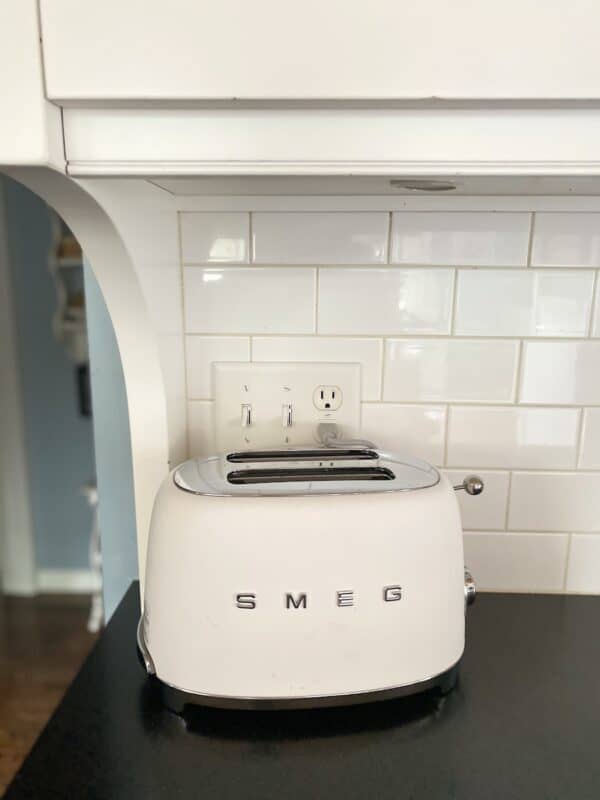
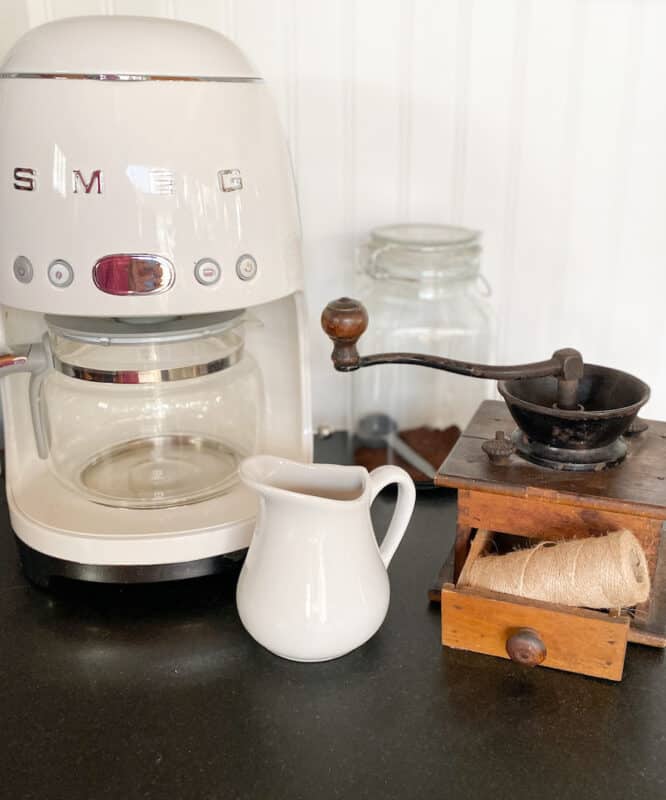
Kitchen and furniture manufacturers have noticed. SMED is one of my favorite examples of a brand leaning hard into retro design while keeping modern function. Other companies are jumping on the bandwagon.
How to Bring Mid-Century Modern Into Your Home Today
If you love this look but don’t want your whole house to feel like a time capsule, here’s how I’d approach it:
- Start with one statement piece. A credenza, a sculptural chair, or a starburst mirror can anchor a whole room without you committing to a full redesign.
- Mix vintage finds with new pieces. Thrift stores, estate sales, and Etsy shops are great for authentic vintage, while modern retailers make it easy to fill in the gaps with reproductions.
- Watch your scale. That oversized lamp from my childhood left me with design trauma. Mid-century pieces often have a small visual footprint, so oversized accessories can throw a room off balance.
- Let the wood tones breathe. Light woods like ash, maple, and birch are the backbone of the look. Keep walls and larger surfaces simple so the furniture can do the talking.
- Add color through textiles. Bold, warm colors in pillows, art, or a single upholstered piece will do more for the look than repainting every wall.
When I was younger and went to flea markets, it was 1800s furniture. Now I go, and it’s mid-century modern. It makes me feel old but mostly nostalgic.
Peace and Love,


This post was originally a part of a virtual book club. The monthly book for this post was “The Help” by Kathryn Stockett, a story set in Jackson, Mississippi, during this same era. If you’re curious what my book club friends wrote alongside this post, you’ll find the links below.
Cindy
Reinvented Delaware
Crystal
Sweet Valley Acres
Erin
Erin Evolving
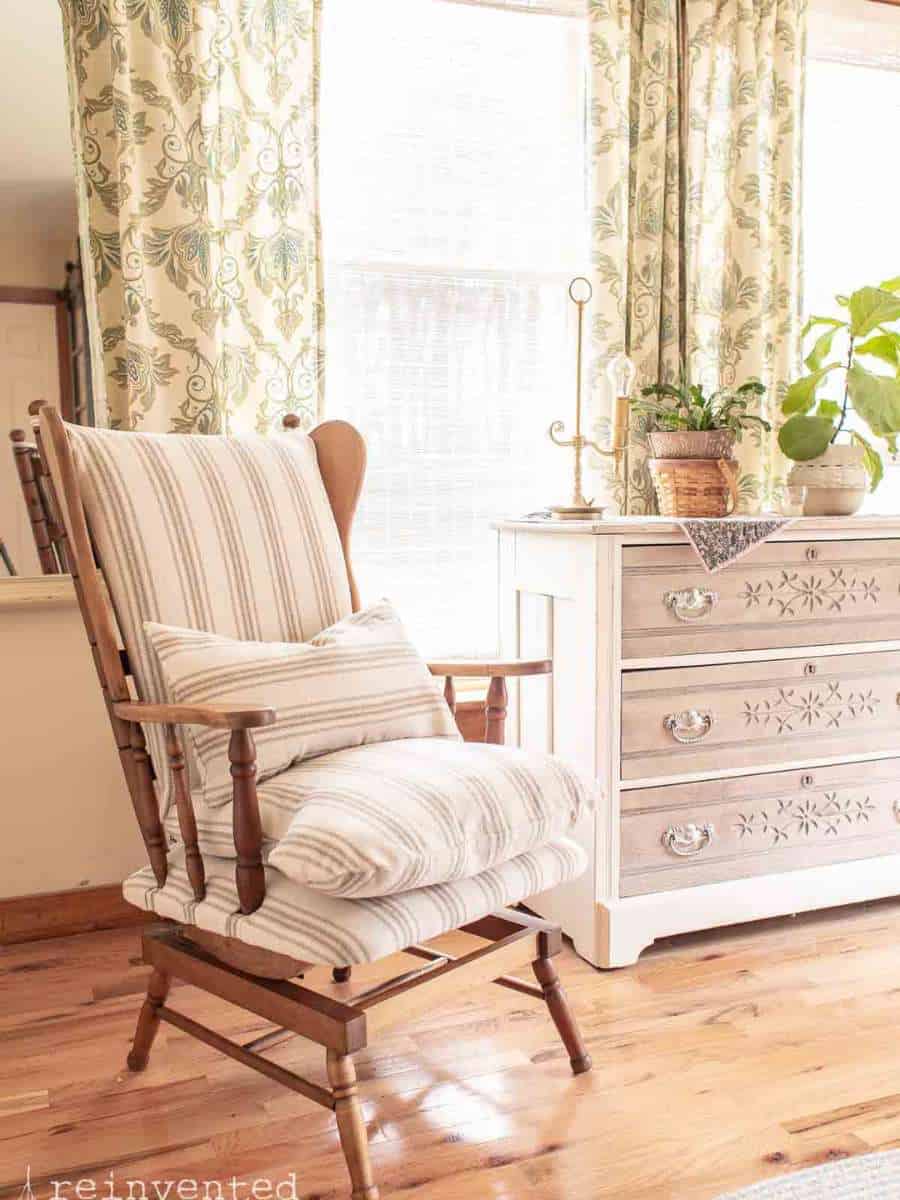



A great way to save this idea is to add it to one of your Pinterest boards. You can find the pin button on the top left of the photo when you click on it. Also, don’t forget to follow me on Pinterest

living large podcast
Living Large is on a break. However, I want to share with you an older episode with Amy from @thevintagebreadbox on IG. She’s my go-to expert on all things vintage.


Meet Me
My name is Lynn. I live in the suburbs of Chicago in a 1,300 sq. ft. home with my Handy husband, Keith.
I’m an open book about my life on my blog. You can find out more about me by visiting my “About Me” page.













Such a fabulous post Lynn! I loved reading and seeing what your home was like! What an adorable little girl you were. I am fascinated that your family was so hip and with it. We had the overly big lamps but we didn’t have the cool furniture. I think my parents didn’t have a lot of money at that time so maybe that is why. Then again, my mom has never really liked following any trends and she thinks I am nuts that I do!!! Hahaha!!!
My mom grew up on a farm and I think moving to the suburbs in a different state was a big deal for her so my Dad let her get whatever she wanted. 🙂
I like your Dad!!!
Lynn- Oh my gosh! This is a fabulous post. I love the photos you shared. They are so cute. Your descriptions of the decor are spot on. How about that pink ash tray??? Ha!
When I saw that pink ashtray – I didn’t even look at the price tag. In the movie “The Help” they all smoked.
I love everything about this! I bet this was so much fun to put together!
It was fun but a stretch for photographs. I had to dig deep into the archives!
What a fun post! I was born in 1959 and I enjoyed the trip down memory lane. We had some very cool “modern” furniture that I wish I had today!
I wish we had kept some of my parent’s furniture too! Same with my grandparent’s furniture.
What a fun and education post-Lynn. Loved reading all about the decor of this era. I too, can remember some of those very large over sized lamps. I really enjoyed your family photos, so cute.
Our book club posts are always fun. It’s stretching our creative muscles. We aren’t sure if we have it all figured out but we ae getting there.
Such a fun post, Lynn. I sure miss you. Hugs to you, my friend.
Hi Renae –
It was such an interesting book to draw inspiration from. While the subject matter of the book is heavy, the retrospect of the era and what we could take from it design wise and food wise was vast.
Hey Lynn, This is such an interesting post! Loved seeing your family pics! I saw the movie and loved it, but I bet the book was even better! I’m enjoying your book club posts!
It’s one of my favorite movies. I was having a hard time with original photography with that style so I decided to show my original vintage family!!!
Loved your post Lynn! Those silver forks are gorgeous! I have hopes of replacing my stainless everyday silverware with pieces like those!
I got that silver for $35 at a vintage market in Michigan. I use it all the time now and I don’t typically even polish it. I actually love the look of it tarnished. 🙂