
Tulips, Transferware & Teapots: A Vintage Easter Table
Before you spend a single dollar on vintage Easter decorating this year, take a slow walk around your house. Open the cabinets where your transferware is stacked. Do you have a tarnished silver champagne bucket sitting on a shelf? Is there a wooden toolbox or vintage teapots waiting to be used?
Chances are, everything you need for the most charming Easter table you’ve ever set is already waiting for you—it just needs tulips.
On my blog Living Large in A Small House, I may sometimes use affiliate links, which means a small commission is earned if you purchase via the link. The price will be the same whether you use the affiliate link or go directly to the vendor’s website using a non-affiliate link. You can find my full Disclosure Policy HERE
Why Vintage and Easter Were Made For Each Other
There’s something quietly satisfying about decorating for a holiday without a single trip to a store. No grabbing a cart at a home decor store, no scrolling through online stores, and no impulse purchases of things that feel dated by next Easter. Just a house full of pieces you’ve loved and collected over time, finally getting their moment to shine together.
That’s precisely the spirit behind the Easter tablescape and spring vignettes that I’ve created around our cozy home this year. Everything you’ll see came from my own shelves, cabinets, and corners—vintage pieces that I’ve gathered slowly over the years. All the flea market wandering, estate sale mornings, and the occasional lucky thrift store find have come together this spring.
I used a wooden toolbox worn smooth with age. A silver champagne bucket that had lost its shine. Teapots that have never once had tea in them but have held countless numbers of flower stems. Transferware in soft blues and whites that looks like it was made to sit beside a handful of spring tulips.
The only thing that I bought was the tulips! And even those came from Trader Joe’s for less than ten dollars.
If you’re someone who collects vintage, or even just someone who has a few older, interesting pieces around the house and has never quite known what to do with them, Easter is your season. The soft colors, natural textures, and mix of humble and elegant that the holiday calls for are all around you. Vintage Easter decor was made for this. Pull out the old china. Let’s style it together.
The Easter Table Centerpiece
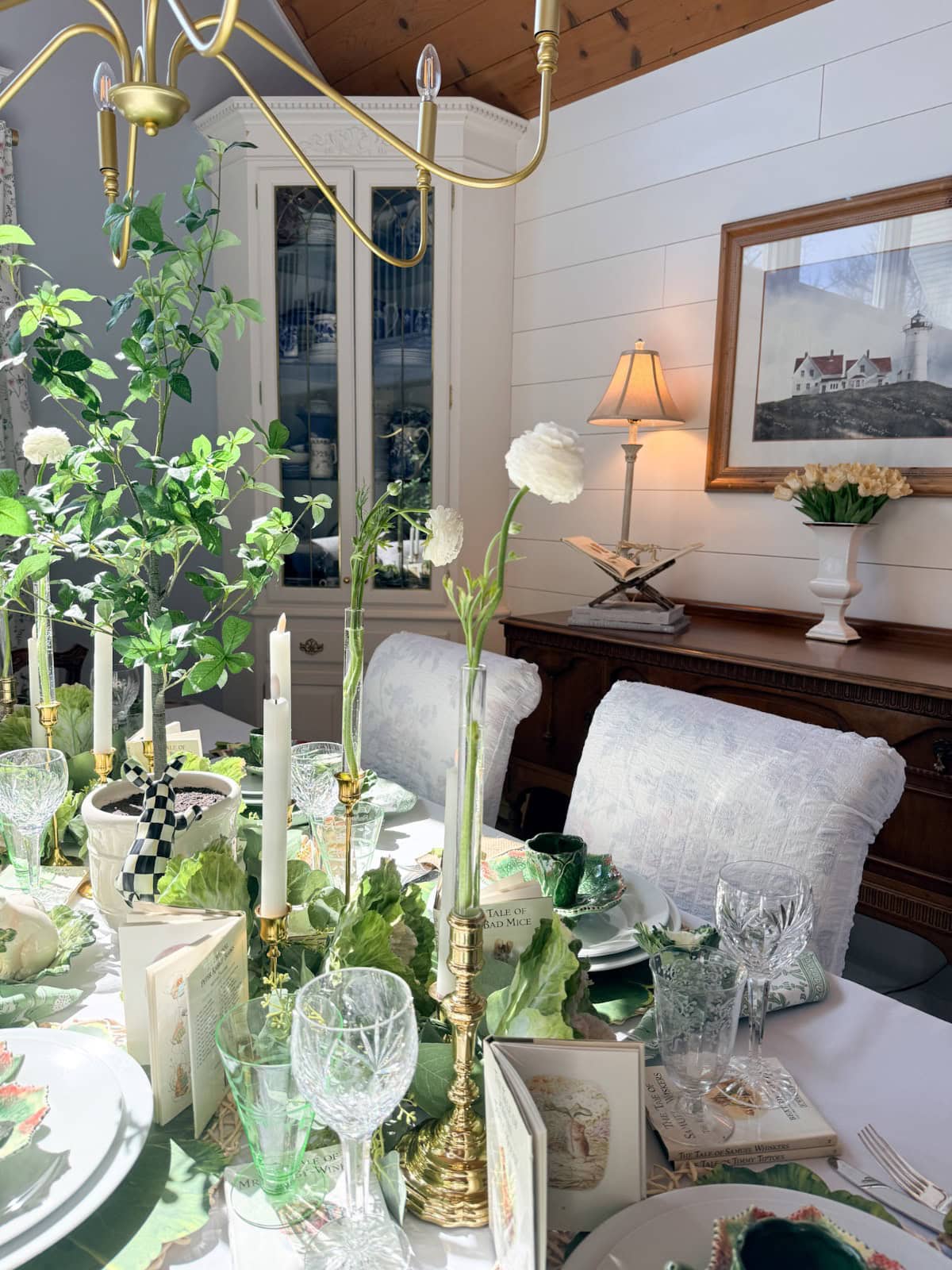
The table is where it all begins, and the secret to making a vintage centerpiece feel intentional rather than cluttered is to think in terms of vessels first, flowers second. When you’re working with pieces that each have their own history and personality, the arrangement styles itself. You just need to give each piece room to be seen.
The Wooden Toolbox
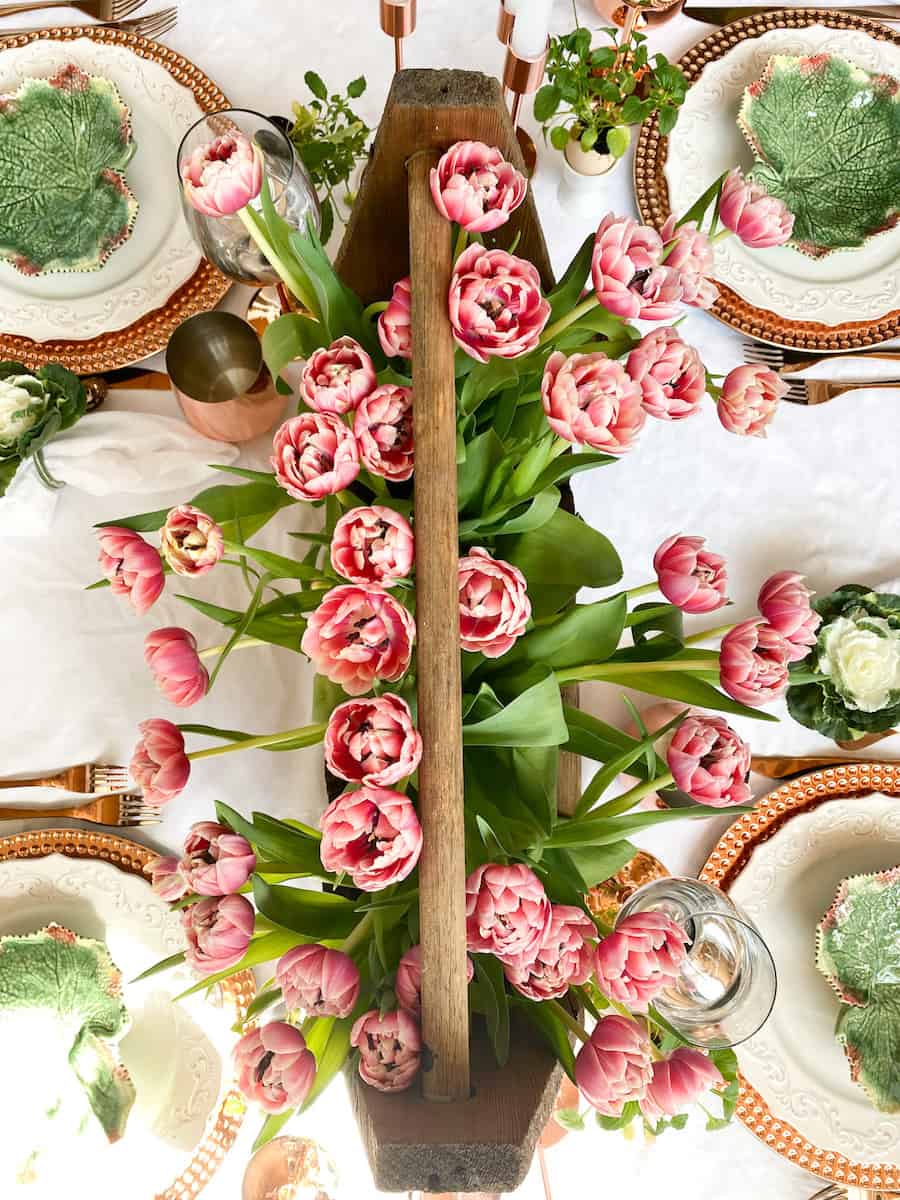
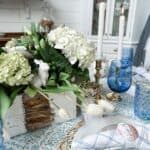
There is something so unexpectedly perfect about an old wooden toolbox at the center of an Easter table. Where it once held nails and screws and the worn tools of someone’s daily work, it now holds tulips. The age of it, along with the dings and wood that has gone soft with time—it’s exactly what makes it work. It grounds the whole arrangement and keeps it from feeling too precious.
Line the inside with a piece of plastic or some Ball jars filled with water to protect the wood, then fill it loosely with tulips. Don’t overthink it. The toolbox does the heavy lifting just by being itself.
The Silver Champagne Bucket
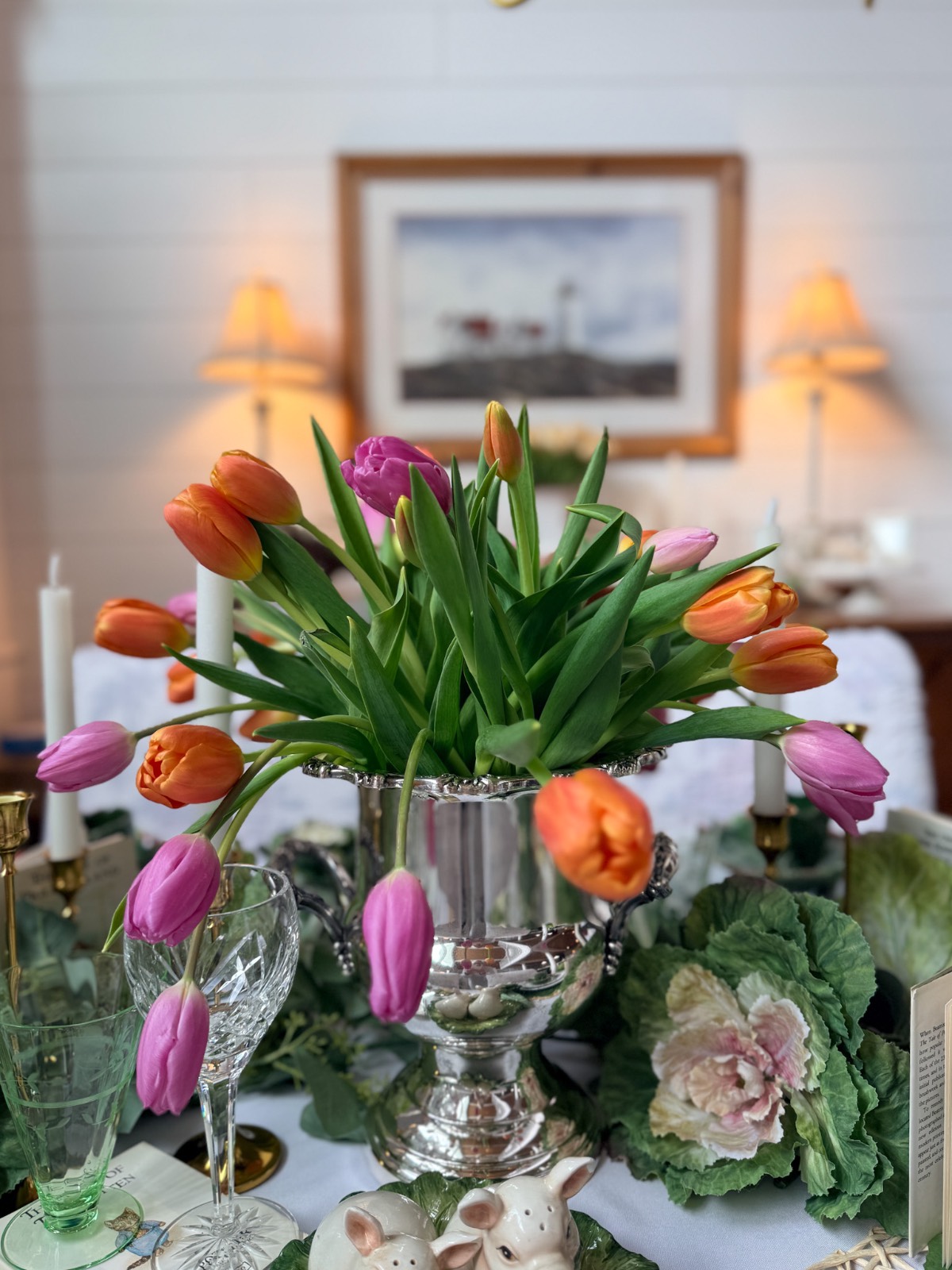
If the toolbox is the humble heart of the centerpieces, the silver champagne bucket is its elegant counterpart. Tarnished silver is having a well-deserved moment in the decorating world, and rightly so, but, I chose to polish my piece and let it really shine on my vintage Easter table. Soft tulips and vintage china feel exactly right together.
Another option for this taller focal point is to gather flowering branches from outside for a really natural look.

The Vintage Teapots
This is where the table starts to feel truly gathered and personal. A collection of vintage teapots that are mismatched in pattern and size, unified by age and charm, brings a very collected look to the table.
Using each teapot as a vase with some tulip stems tucked into them is all it takes. Vary the heights by propping some on a small stack of vintage books. Let them feel casually placed rather than rigidly arranged—as if they wandered there on their own.

The Transferware
I love transferware, and it has a way of making any table feel like it has a history. It’s like generations of Easter dinners have been served on these very pieces. The pastoral scenes, the soft blue and white, or muted green patterns, along with the slightly imperfect printing and patina, remind you each piece is old and has a story.
I incorporate my transferware pieces into my home decor and my centerpieces rather than reserve them just for place settings. A transferware bowl filled with speckled eggs and moss and then tucked into the tablescape adds depth and playfulness to the table.
Spring Vignettes Around the Home
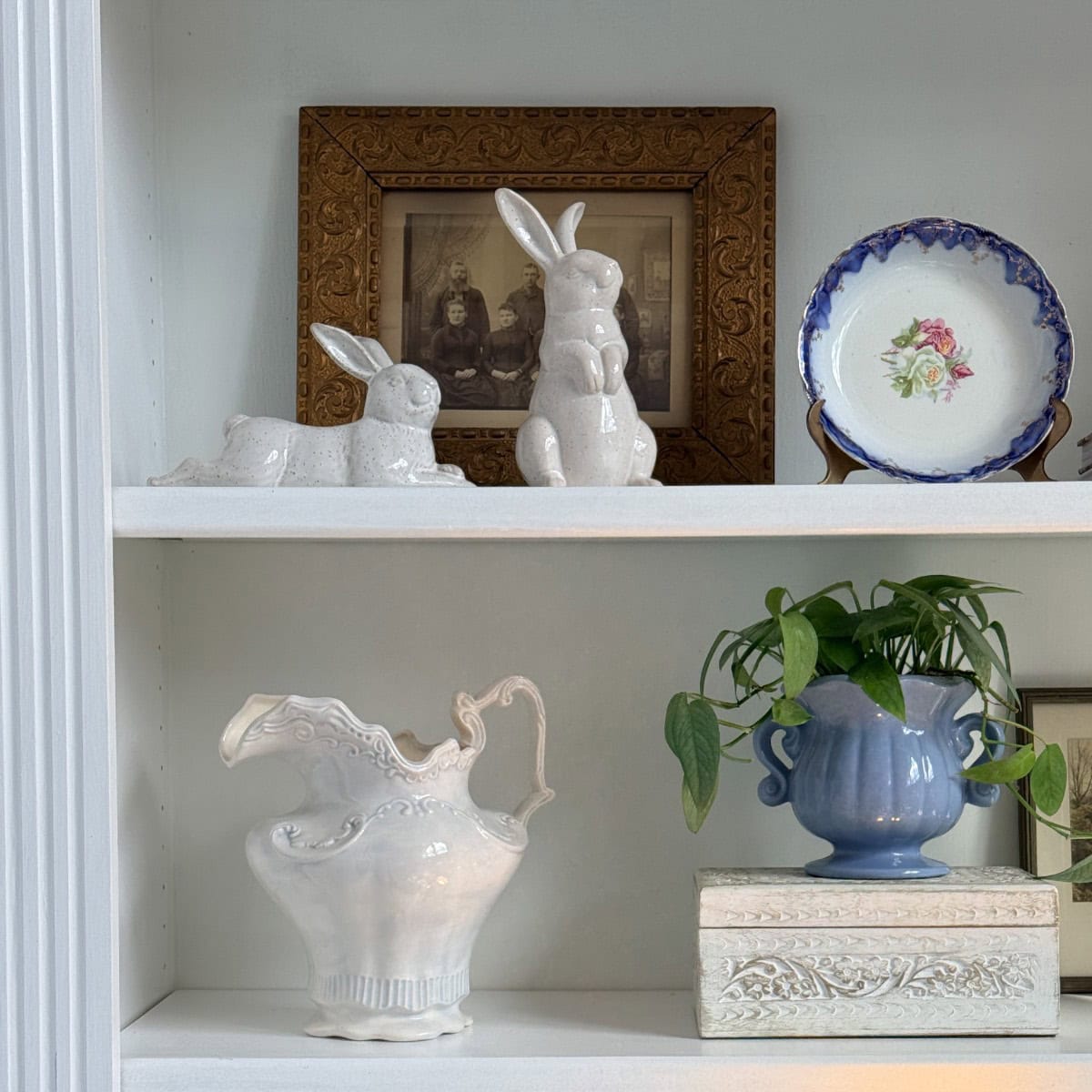
The Easter table gets all the attention, but some of the most charming vintage Easter decorating happens in the quieter corners of the house—on the bookshelves, along a mantel, tucked onto a kitchen hutch or a windowsill. This is where your vintage pieces can really roam free, styled into small vignettes that make the whole house feel like spring has settled in for a visit.

Cabbageware and Old Plates
If you have cabbageware, Easter and spring are its seasons. The sculptured green leaves make each piece look like it was pulled straight from a kitchen garden. There is nothing that says spring quite like a stack of cabbageware plates or a big cabbageware bowl sitting out where everyone can see it.
Now is the time to pull these precious pieces out of the cabinet. Give them a moment on the table or hutch. Let the green do its work all by itself.
One of my favorite collections is Flow Blue. I use these dishes for decor most of the year, but the beautiful blue and white really shines in the spring. I mix the Flow Blue with white ironstone and antique bottles. The common thread of age and wear is what visually holds them together.

Vintage Books with Light-Colored Spines
There is a reason that vintage books appear in nearly every beautiful shelf styling you’ve ever admired. They are one of the most versatile and quietly lovely decorating tools that I know of. They can cost next to nothing if you know where to look.
For spring and Easter, the ones you want are those with light, muted, faded spines. Creams and ivories, dusty pale blues and sage greens, soft blush pinks, and worn yellows are the colors that I look for. The colors of old cloth bindings have a gentle, sun-faded quality that feels inherently seasonal.
I display books in small clusters around my home. Stand some upright, stack two or three horizontally, and use the stacked ones as a little platform for a small object on top. Think of a tiny ceramic bird or a miniature vase with one tulip finding a home on top of those books.
They aren’t just on my bookshelves either. I put books on tables, mixed into a tray vignette, or tucked into my tablescape. The ways you can display them are endless.


Antique Baskets for Easter Eggs
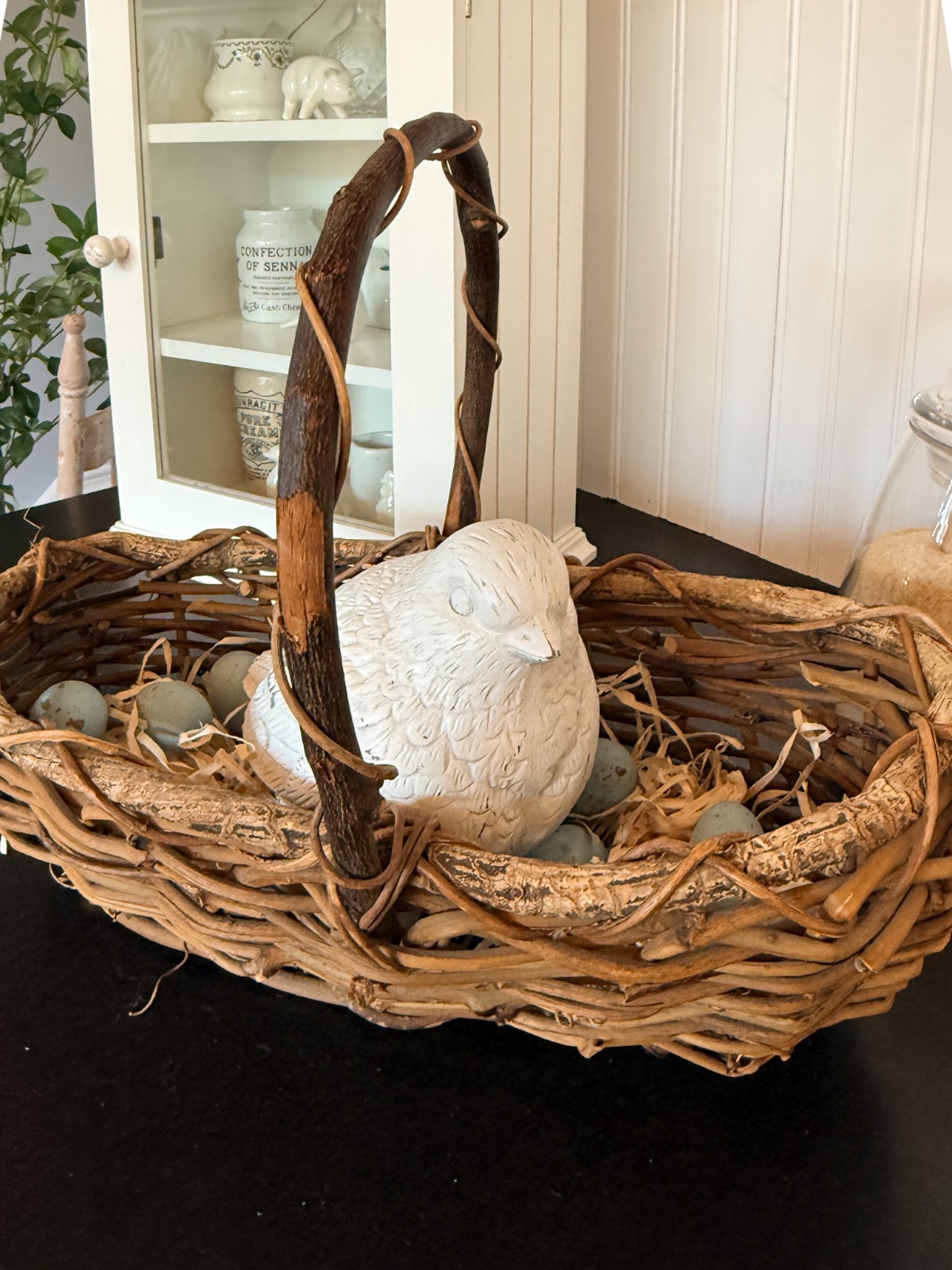
If there is one vintage item that was practically invented for Easter, it is an old basket. Not the bright, stiff, cellophane-stuffed baskets from the drugstore display, but the real ones. The ones with handles worn smooth from years of use, the ones with a little sag in the weave, and the ones that smell faintly of attic and history when you first bring them home.
There is a warmth and authenticity to an antique basket that no new version can replicate, and at Easter they come into their own completely.


Become a Friend of Living Large
Be the first to see affordable decorating ideas, gardening tips and tricks, along with great organizing, entertaining ideas and easy recipes
Where to Find Vintage Easter Pieces
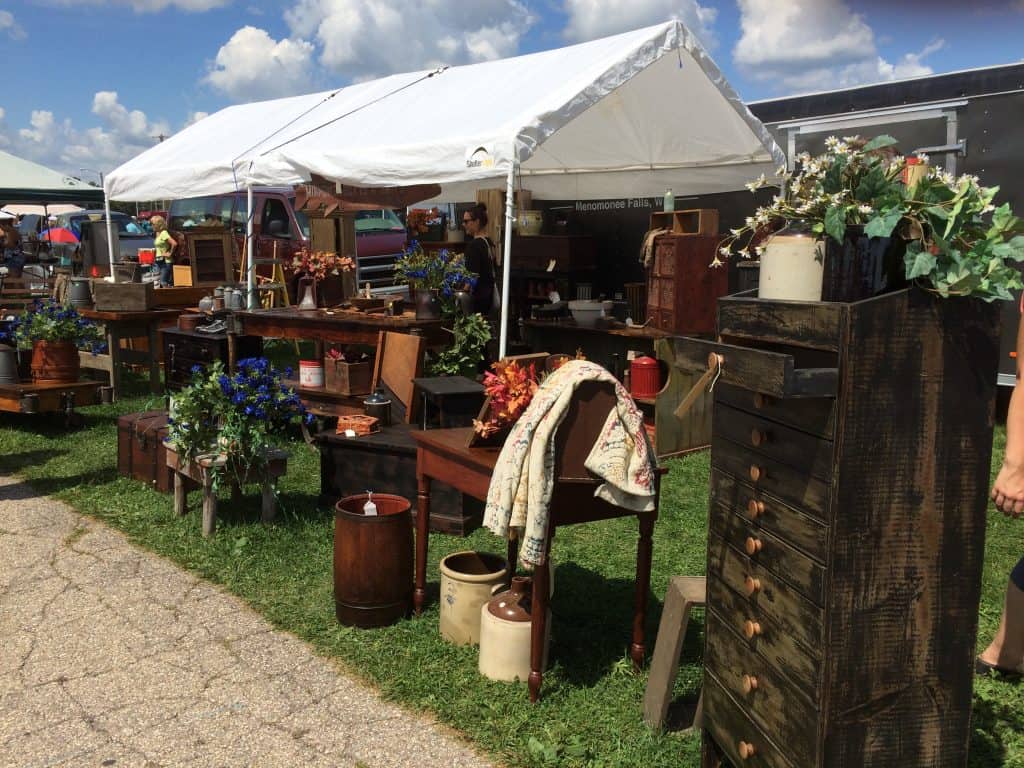
Every vintage piece in my home is from years of slow, happy collecting from flea markets, estate sales, thrift stores, antique shops, and occasionally a great find on Facebook Marketplace or eBay.
Estate sales are a great source for quality vintage at honest prices. The key is to get there early on the first day. I use an app called EstateSales.net.
Flea markets and antique malls are ideal for browsing without a specific item in mind.
Thrift stores reward consistency. The inventory changes constantly, and the people who find the best pieces are the ones who check in regularly.
Online sources like Etsy, eBay, and local Facebook Marketplace are excellent sources, particularly for specific items you are intentionally searching for.
My number one rule is to only purchase things I love and can’t live without. However, before you go out shopping, shop your home first.

Final Thoughts about Vintage Easter Decor
With a handful of tulips I picked up from the grocery store, I walked around the house and gathered some of my favorite pieces and went to work creating a cozy spring and vintage Easter home.
I don’t understand why, but every spring it becomes my favorite, and I fall in love with my home all over again.
Peace, love, and happy styling,


FAQ’s
What is transferware, and how do I use it for Easter decorating?
Transferware is a style of pottery decorated by transferring a printed design onto the ceramic surface, commonly in blue and white, soft greens, pinks, and browns. It originated in England in the 18th century and typically features pastoral scenes, florals, and botanical motifs. For Easter and spring decorating, it is ideal. You can use a large platter as a base for your centerpiece, stacks of plates on a hutch or leaning against a wall on a shelf for an easy spring vignette.
What kind of tulips work best for a vintage Easter table?
Soft, muted varieties work best alongside vintage pieces. Look for creamy whites, blush pinks, pale lavenders, and soft yellows rather than bold or bright colors. Single-bloom tulips have a classic, unfussy quality that pairs beautifully with old silver and aged wood. Peony tulips with their dense, layered petals add a romantic touch if you want a little more drama. All of them are widely available at grocery stores and farmers markets in early spring for very little money.
Can I mix different vintage styles and patterns together?
Absolutely, and in fact you should. The most interesting vintage tablescapes and vignettes come from mixing different patterns of transferware, teapots from different eras, and baskets of different weaves and shapes. The common thread of age and patina is enough to hold everything together visually. What looks mismatched at first glance reads as beautifully collected once it is all arranged together. Trust the pieces and give them room to coexist.


A great way to save this idea is to add it to one of your Pinterest boards. You can find the pin button on the top left of the photo when you click on it. Also, don’t forget to follow me on Pinterest


Meet Me
My name is Lynn. I live in the suburbs of Chicago in a 1,300 sq. ft. home with my Handy husband, Keith.
I’m an open book about my life on my blog. You can find out more about me by visiting my “About Me” page.