
23 Simple Spring Garden Cleanup Tips (+ Free Checklist)
Spring is finally here, and if you’re anything like me, you’ve been staring out the window waiting for the moment you can get your hands back in the soil.
But before you rush outside with your rake, there are a few things every gardener needs to know. Clean up too early, and you could harm the very beneficial insects that make your garden thrive. Clean up in the right order, and you’ll set yourself up for the best growing season yet.
This post walks you through 23 practical spring garden cleanup tips I actually use in my Zone 5b garden, plus a free printable checklist so you don’t miss a thing.

Disclosure: This post may contain affiliate links, which means I earn a small commission if you make a purchase, at no extra cost to you. I only recommend products I, personally, use and love. Thank you for supporting Living Large in A Small House!
Quick Answer: When Should You Start Spring Garden Cleanup?
Wait until daytime temperatures are consistently above 50°F for at least 7 consecutive days. This allows beneficial insects, including native bees that overwinter in hollow stems and leaf litter, to safely emerge before you disturb their habitat.
In Zone 5b (like northern Illinois), that typically means early to mid-April, not the first warm day in March.
Why You Shouldn’t Start Too Early
It’s tempting to get out there on the first 60-degree day in March. I get it, but here’s why you should resist the urge:
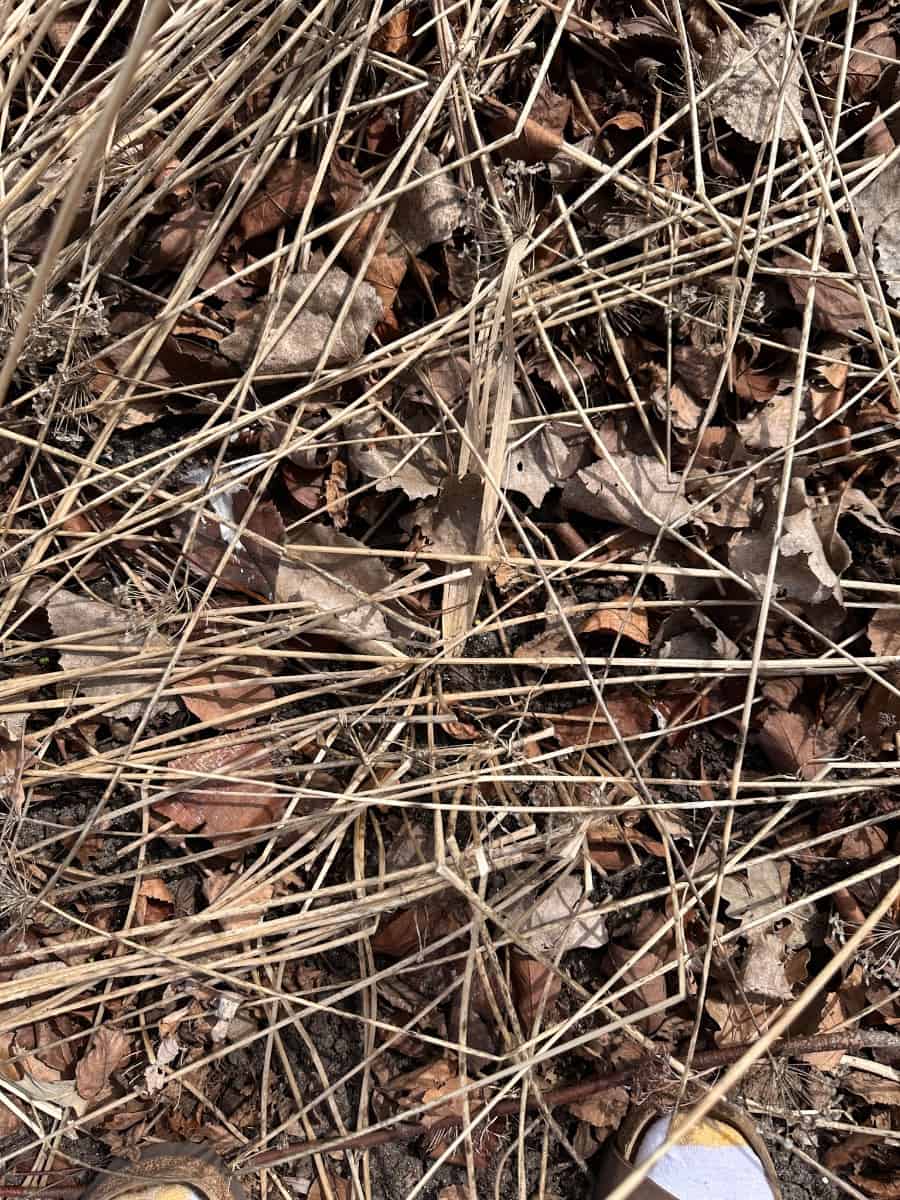
- Dead plant stems, hollow stalks, and leaf litter are winter homes for native bees, lacewings, and other beneficial instects.
- Disturbing this debris before temperatures stabilize can kill pollinators before they emerge.
- Early cleanup can expose tender new growth to late frosts, a real risk in Zone 5b, where big April snowstorms are common.
Once you’re seeing consistent warmth and new growth is pushing through the soil, that’s your green light.
23 Spring Garden Cleanup Tips
Part 1: Clear the Debris (Tips 1-6)
- Pull dead plants left from last year. Missed some in the fall? Now’s the time. Removing them prevents disease and fungal spores from overwintering in your beds.
- Pick up fallen branches. Tree debris smothers lawns and garden beds. Our river birch is notoriously messy. I make a full lap of the yard before doing anything else.
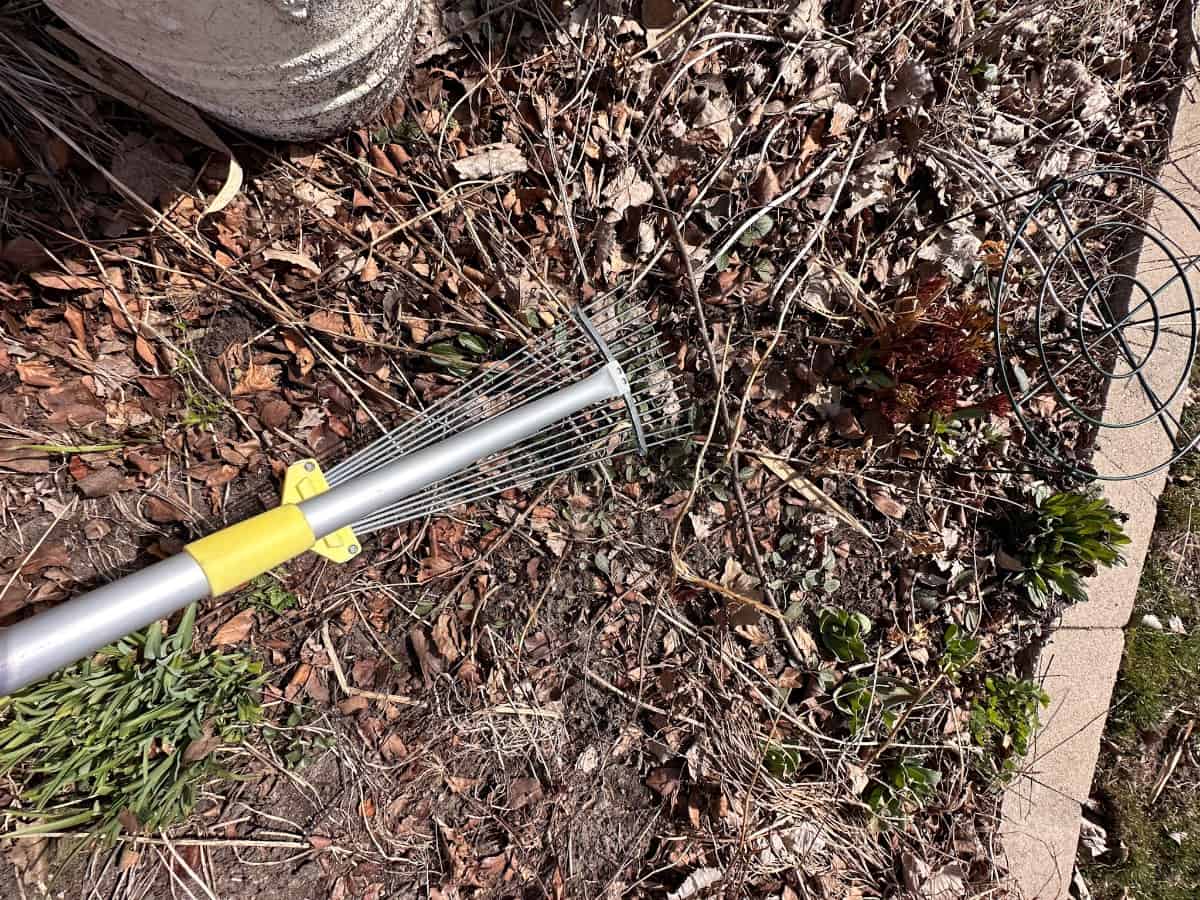
- Rake up dead leaves carefully! Use a light hand around tender, emerging plants. Shred leaves with your mower and add them to your compost pile, or use them as a fine leaf mulch in your beds.
- Cut down ornamental grasses. I leave mine up through the winter for visual interest and wildlife habitat. In early spring, cut them back to about 4-6 inches above the ground before new growth starts. Tie them in a bundle first, as it makes cleanup a breeze.
- Clean your garage, garden shed, and/or greenhouse. Wash pots, organize tools, and take stock of what you need for the garden. It gets messy over the winter, and spring is the perfect time to reset.
- Wash and put out patio furniture. After a day of hard work in the garden, you’ll want a clean spot to sit and enjoy it.
Part 2: Prep Your Soil (Tips 7-12)
- Get a soil test. This is the most underrated spring task. A soil test tells you exactly what nutrients your beds are missing so you’re not guessing. Your local cooperative extension office often offers them for free or at very low cost.
- Add compost to your vegetable garden beds. If you have a compost pile, now is the time to use it. Work in a 2-3 inch layer into the top 6 inches of soil.
- Add organic matter if you don’t have compost. We love mushroom compost. It’s rich, dark, and improves both drainage and moisture retention. Bagged options are widely available at garden centers.
- Add nutrients to your roses and flowering shrubs—I use Rose-Kote on both my roses and flowering shrubs.
- Lay down your irrigation system. Set it up before you plant so you’re not working around seedlings later. Covering it with garden cloth not only protects it, it also keeps the weeds in your beds at bay.
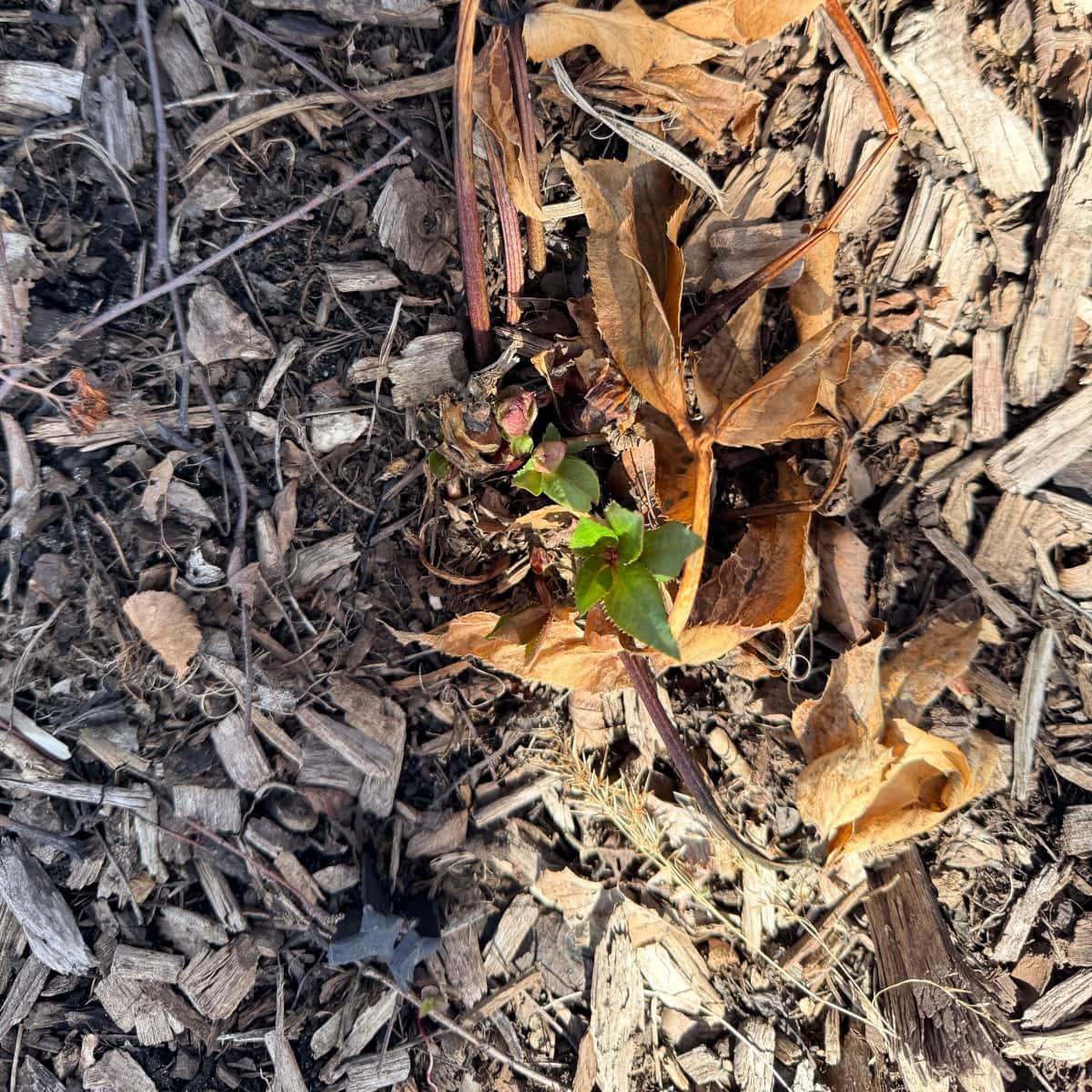
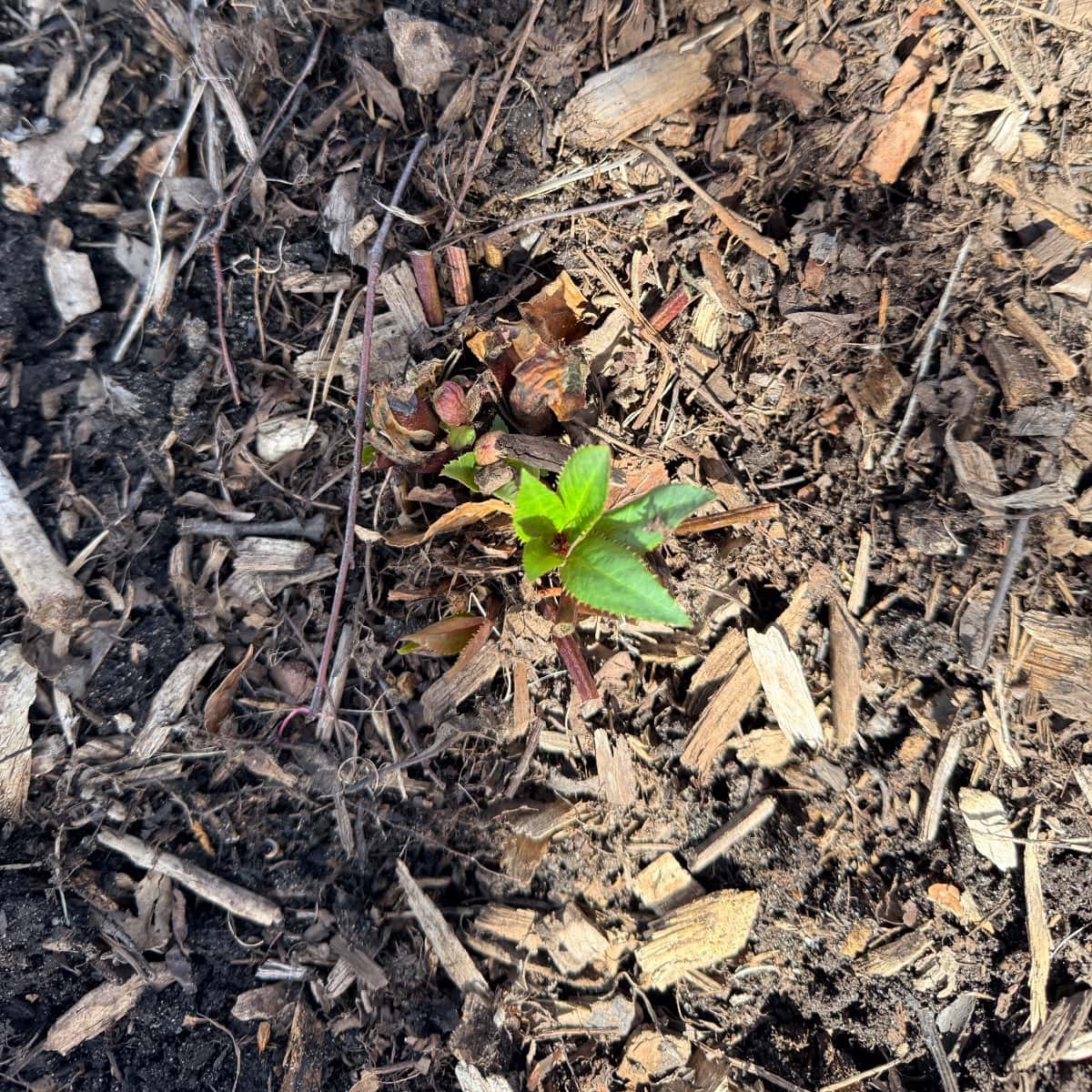
- Mulch your gardens. This is also the optimal time to mulch your garden beds before your plants emerge. A 2-3 inch layer suppresses weeds, retains moisture, and gives your beds a polished look. We use leaf mulch on our gardens. It looks so natural and is great for your soil.
Part 3: Pruning & Plant Care (Tips 13-17)
- Prune dormant trees and shrubs. Early spring, before new growth, is a great time to remove dead, damaged, or crossing branches. Use clean, sharp pruners to make clean cuts.
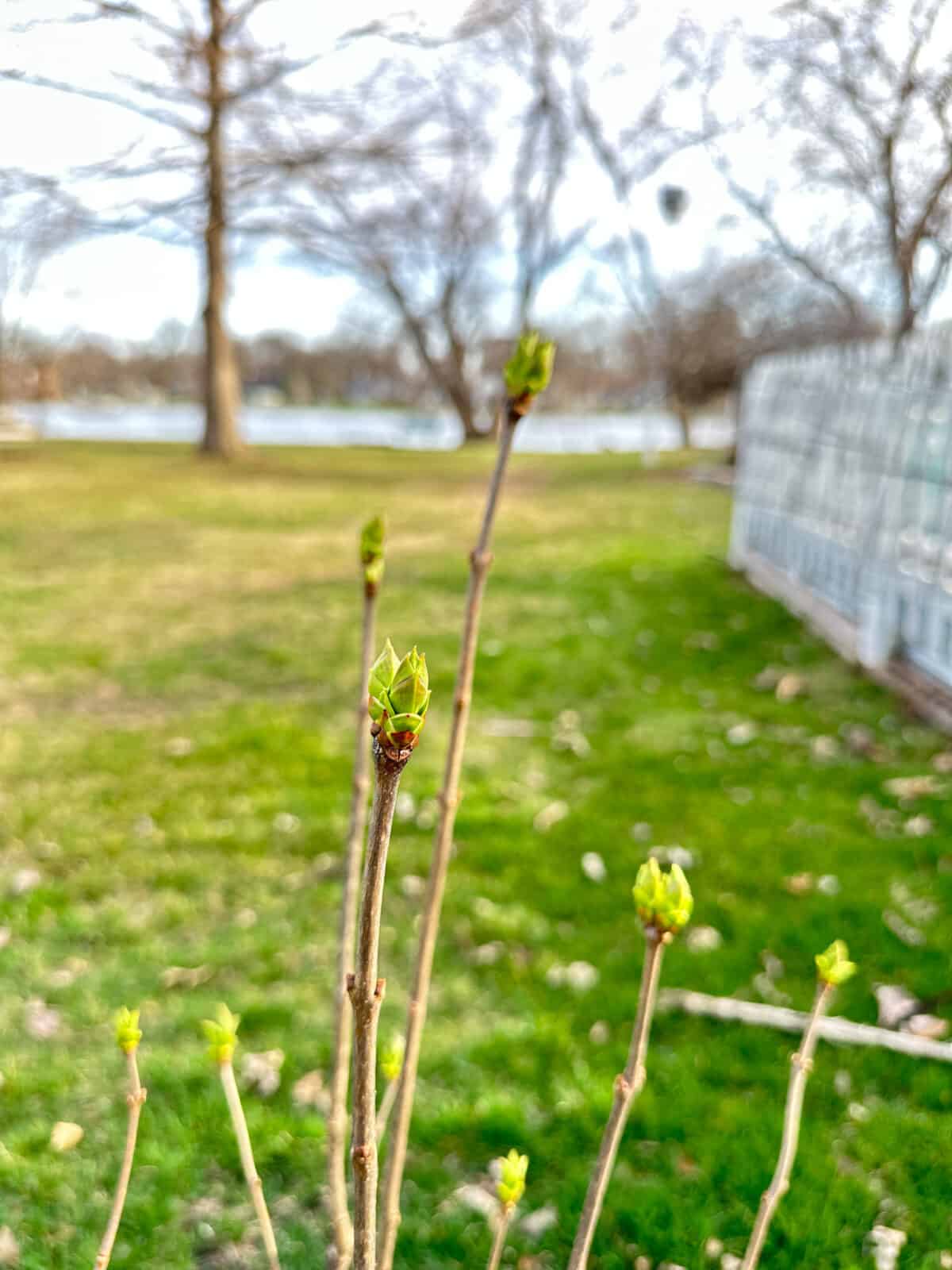
- Wait to prune spring-flowering shrubs. Lilacs, forsythia, some hydrangeas, and azaleas bloom on old wood. Prune them after they flower, or you’ll cut off this year’s buds. (I learned this the hard way with some of my hydrangeas!)
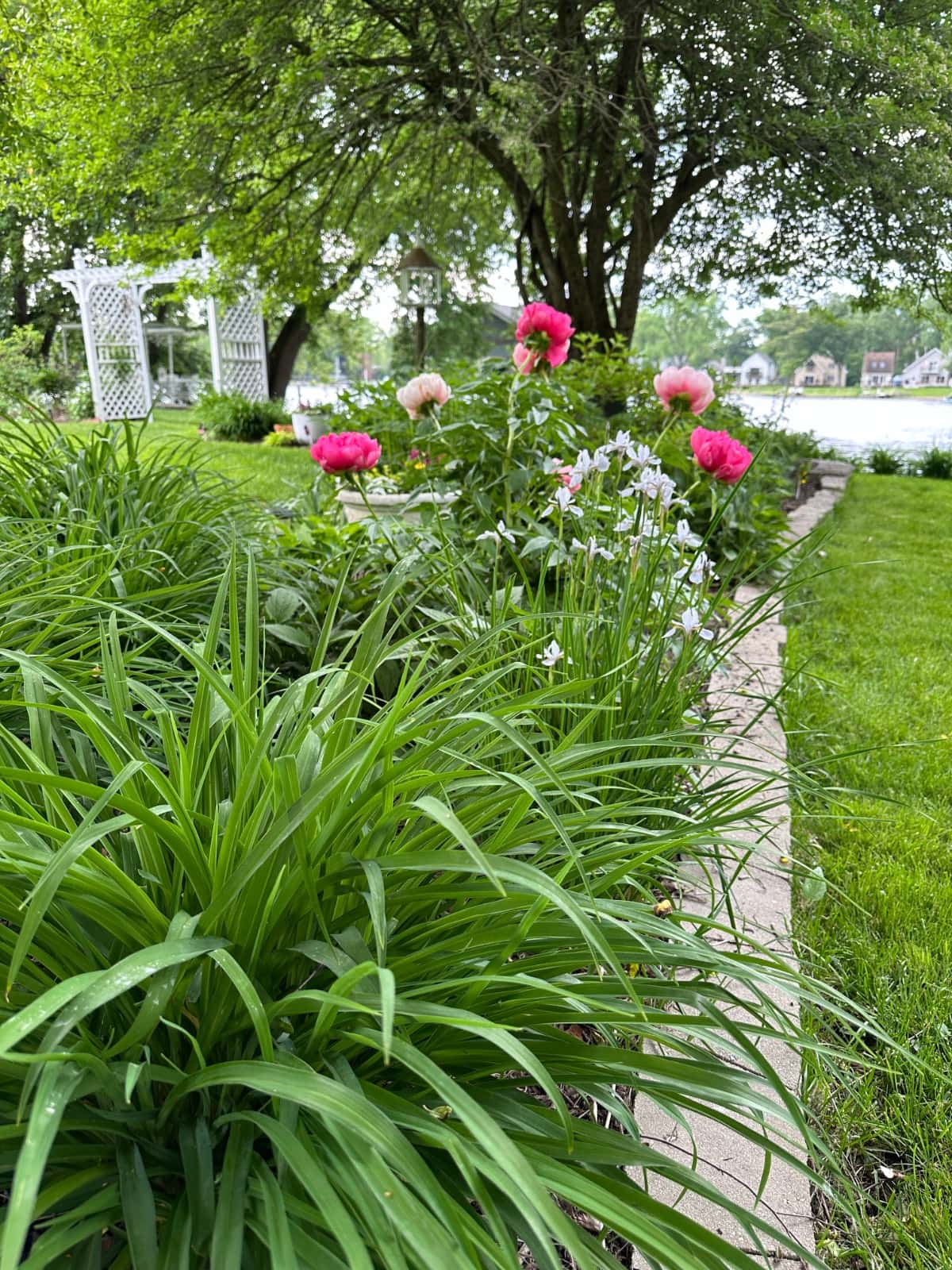
- Divide overcrowded perennials. Spring, when plants are still small, is the ideal time to divide and transplant. Good candidates: daylilies, hostas, coneflowers, ornamental grasses, irises, and black-eyed Susans.
- Protect plants from deer. Spray deer repellent (I use Plantskydd) on tulips, emerging daylilies, and budding shrubs like hydrangeas before the deer find them.
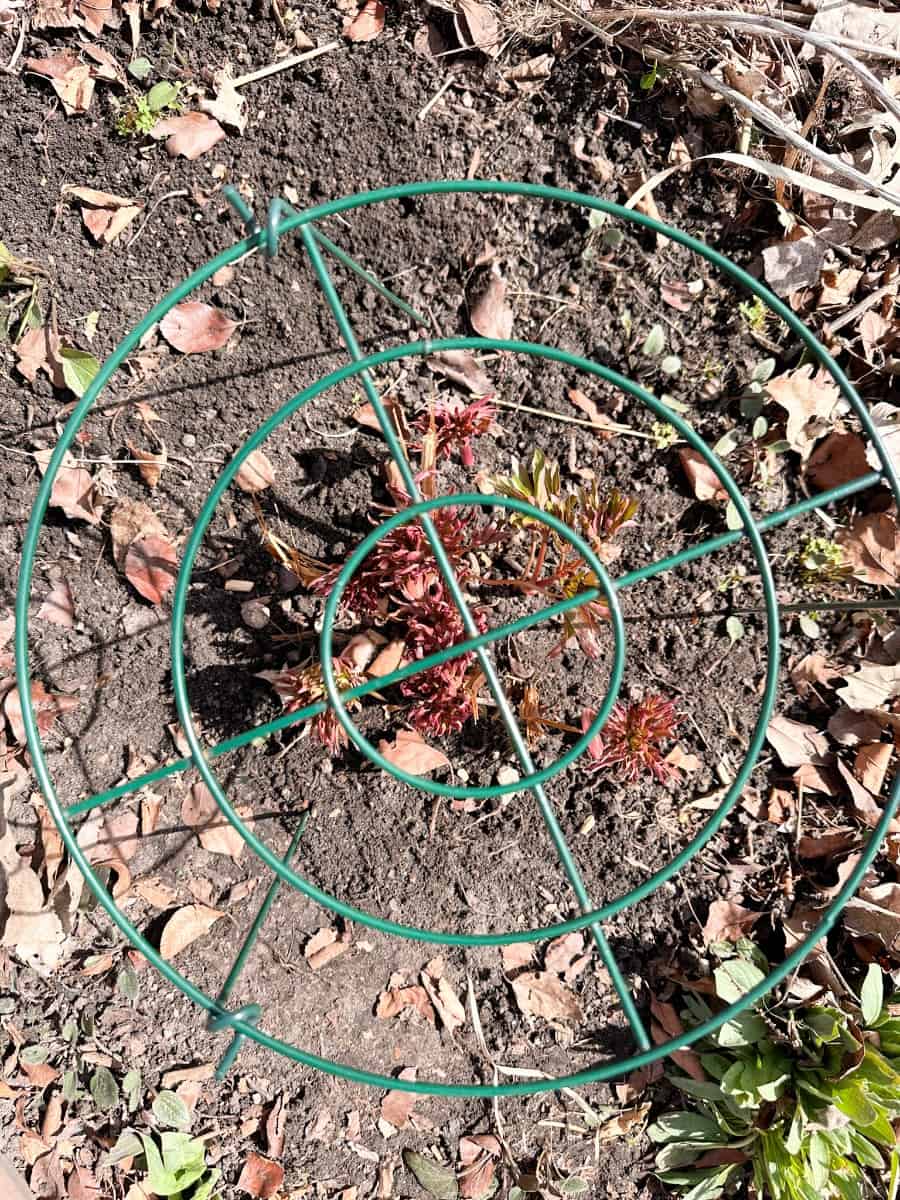
- Set up peony stakes early. Put baskets or ring supports around peony bushes now while they’re still small. By the time they need support, you won’t be able to get them in without damaging the plant.

Part 4: Planting & Seeds (Tips 18-21)
- Plant cool-season seeds directly in the garden. Some crops and flowers can go out before your last frost date. In Zone 5b, that includes larkspur, bunching onions, snow peas, and lettuce seeds.
- Plant new shrubs, trees, and perennials. Spring, before the heat of summer, is one of the best times to establish new woody plants. The cool soil and spring rains help them to get settled.
- Review and update your garden plan. That plan you made in late winter looks a little different once you’re standing in the garden. Walk through your beds and adjust before buying and planting.
- Buy annual transplants early. Garden centers get picked over fast. I buy my annuals in late April (before Zone 5b planting time). Then I store them in my greenhouse. You can put them in your garage or basement as well. Keep them watered and bring them out on nice days to harden off.
Part 5: Finishing Touches (Tips 22-23)
- Pull weeds now—don’t wait! Spring weeds are easier to pull from damp soil, and getting ahead of them early dramatically reduces your workload all season long. The longer you wait, the harder the job.
- Edge your beds. A crisp edge before lawn and garden beds makes everything look intentional and put-together. It also keeps grass from creeping into your beds.

Essential Spring Garden Cleanup Tools
Having the right tools makes this work so much more enjoyable. Here are the ones that I reach for each spring.
- Adjustable rake—great for working around plants without disturbing them
- Garden fork—for turning beds and dividing perennials
- Spade shovel—edging, digging, and transplanting
- Hand trowel—for planting and weeding
- Garden knife—the best tool for weeding rhizomatous weeds
- Pruners (standard + heavy duty)—keep them sharp
- Long rose gloves + waterproof gloves—for thorny shrubs and wet work
- Kneeler or knee pads—your knees will thank you
- Twist tiller—brilliant for loosening soil in tight spots
- Grandpa’s Weeder—for deep-rooted weeds without bending
- Stirrup loop hoe—great for shallow weeding between plants
- Deer Repellent: Deer Out, Plantskydd, Deer Scram, and Liquid Fence
What to Plant After Spring Cleanup
In Zone 5b, our last frost date is around May 15th. Here’s what I plant once my beds are cleaned and ready.
This is just some of what I will be planting.
Vegetable Garden
- Tomatoes—San Marzano, big beef, early girl, cherry tomatoes
- Broccoli and cabbage
- Cucumbers and zucchini
- Red, yellow, and green onions
- Lettuce, beets, and carrots (direct sow seeds)
- Jalapeno peppers
- Herbs: basil, thyme, rosemary, oregano,

Flower Garden & Pots
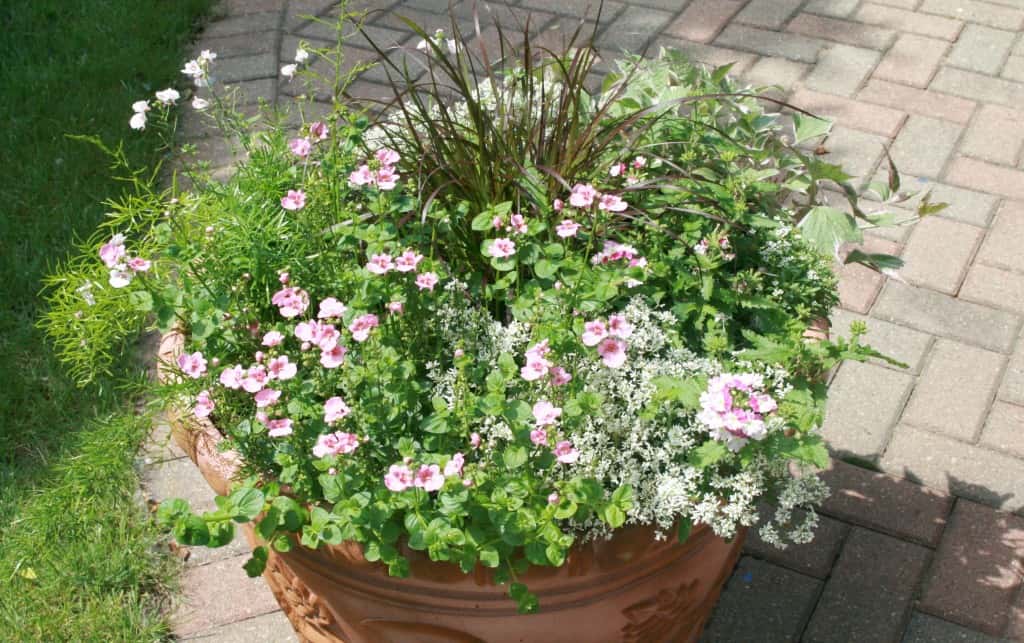
- Zinnias, sunflowers, and dahlias for summer color
- Amaranth, celosia, and strawflowers for texture
- Cleome, sweet pea, and poppies for cottage charm
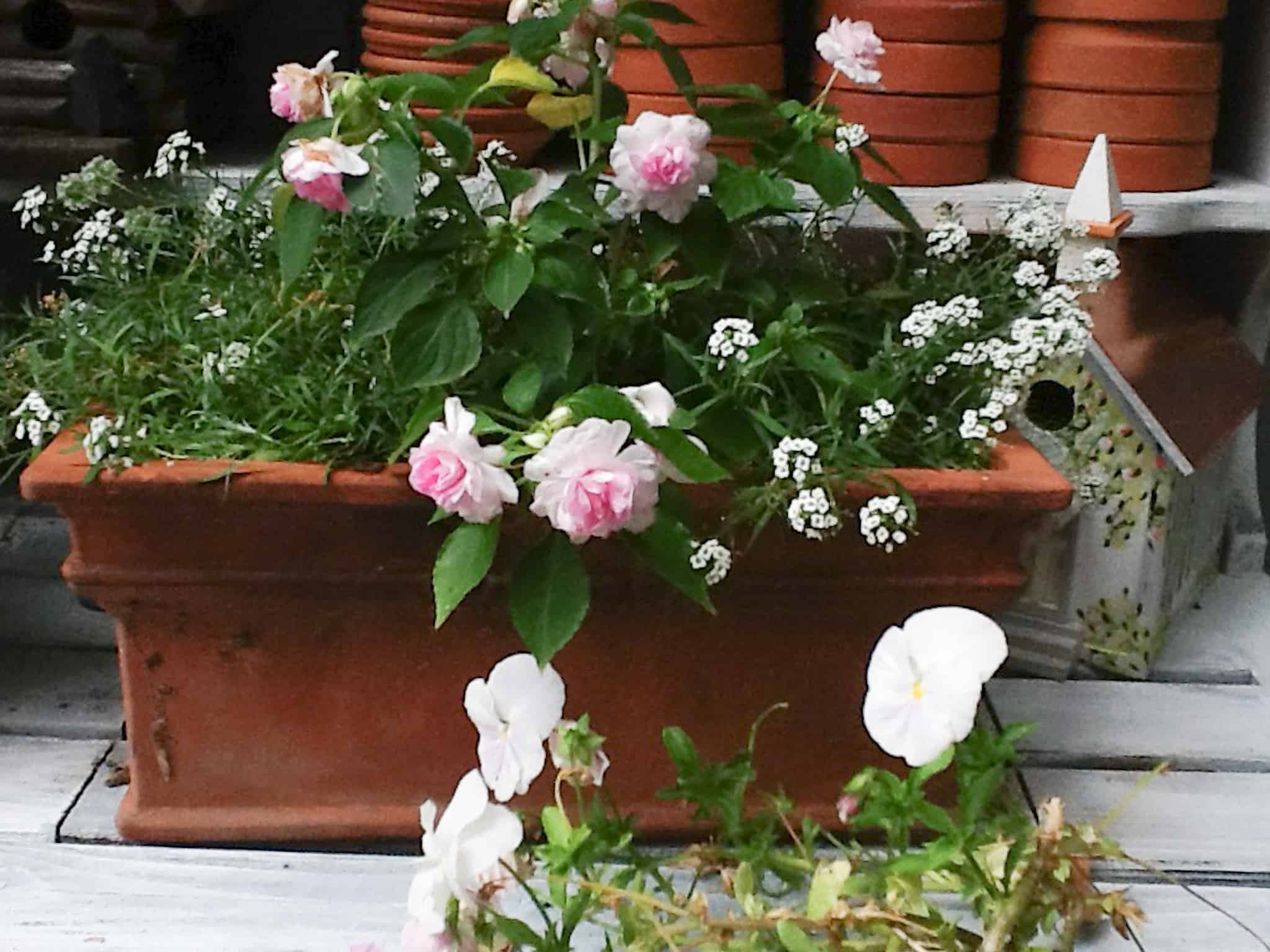
- Coleus and impatiens for shady spots
- Calendula and ranunculus for early color
FAQ’s
Should I remove leaves from my flower beds in spring?
Not necessarily, and certainly not too early. Leaf litter provides critical shelter for overwintering beneficial insects. Wait until temperatures are consistently above 50°F before clearing it. When you do clean up, you don’t need to remove every single leaf. I like to rake the beds enough to let air and light in, then top-dress with a finer leaf mulch or fresh compost for a clean, tidy look.
How do you clean up perennials in the spring?
Start by clearing away any debris around the base of the plant. Then cut back dead stems and foliage. Most perennials can be cut to within a few inches of the ground. For ornamental grasses, tie and cut to about 4-6 inches. Avoid pulling or raking harshly around tender, emerging shoots.
What should I do first in a spring garden cleanup?
Start with the big stuff. Clean up fallen branches, dead plants from last year, and a rough rake of the beds. Then move to soil prep (compost, turning beds), pruning, and finally the detail work like edging and mulching.
Is hiring a landscaper for spring cleanup worth it?
If you’re not doing the work yourself, get on a landscaping company’s list early. Spring cleanup slots fill up fast. For most homeowners, though, doing it yourself means you know exactly what’s in your beds and can make more thoughtful decisions about what to cut back, divide, or protect. We do get help now that we are older, but I work along with them to keep the integrity of my garden beds.
Get Your Free Spring Garden Cleanup Checklist
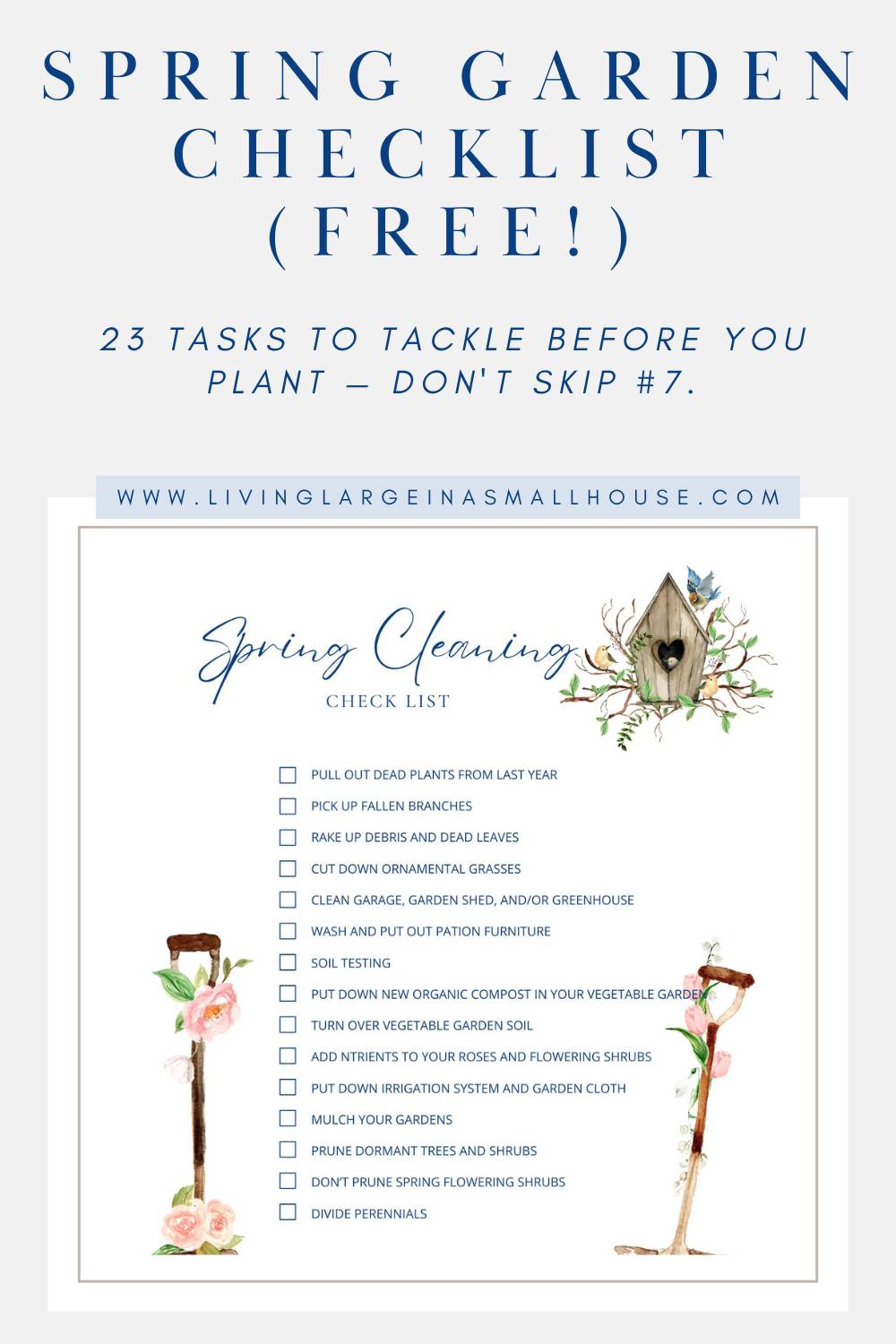
I’ve put together a free printable checklist with all 23 of these tasks so you can work through them at your pace without forgetting a thing.

Become a Friend of Living Large
Be the first to see affordable decorating ideas, gardening tips and tricks, along with great organizing, entertaining ideas and easy recipes
Final Thoughts
Spring garden cleanup isn’t just a chore; it’s the beginning of everything good that happens in your garden for the next six months. Take it one task at a time, be patient with the weather, and don’t forget to stop and appreciate those first daffodils.
The glory of gardening: hands in the dirt, head in the sun, heart with nature. To nurture a garden is to feed not just the body but the soul.
– Alfred Austin
Happy Gardening!




A great way to save this idea is to add it to one of your Pinterest boards. You can find the pin button on the top left of the photo when you click on it. Also, don’t forget to follow me on Pinterest

Meet Me
My name is Lynn. I live in the suburbs of Chicago in a 1,300 sq. ft. home with my Handy husband, Keith.
I’m an open book about my life on my blog. You can find out more about me by visiting my “About Me” page.













So many great tips! I still have quite a few to get done! I’m going to hire someone to do my windows this year!
That is such a good idea to hire out the window cleaning.
Such a wonderful post, Lynn. We have been experiencing warmer days since late March here in Tennessee, but I haven’t tackled the yard cleanup yet. I plan to get started this weekend, and your list will definitely come in handy. Thanks for sharing at the party. This post will be a feature this week. #HomeMattersParty
Thank you so much Donna for sharing my post!