
Why an Organized Home Benefits Your Mental Health
Do you ever walk into your home and feel your shoulders tighten instead of dropping? You’re not alone. So many of us are juggling busy lives, and the state of our home often reflects that chaos. But here’s the thing I’ve learned after years of living intentionally in a small house: the way your home looks and feels inside has a very real effect on how you yourself feel inside.
On my blog Living Large in A Small House, I may sometimes use affiliate links, which means a small commission is earned if you purchase via the link. The price will be the same whether you use the affiliate link or go directly to the vendor’s website using a non-affiliate link. You can find my full Disclosure Policy HERE
In this post, we’ll look at what the science says about clutter and mental health, the key benefits of an organized home, how to get started without feeling overwhelmed, and how to actually maintain it long-term. So if you’re ready to take control of the clutter, read on!
What Does Science Say About Clutter and Mental Health?
This isn’t just a “feel-good” theory. Multiple studies have confirmed the very real relationship between our environments and our mental state.
A landmark study by Saxbe and Repetti found that women who described their homes as cluttered had higher levels of cortisol (the body’s primary stress hormone) throughout the entire day, not just at home. That means the mess you leave in the morning is quietly stressing you out at work, in the car, and at dinner.
Princeton University neuroscientists have also found that visual clutter competes for your brain’s attention, reducing your ability to focus and process information. And it goes even deeper than that: clutter can trigger your brain’s threat response, nudging your nervous system into a low-grade fight-or-flight mode. This is why walking into a messy room can make you feel subtly on edge or irritable, even if you can’t pinpoint why.

The Mental Health Benefits of an Organized Home
Maintaining an organized home promotes a healthier, calmer lifestyle in more ways than most people realize. Here’s what changes when you get your space in order.
Reducing Stress and Anxiety
When your home is tidy, your brain registers that your environment is safe and in order, allowing your nervous system to truly relax. You’ll notice you feel more at ease the moment you walk through the door. And that calm stays with you. When everything has a place and is easy to find, you spend less time worrying about your home and more time doing things you enjoy.
Improved Focus and Productivity
A tidy home frees up mental energy. When your environment is organized, your brain doesn’t have to work as hard to filter out visual distractions, leaving more capacity for focus, creativity, and getting things done.
Boosted Mood and Self-Esteem
There’s something genuinely powerful about coming home to a clean house. Even small acts like making your bed, clearing the kitchen counter, or organizing one drawer, can create a genuine sense of accomplishment that lifts your mood and your sense of self-worth. That positive feedback loop is real, and it compounds over time.
Better Sleep
Your bedroom should be a retreat. When it’s cluttered with laundry piles, and “I’ll deal with this later” items, it becomes another source of subconscious stress that makes it harder to wind down. The National Sleep Foundation has connected a tidy bedroom with more restful sleep. And people who make their beds every morning are significantly more likely to report sleeping well. Fewer distractions mean a calmer mind at bedtime.
A Greater Sense of Control
We can’t control everything—the news, our jobs, other people’s behavior. But we can control our homes. And that sense of agency matters enormously for mental health, especially on days when everything else feels uncertain. An organized home gives you a solid, dependable foundation to come back to.
Save Time and Money
When your home is organized, you stop wasting time searching for things, and you stop buying duplicates of items you already own but can’t find. If you’re paying for off-site storage just to hold overflow clutter, imagine what you could do with that money instead. The savings in both time and money add up faster than most people expect.
Stronger Relationships
This one often gets overlooked. When your home feels chaotic, you may feel embarrassed to have people over, which quietly leads to social withdrawal and loneliness. For couples and families, clutter can also create tension and conflict. An organized home removes that friction and makes it easier to open your doors and enjoy the people in your life.
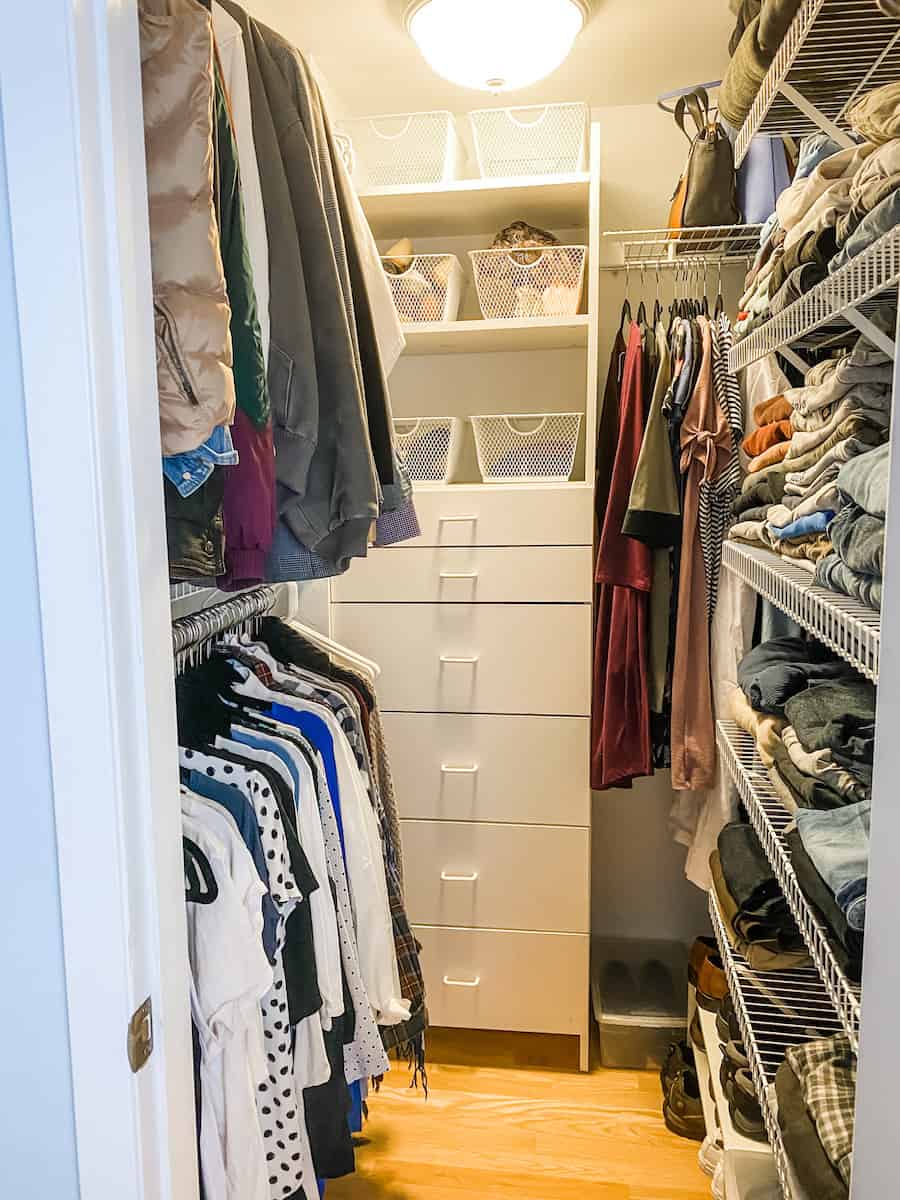
The Emotional Side of Decluttering
I want to talk about something that doesn’t always get mentioned: decluttering is emotional. It’s not just about throwing things away or finding better storage solutions. It’s about letting go.
So many of us hold onto things because they represent a memory, a past version of ourselves, or a goal we haven’t accomplished yet. That shelf of books you’re going to read someday. The clothes from a size you hope to get back to. The craft supplies for the hobby you meant to pick up.
There’s a real relief in releasing those items. It’s an act of self-compassion and telling yourself that your home and your mental energy deserve to be filled with what actually serves your life right now.
I know firsthand that the younger generation is much more minimal, and honestly, they’re onto something. My kids don’t want my old things. Accepting that was actually freeing to accept and helps me to purge things I no longer love or want.

Practical Steps to Organizing Your Home
Ready to feel the difference? Here’s how to get started without being overwhelmed.
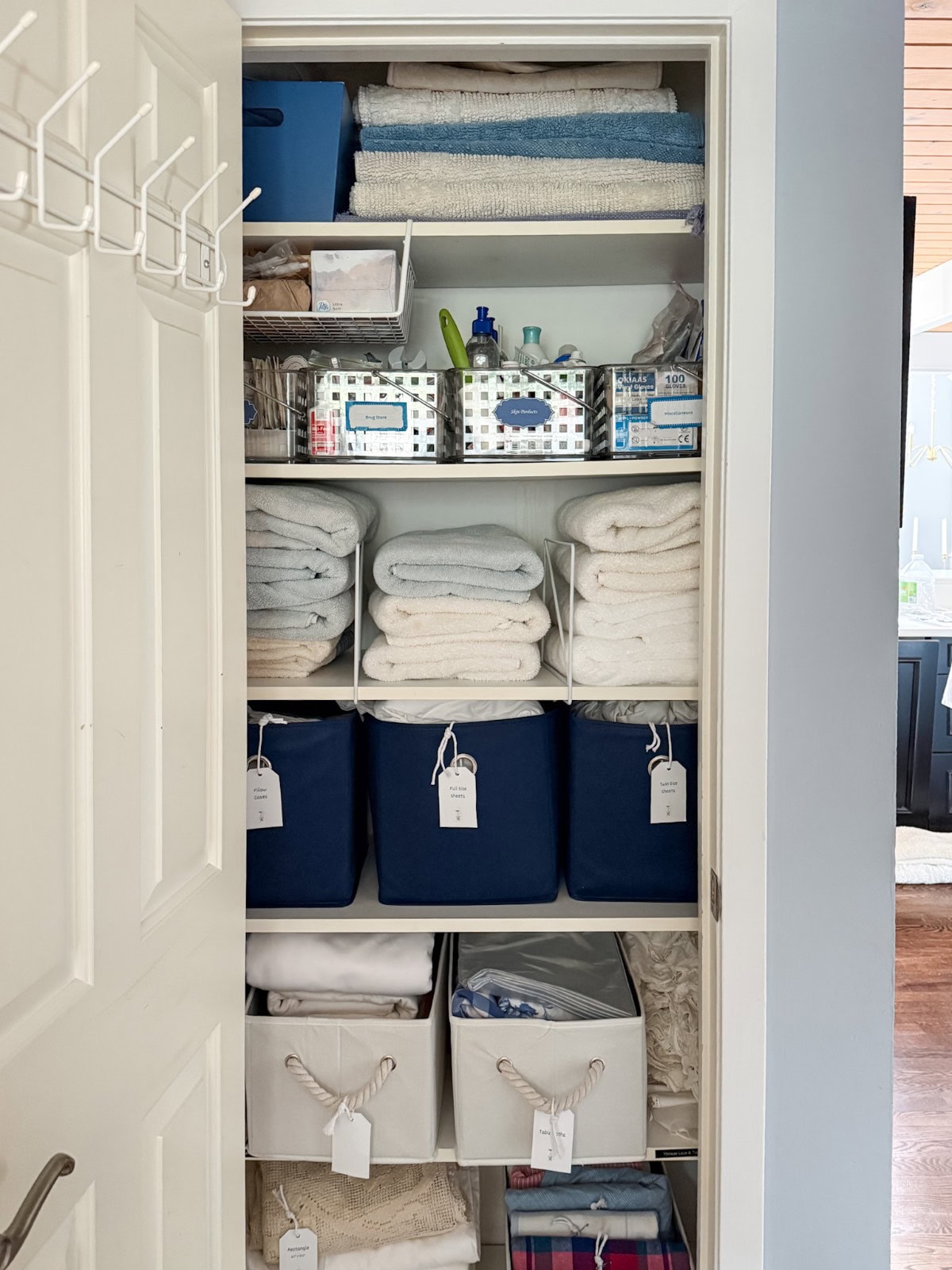
1. Start Small
Don’t try to do your whole house in a weekend. Pick one drawer, one counter, or one corner. Set a timer for 15-30 minutes and focus only on that small space. The win you get from completing even one small area builds momentum and proves to your brain that change is possible.
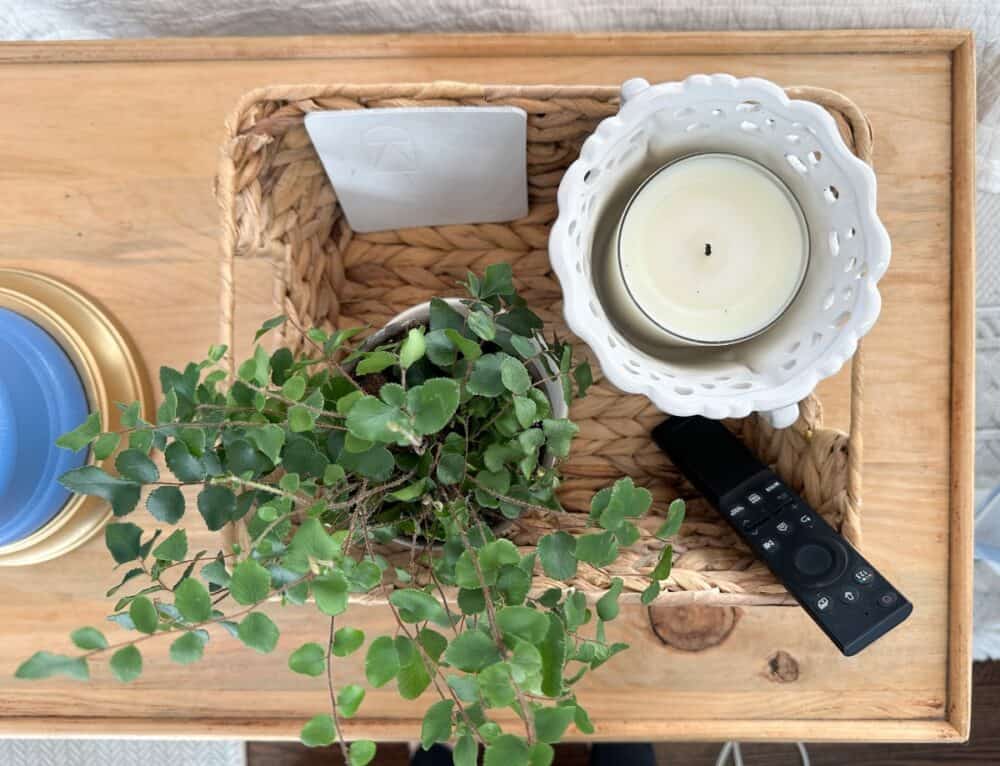
2. Declutter Before You Organize
This is the step most people skip, and it’s the most important one. You can’t organize clutter. You can only move it around. Before buying a single storage bin, go through each area and ask, Do I use this? Do I love this? Does this belong in my home right now?
Sort everything into piles:
- Keep
- Donate
- Sell
- Trash
Be ruthless. Get rid of duplicates. And remember that 30 minutes a day adds up. Eventually, your entire house will be free of things you no longer need or want.
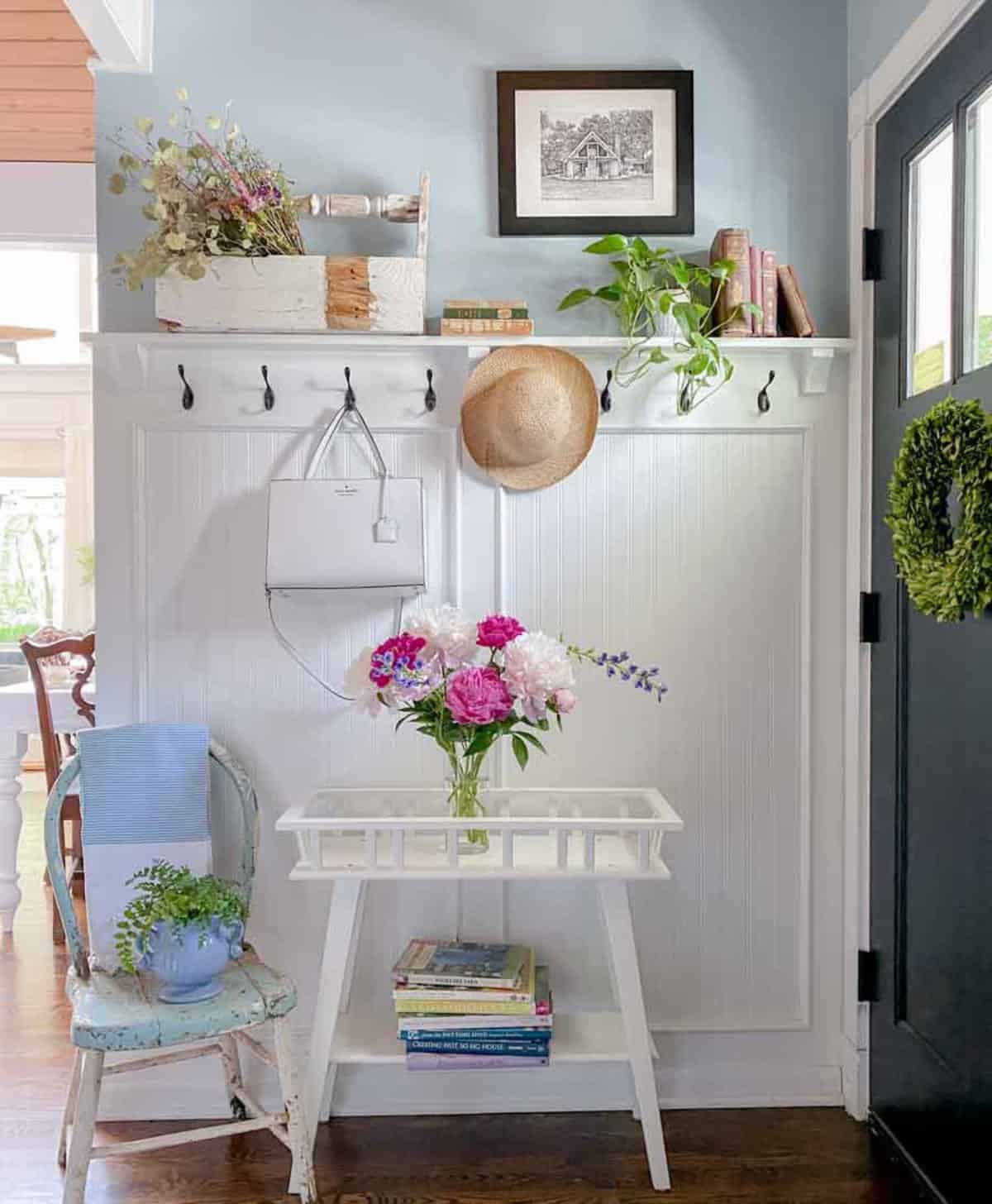
3. Give Everything a Home
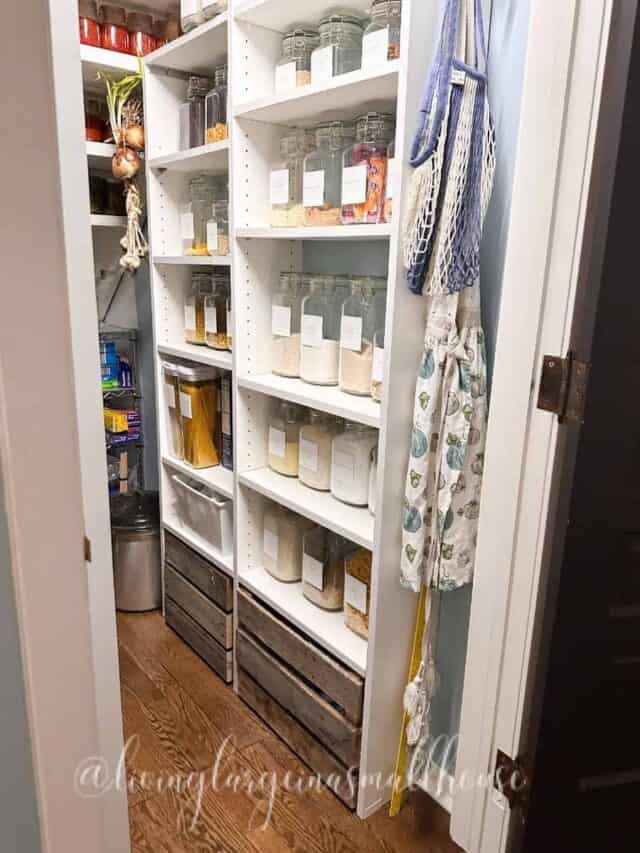
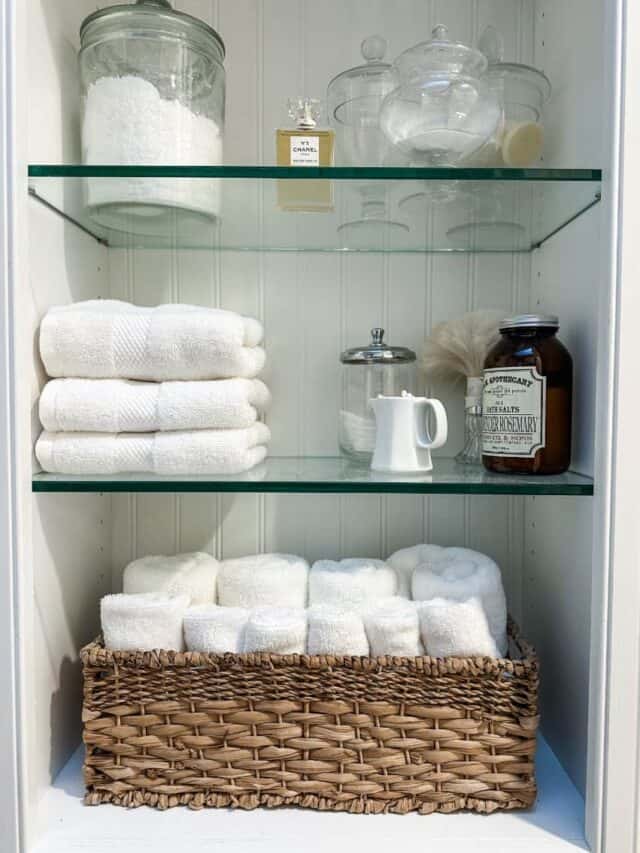
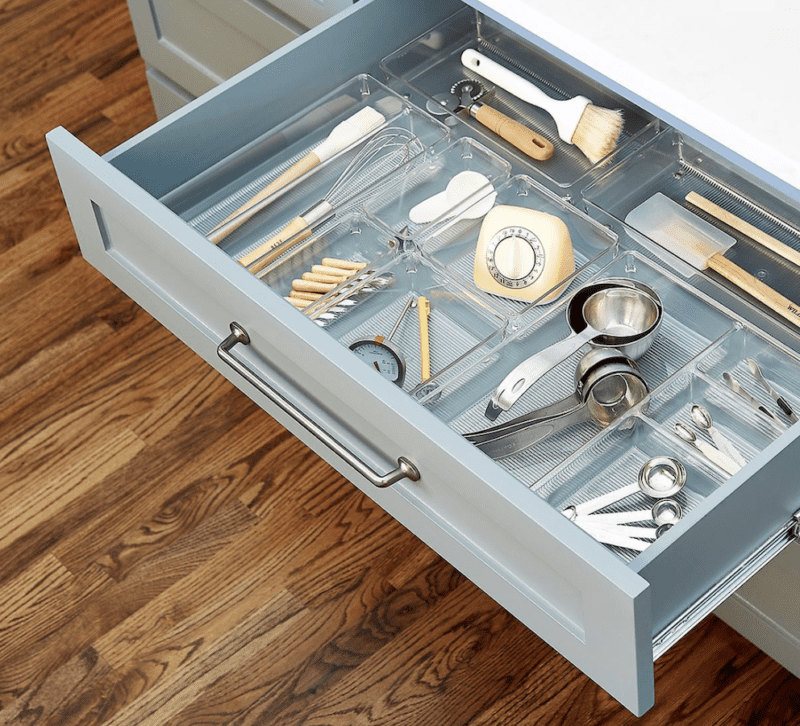
Once you’ve decluttered, give every remaining item a specific, intentional home. A place where that item makes sense. Keep items where you actually use them. Use storage containers, baskets, and labeled shelves so that everyone in the household knows the system. This is what makes organization stick long-term.

4. Get the Whole Family Involved
A tidy home can’t be one person’s responsibility. Assign age-appropriate tasks to everyone, make it a non-negotiable part of the household routine, and remind your family that this isn’t about perfection; it’s about everyone feeling good in the space you share.
Life is too complicated
not to be orderly.
-Martha Stewart
How to Maintain an Organized Home Long-Term
Getting organized is a milestone. Staying organized is a lifestyle. Here’s what actually makes it sustainable. .
The One-In, One-Out Rule
Whenever something new comes into your home, something old leaves. This is the single most effective habit for preventing clutter from creeping back in. It’s especially useful for clothes, toys, and kitchen gadgets.
Develop a Daily Tidy-Up Habit
A 10-to-15-minute end-of-day reset is worth more than a Saturday deep clean. Dishes in the dishwasher, toys put away, counters cleared. This small daily commitment is what keeps your home feeling consistently calm instead of bouncing between chaos and clean.
Be Intentional About What You Buy
The best clutter-prevention strategy is simply buying less. Before purchasing something, ask yourself, where will this live in my home? Do I really need this? Waiting a few days before buying often reveals that you didn’t need it at all.
Regularly Review and Adjust Your System
The routines of a home and a family are continually changing. A system that worked perfectly two years ago might not work now. Make it a habit to periodically reassess, especially closets, storage spaces, and high-traffic areas. I’ve written before about the best places to donate your stuff to make regular purging easier.
When to Consider Hiring a Professional Organizer
Occasionally the clutter feels so overwhelming that you genuinely don’t know where to begin. That’s not a personal failing; it’s just where you are right now. A professional organizer can help you create a plan, stay accountable, and tackle spaces that feel emotionally loaded.
The National Association of Productivity & Organizing Professionals (NAPO) has an online directory to help you find a certified professional in your area. Many offer a free initial consultation to discuss your goals and your space.
And if the disorganization in your home feels connected to deeper feelings of depression, anxiety, or being overwhelmed, please know it’s okay to also reach out to a licensed therapist or counselor. Organization is a powerful tool for mental health, but it works best alongside other forms of support.

FAQ’s
Is clutter linked to depression?
Research does show a correlation between clutter and depressive symptoms. A disorganized environment can reinforce feelings of helplessness and being out of control. While clutter alone doesn’t cause depression, it can contribute to and perpetuate a negative cycle. You feel too low to clean, which makes the space worse. If this resonates, starting with one very small area can help break that cycle.
How long does it take to see the mental health benefits of an organized home?
Many people notice an improvement in mood almost immediately after decluttering even one space. The physical act of clearing a counter or sorting a drawer creates an instant sense of accomplishment. Deeper benefits like reduced baseline stress and better sleep tend to build over a few weeks as the habit becomes consistent.
Can you be organized in a small home?
Absolutely and honestly, small homes can be easier to keep organized because there’s less space to let things pile up. The key is being more intentional about what you own. In a small home, every item needs to earn its place. Vertical storage, multi-purpose furniture, and regular decluttering are your best friends.
Final Thoughts
An organized home is one of the most accessible and impactful things you can do for your mental health. It doesn’t require a big budget, a large home, or a perfectly Pinterest-worthy aesthetic. It just requires a commitment to creating a space that supports you.
Start small. Be consistent. Give yourself grace on the days it falls apart because it will sometimes. That’s not failure; that’s just life. What matters is coming back to the practice and remembering that your home, and your mental health are worth tending to.
In my resource library. I have some great tools to help you on your decluttering journey. And if you’ve found a routine or system that works for you, I’d love to hear about it in the comments!

Become a Friend of Living Large
Be the first to see affordable decorating ideas, gardening tips and tricks, along with great organizing, entertaining ideas and easy recipes
Peace, Love, and Happy Organizing



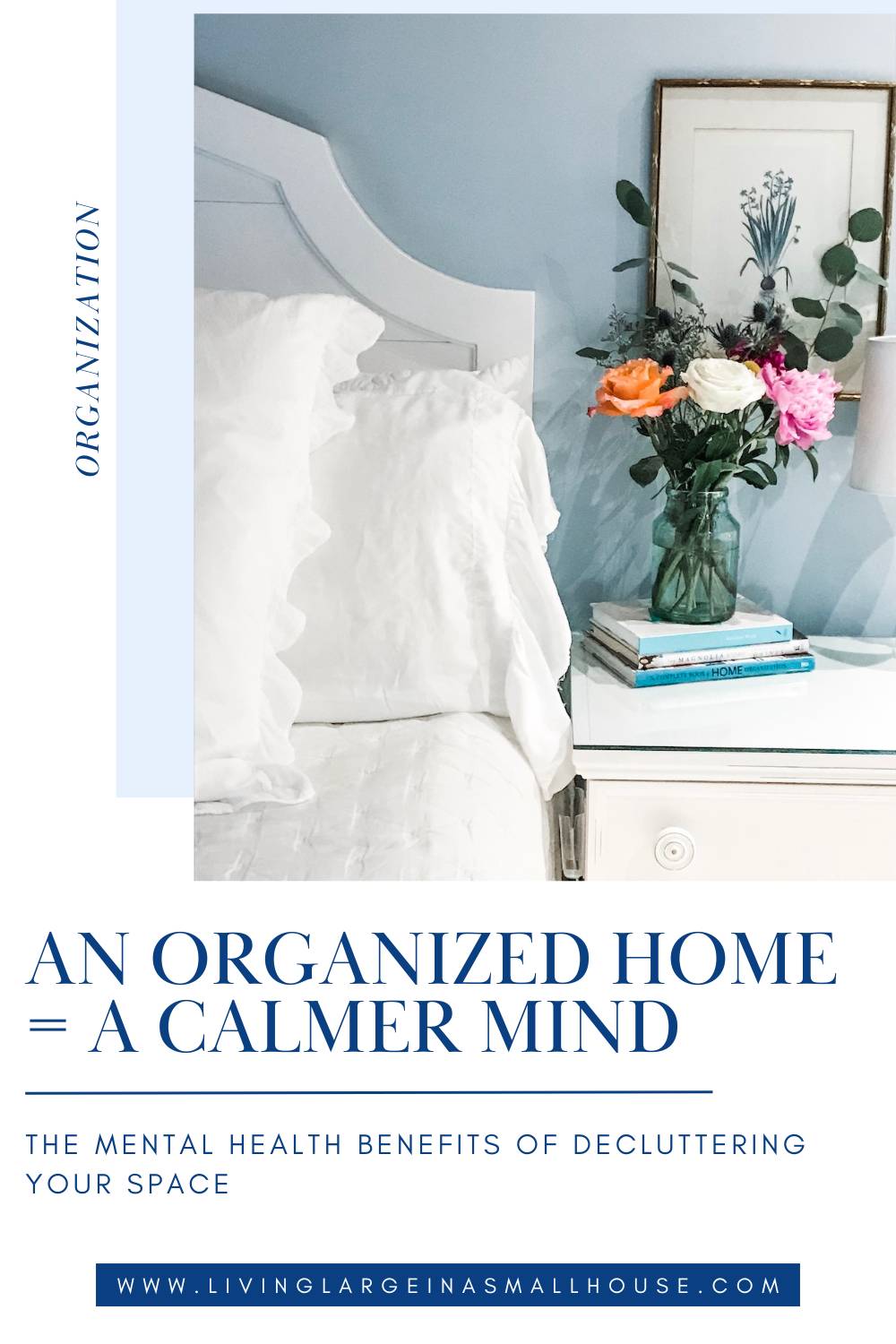
A great way to save this idea is to add it to one of your Pinterest boards. You can find the pin button on the top left of the photo when you click on it. Also, don’t forget to follow me on Pinterest

Meet Me
My name is Lynn. I live in the suburbs of Chicago in a 1,300 sq. ft. home with my Handy husband, Keith.
I’m an open book about my life on my blog. You can find out more about me by visiting my “About Me” page.












Such a great article, Lynn. When my home office is a mess, I lose focus. I make sure at the end of the day my desk area is tidy. It get’s a good cleaning (vacuum and dust) each week. I find picking up the house each evening before bed helps significantly. You have some good tips.
I feel exactly the same way Tammy. I like to go to sleep knowing that things are picked up and what a join to start the day coming down to an organized house.
Hi Lynn,
I love an orderly home, so my distress with my kitchen slab leak and kitchen repair has caused so much discomfort and unrest. It has been over 6 weeks without a sink, kitchen, flooring, granite countertops, etc. Concrete dust is now a houseguest, needless to say. The construction crew had some delays due to preventable issues and misplanning on their part. Each room (and the garage) have additional boxes and items unrelated to a bedroom’s needs.
Of course, there are a lot more problems worse than this. I am grateful there is not flooding like you are enduring in your home. God bless you and I hope it dries up soon.
Having been through countless renovations, I genuinely understand your distress. It gives me so much anxiety to have my home out of order. I just keep my eye on the big picture of what it will be like when it’s done. Living in construction is not for the faint of heart. I will be thinking of you and hoping you have things fixed soon. Thanks for keeping in touch!