
When the River Comes to Visit: Recovering My Gardens After a Spring Flood
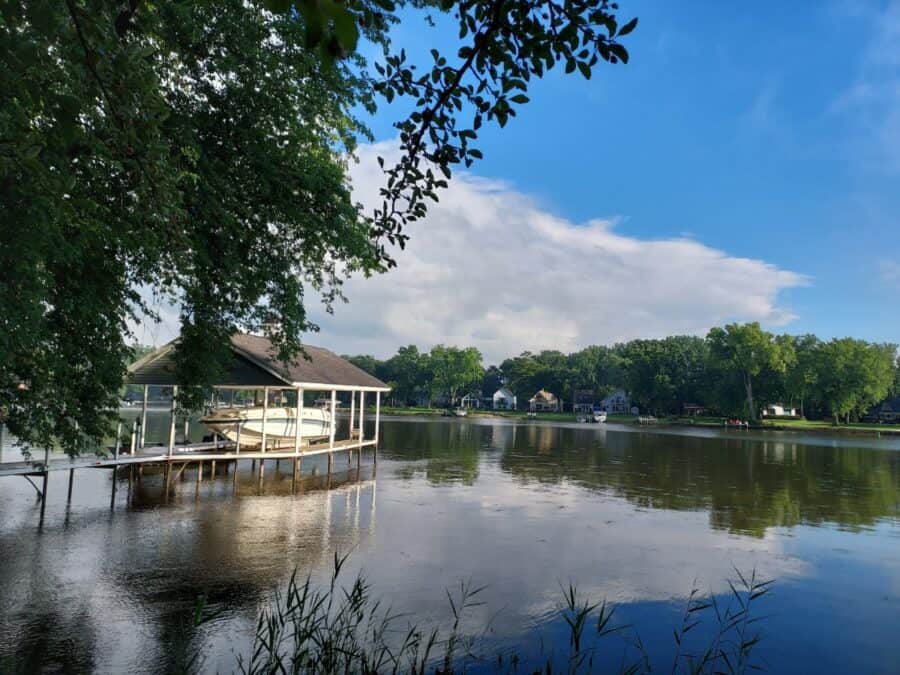
There’s a reason we have never regretted our decision to live on the river. On any given day, the view is stunning, the wildlife is endlessly entertaining, and the pace of life out here feels like a gift. We always say that 99% of the time, living on the water is absolutely idyllic. But every once in a while, the river reminds you who was here first.
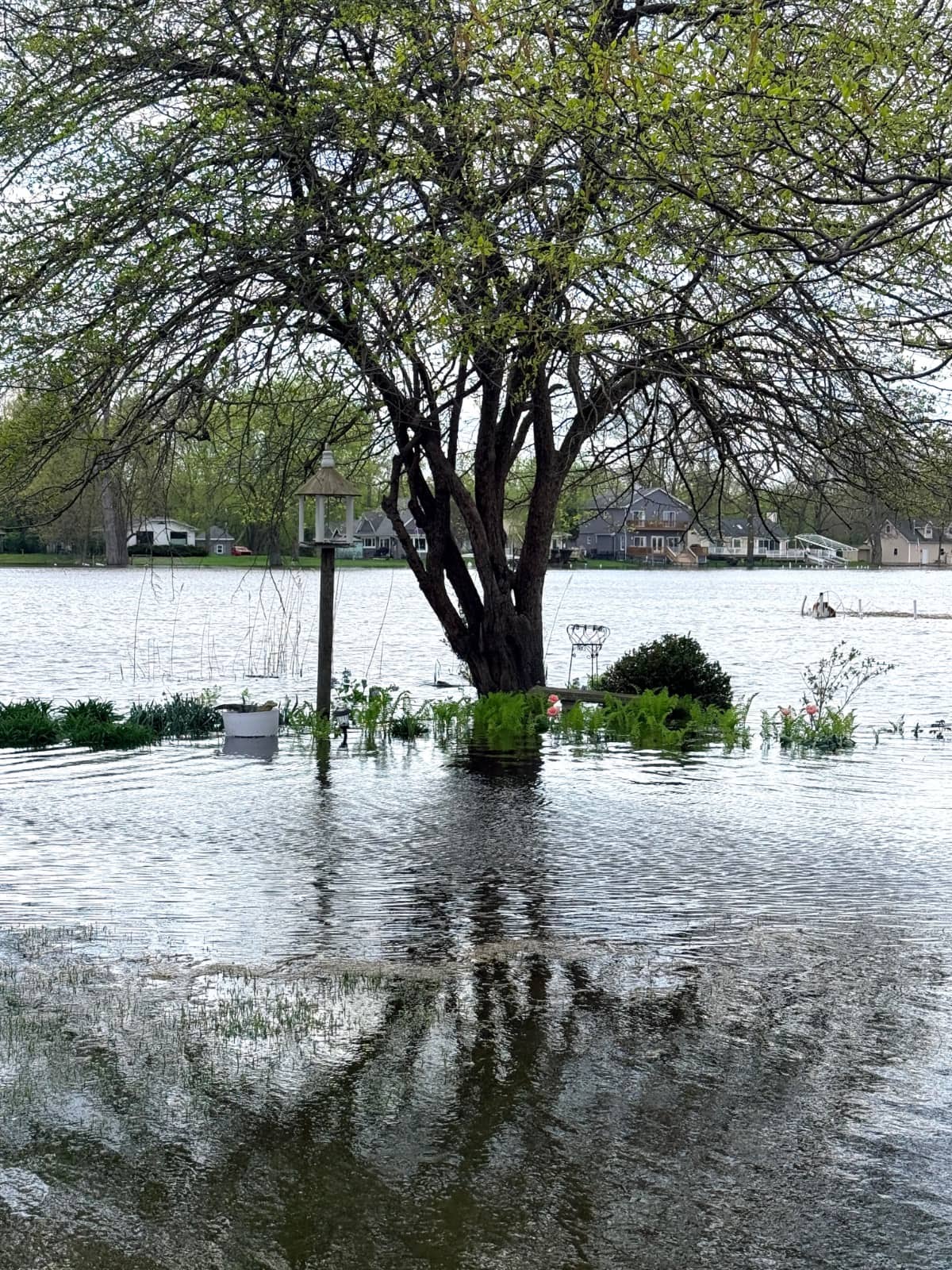
This past April, for the first time in nearly a decade, our river overflowed its banks. And this was one of those floods that got our full attention.
On my blog Living Large in A Small House, I may sometimes use affiliate links, which means a small commission is earned if you purchase via the link. The price will be the same whether you use the affiliate link or go directly to the vendor’s website using a non-affiliate link. You can find my full Disclosure Policy HERE
When 20 Inches of Water Becomes Your Front Yard
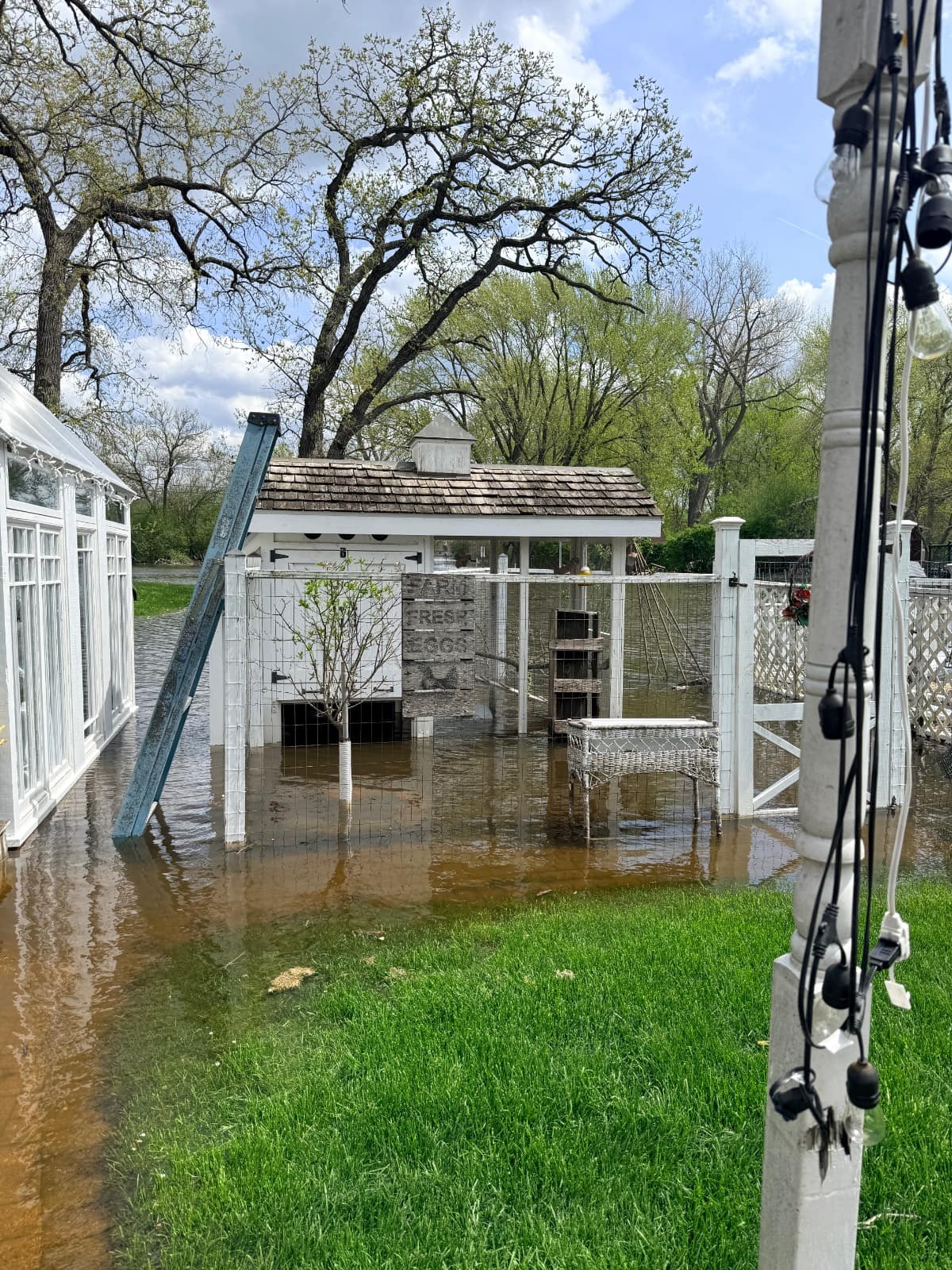
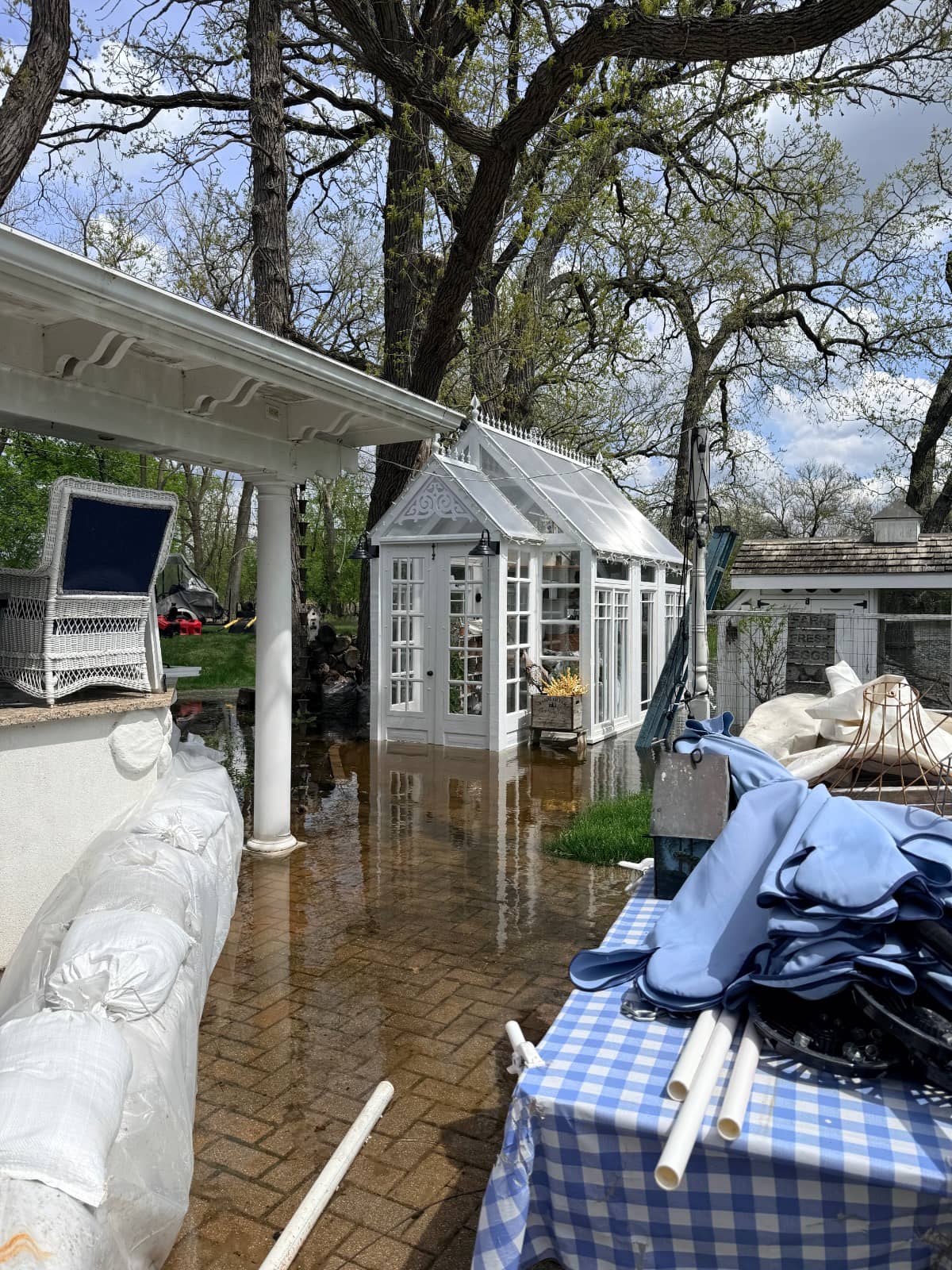
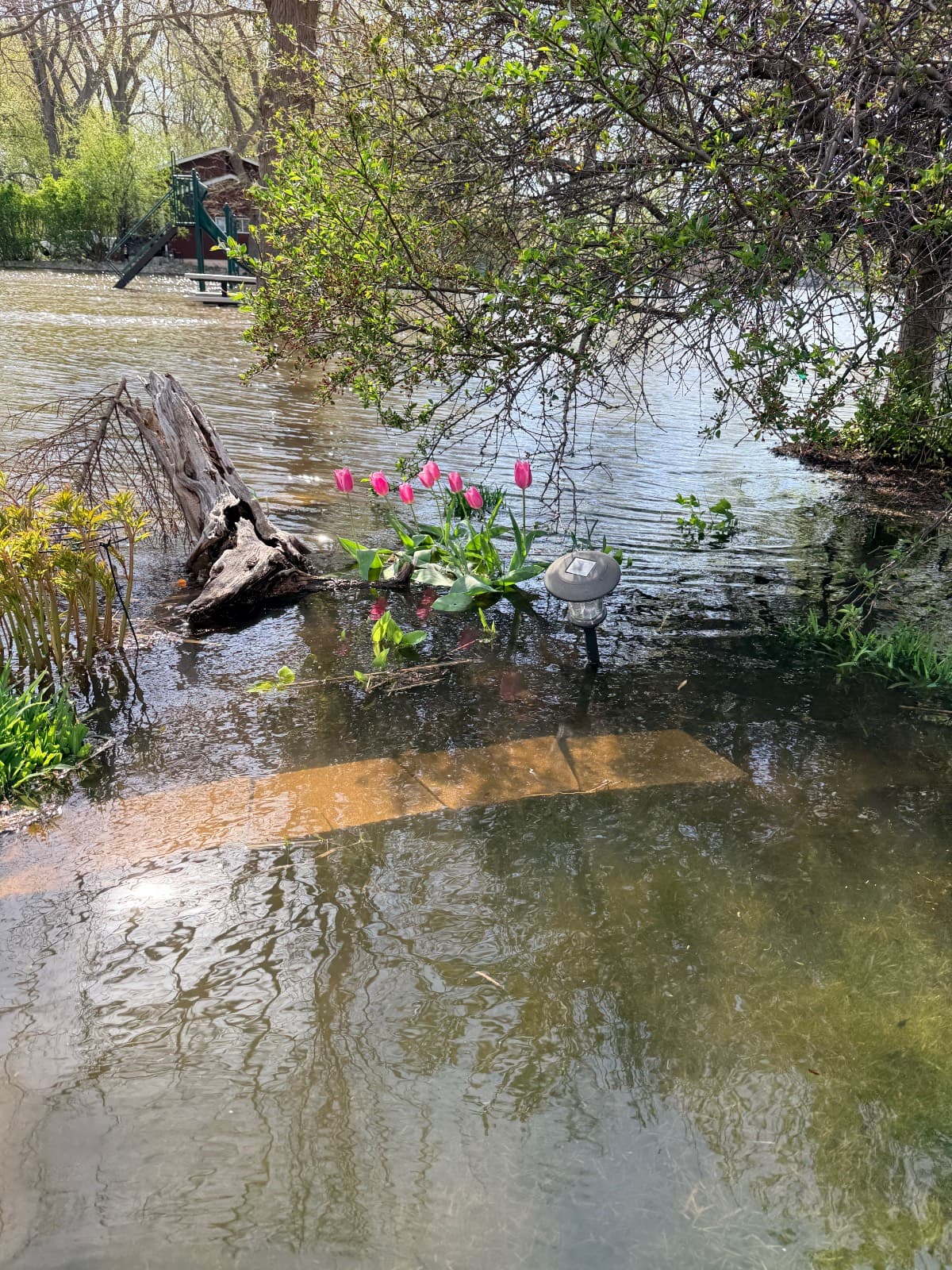
At its peak, we had 20 inches of water on our road. The only way in or out of our property was on foot in hip waders or by rowboat. I want to be clear: our home stayed dry, and we are grateful for that. This isn’t our first flood, nor was it our worst, so we are prepared, and we know what to do to protect our property. However, everything outside the four walls of our home was a different story.
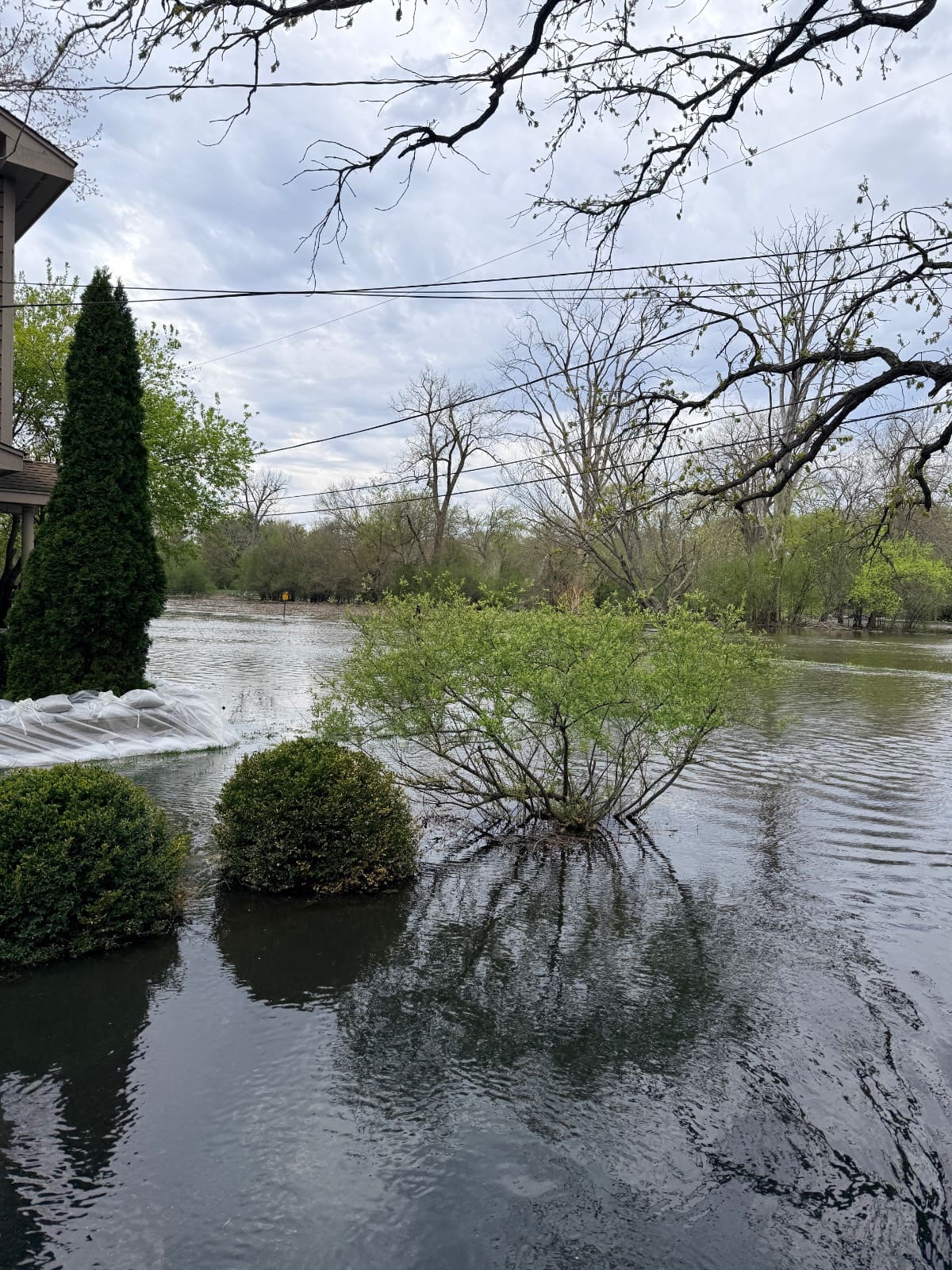
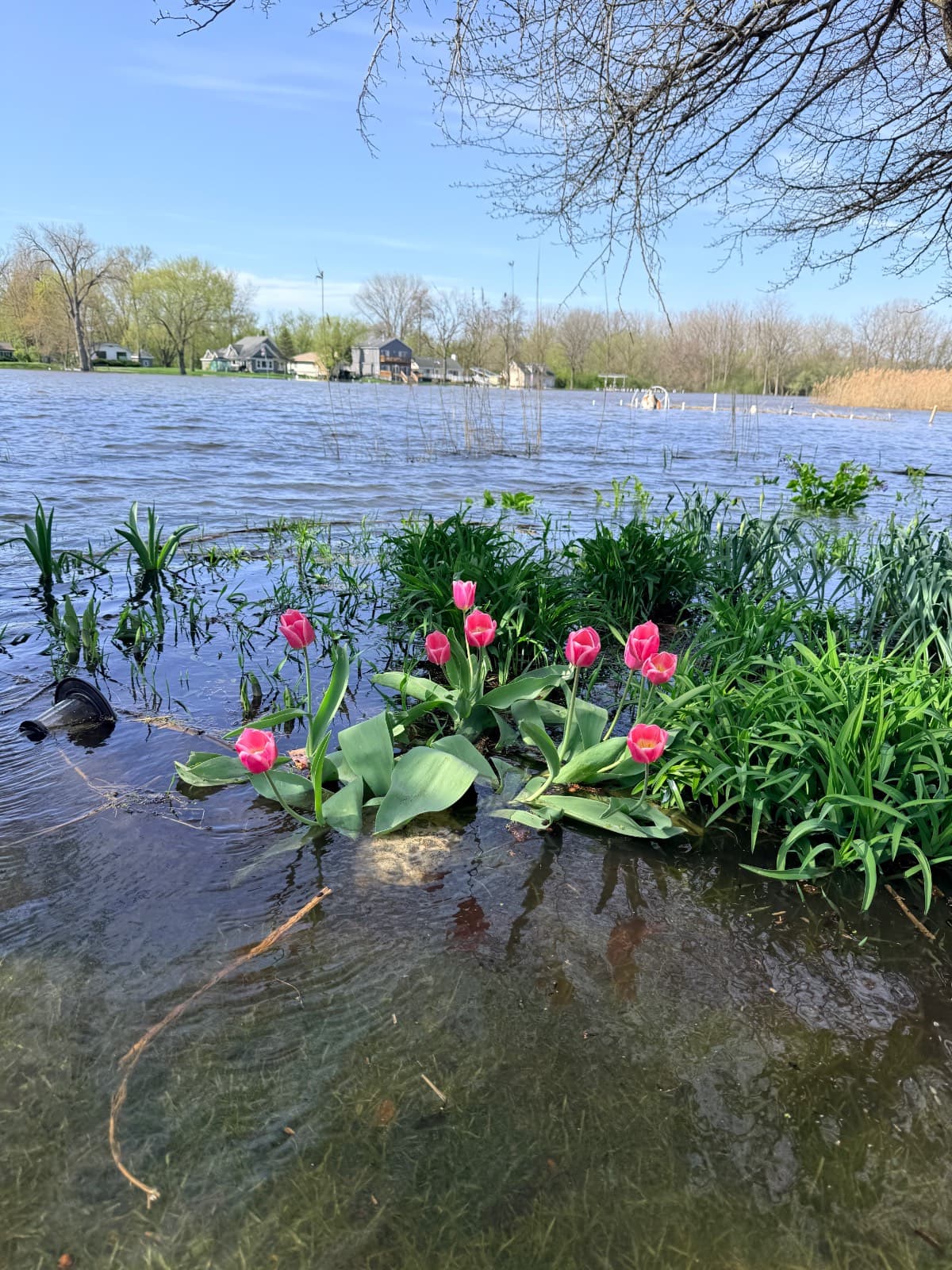
The chicken coop flooded. The greenhouse took on nearly a foot of water. And my gardens, especially the perennial beds that I’ve spent 33 years building, sat submerged long enough to do some real damage.
This is not a post asking for sympathy. This is river life, and we chose it. But I did want to share what the recovery has looked like. If you’ve ever dealt with flood damage in your garden, you know it’s not as simple as waiting for things to dry out and picking up where you left off.
The Chickens Come First (They Always Do)
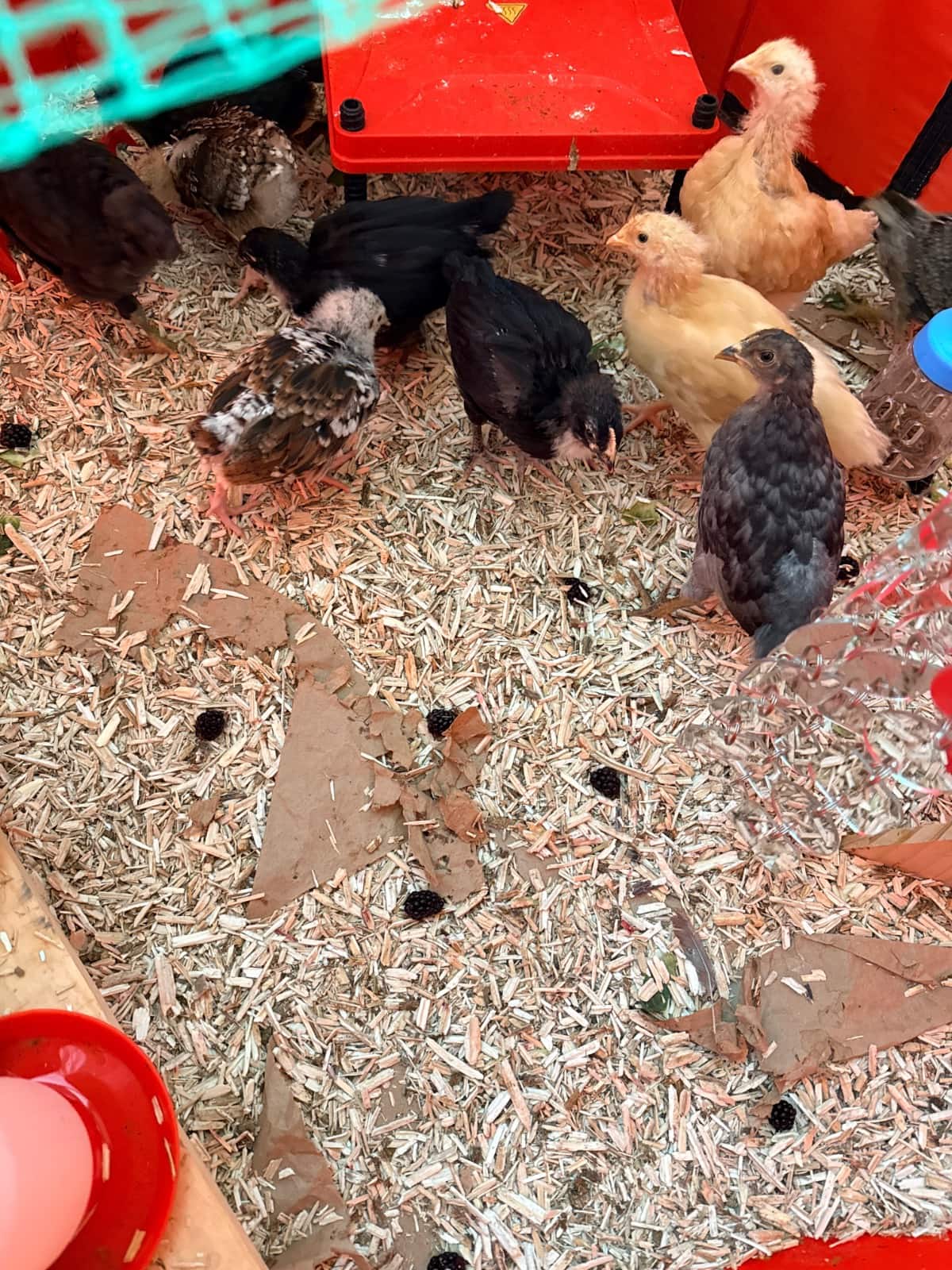
We’ve been urban backyard farmers for about 15 years, so our chickens are just part of our lives. Our last two ladies of our old flock passed away last summer. The decision was to get new baby chicks in late March, early April, and they would be ready to go outside mid-May. We picked up our days-old chickens on the first Saturday in April. In hindsight, the timing was not ideal.
With the coop underwater, those chicks stayed inside our house far longer than any of us, chicks included, would have preferred. It wasn’t until the end of May that the coop was cleaned up, dried out, repaired, and ready for its new residents.
If you are curious and want more details about raising backyard chickens, you can read my post “Do You Want to Raise Chickens in Your Backyard?” We’ve had chickens for about 15 years, and it never gets old. The taste of an egg from your backyard is like nothing you’ve ever tasted in a store-bought egg. To me it tastes like butter!
What Flood Water Does to a Garden
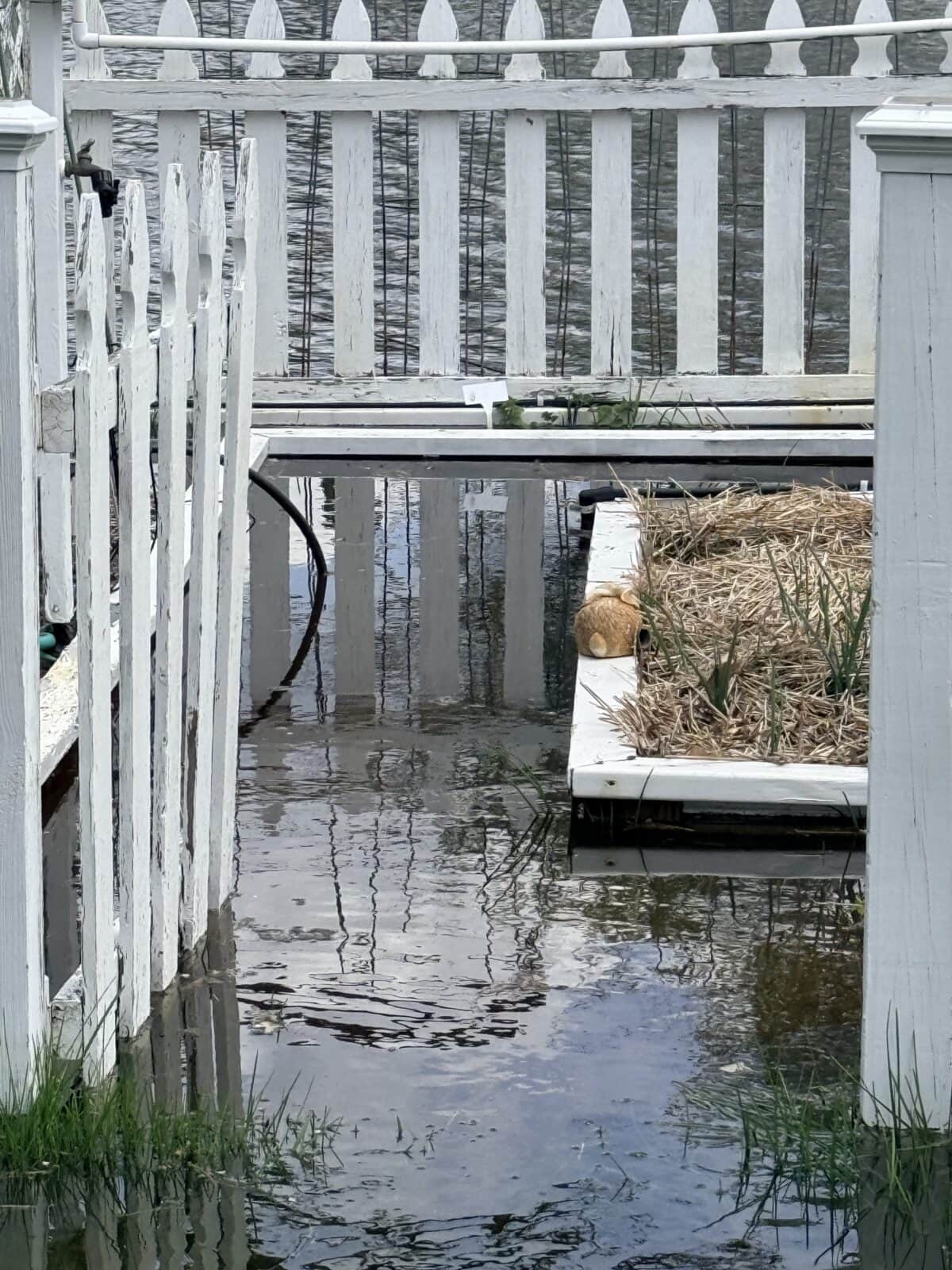
Here’s what most people don’t realize about flooding from a river: it’s not clean water. Along with the obvious debris, you’re dealing with sediment, silt, and, in our case, a generous dose of natural fish emulsion deposited across everything. The smell is something. The mess is significant.
But here’s the silver lining that only a gardener who’s been through this would notice: that same river water leaves behind incredibly fertile soil. Our lawn after a flood is lush and green in a way that would cost a fortune to achieve with conventional fertilizer. The soil in my beds gets a natural nutrient boost that will benefit my plants for months to come. It doesn’t make the cleanup easier, but it does make the recovery a little sweeter.
Calling in Reinforcements
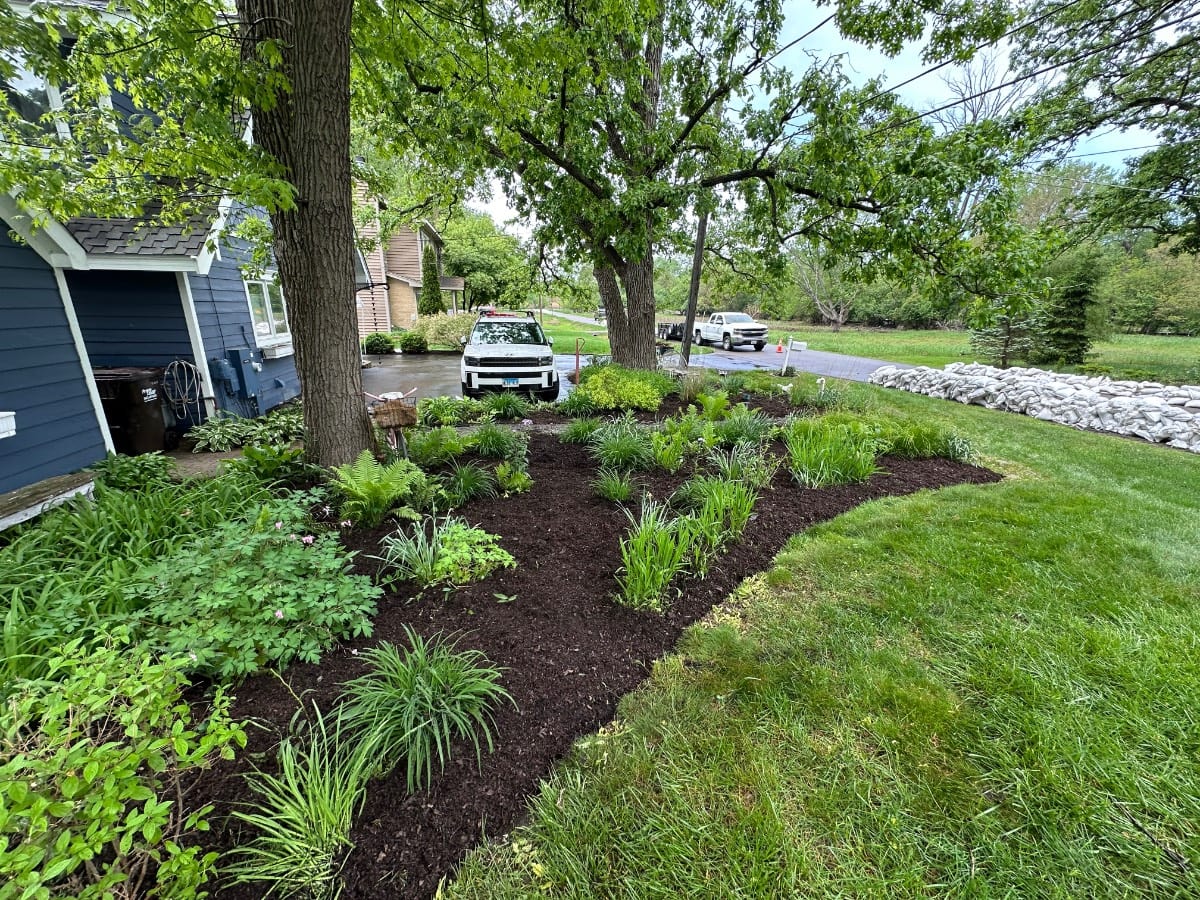
The scale of the cleanup was beyond what I wanted to tackle alone. I called in our landscapers, Sprout Lawn Care & Landscaping, LLC—if you’re local and looking for excellent service, and it was absolutely the right thing to do. They worked through the perennial beds, clearing out the debris the water had deposited, also taking out dead plant material. Then they edged the beds and laid down a thick layer of leaf mulch. Walking out to see the beds clean and defined again after weeks of chaos was one of those small moments that felt enormous.
It’s okay to ask for help. That’s something you learn after 33 years on a property like this. Furthermore, the older we get, the harder it gets to do all the work ourselves.
The Losses, The Survivors, and a Few Surprises
My gardens are a part of who I am. I love to get my hands in the soil. It’s my therapy. So when we flood and I lose some of my gardens, it’s heartbreaking.
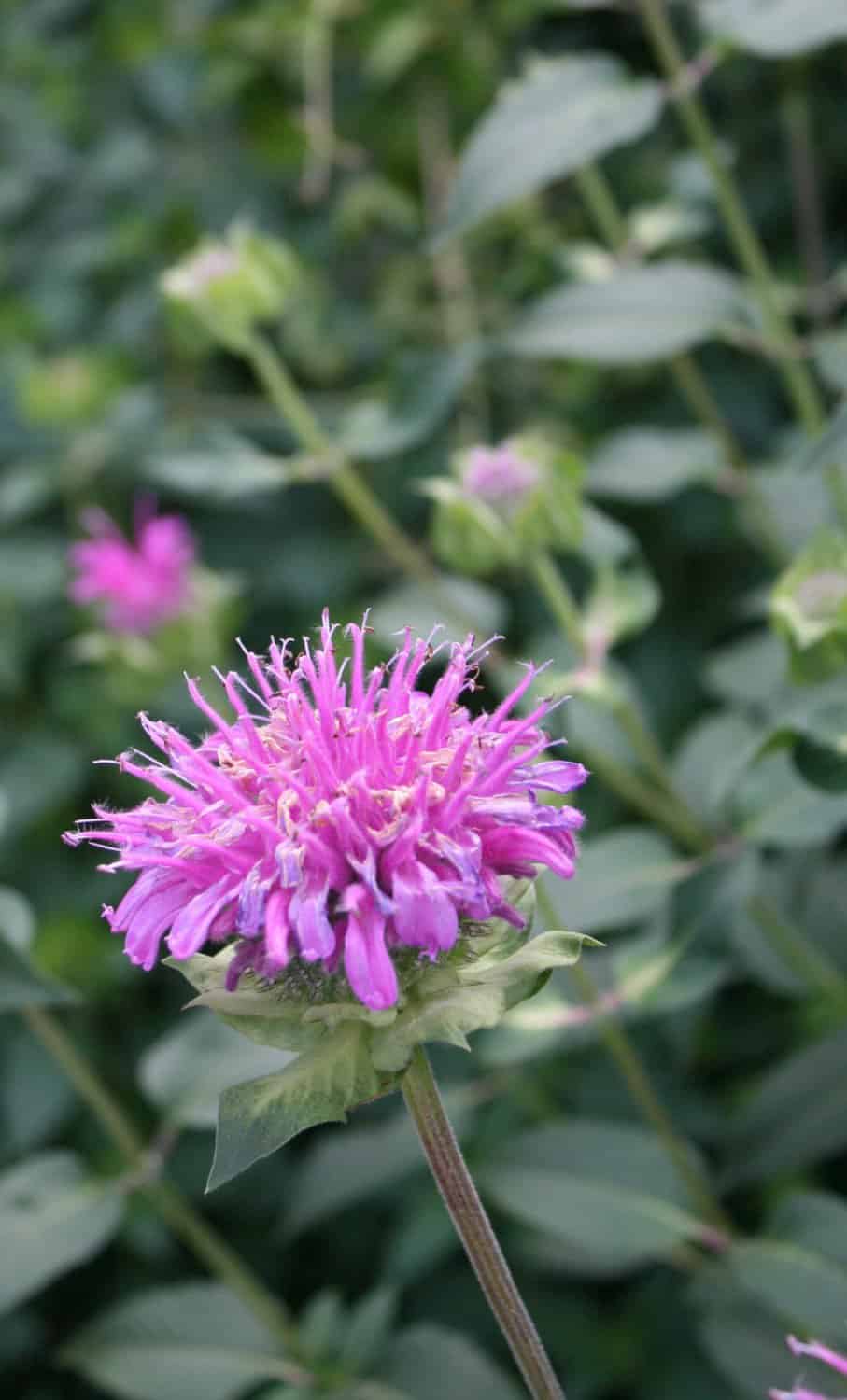
The plants that simply will not tolerate wet roots took the hardest hit. I lost all of my lavender, sage, salvia, coneflowers, bee balm, hellebores, and foxglove. Several rose bushes didn’t make it. I have two hydrangeas that I’m still watching closely, but I’m not optimistic. And my climbing autumn clematis, which had become a beautiful focal point on the arbor in my garden, is gone. That one stings. It has taken years to get this clematis established and climbing the way mine was.
And then there were the peonies and tulips. But I’ll get to those in a moment.
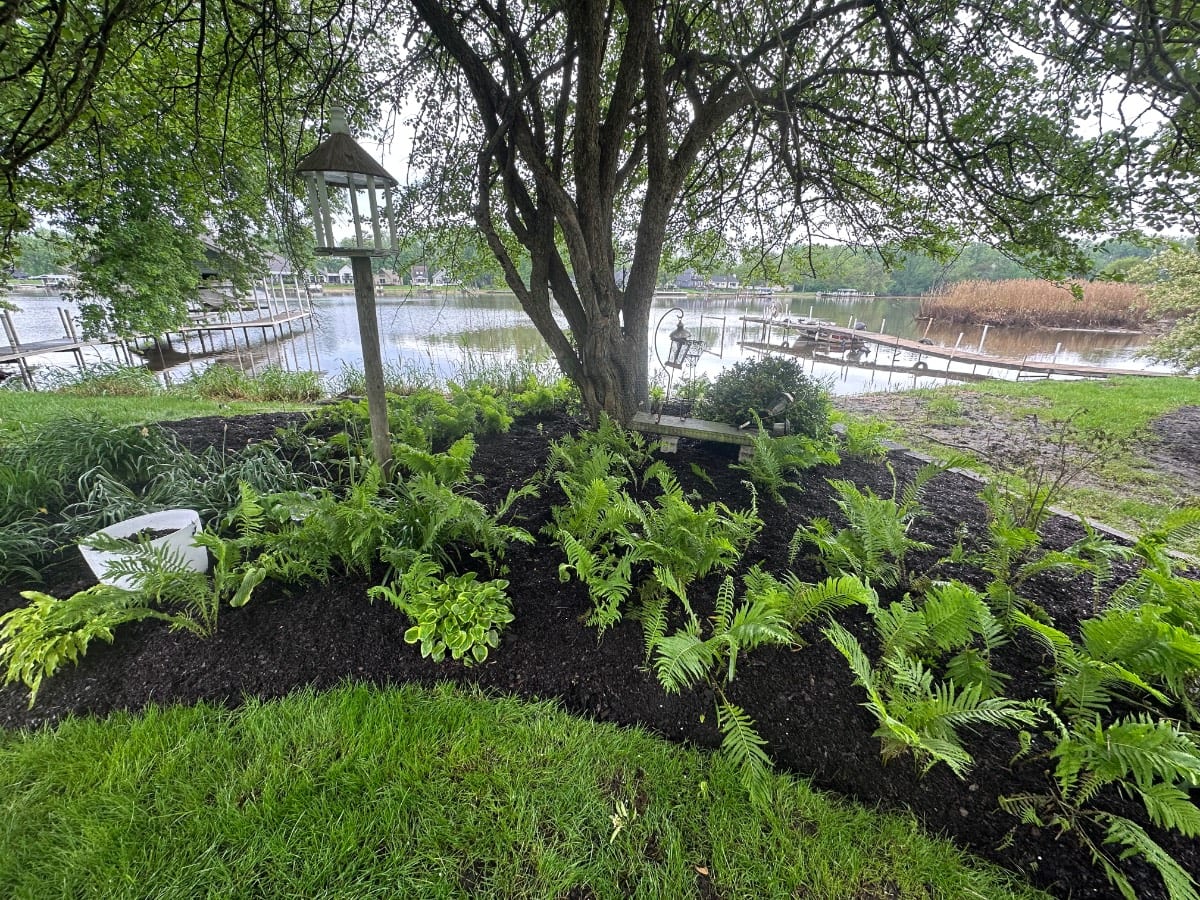
On the survivor side: my hostas, ferns, and daylilies came through with just a little dirt on their leaves. They are reliable and tough, and this spring proved that again. My blue flag irises also survived, which might surprise you if you’ve read that irises don’t tolerate wet conditions. That’s true of bearded irises, which rot quickly in saturated soil. The variety of my irises actually prefers moisture.
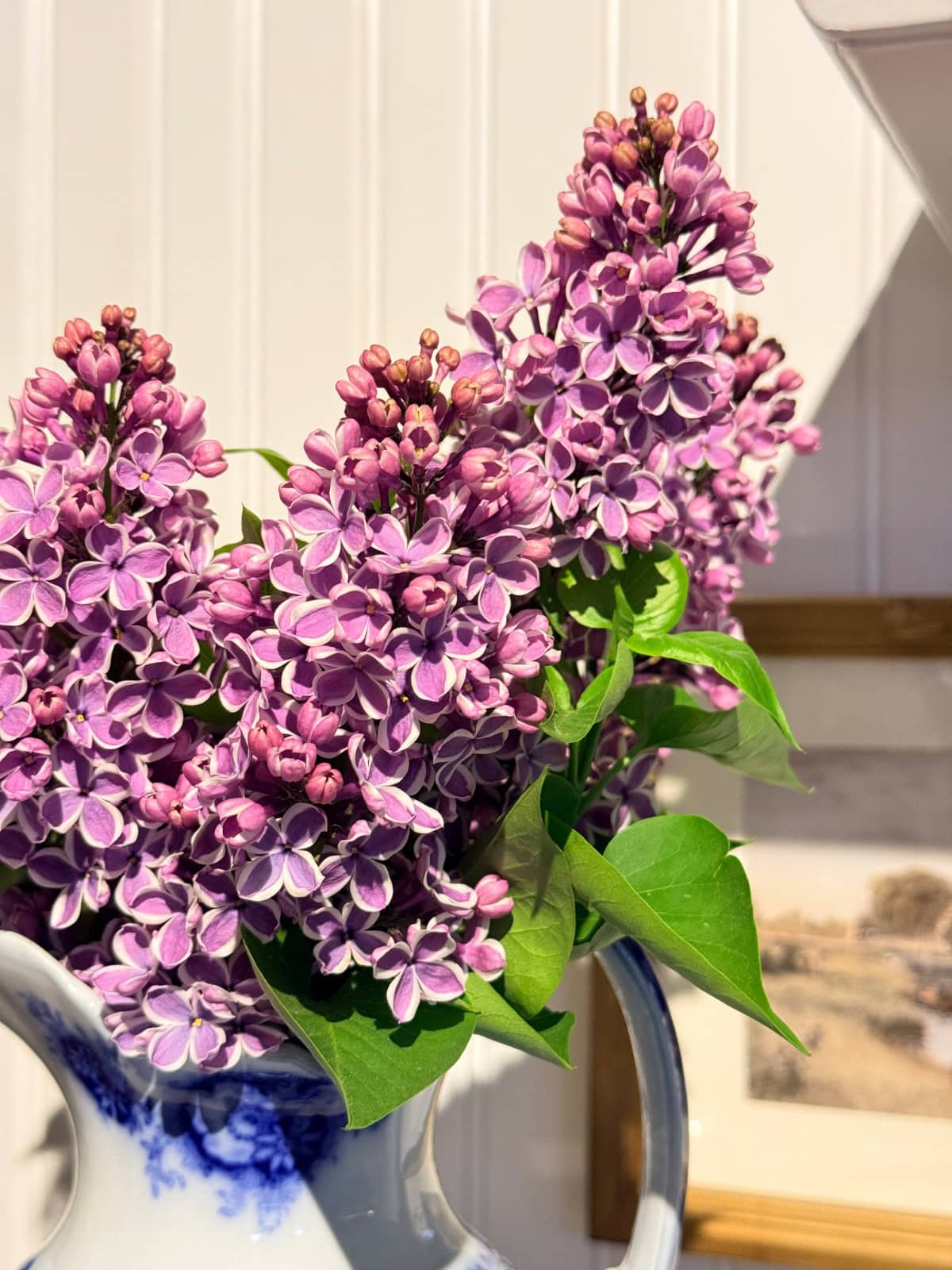
Now for the surprise of the season. Three years ago I planted a lilac bush, and this spring it had finally, finally started to flower. The timing could not have been worse. Everything I had read told me lilacs don’t like wet roots, and I watched that water rise up to and then around my lilac bush. I grabbed some flowers and thought this would be the first and only blooms I would get. As luck would have it, the bush looks just fine. The little tree is tougher than I gave it credit for.
The Peonies and the Tulips: A Moment of Honest Grief
I have to talk about the peonies and the tulips.
If you’ve followed this blog for any length of time, you know these two flowers are my favorite spring blooms.
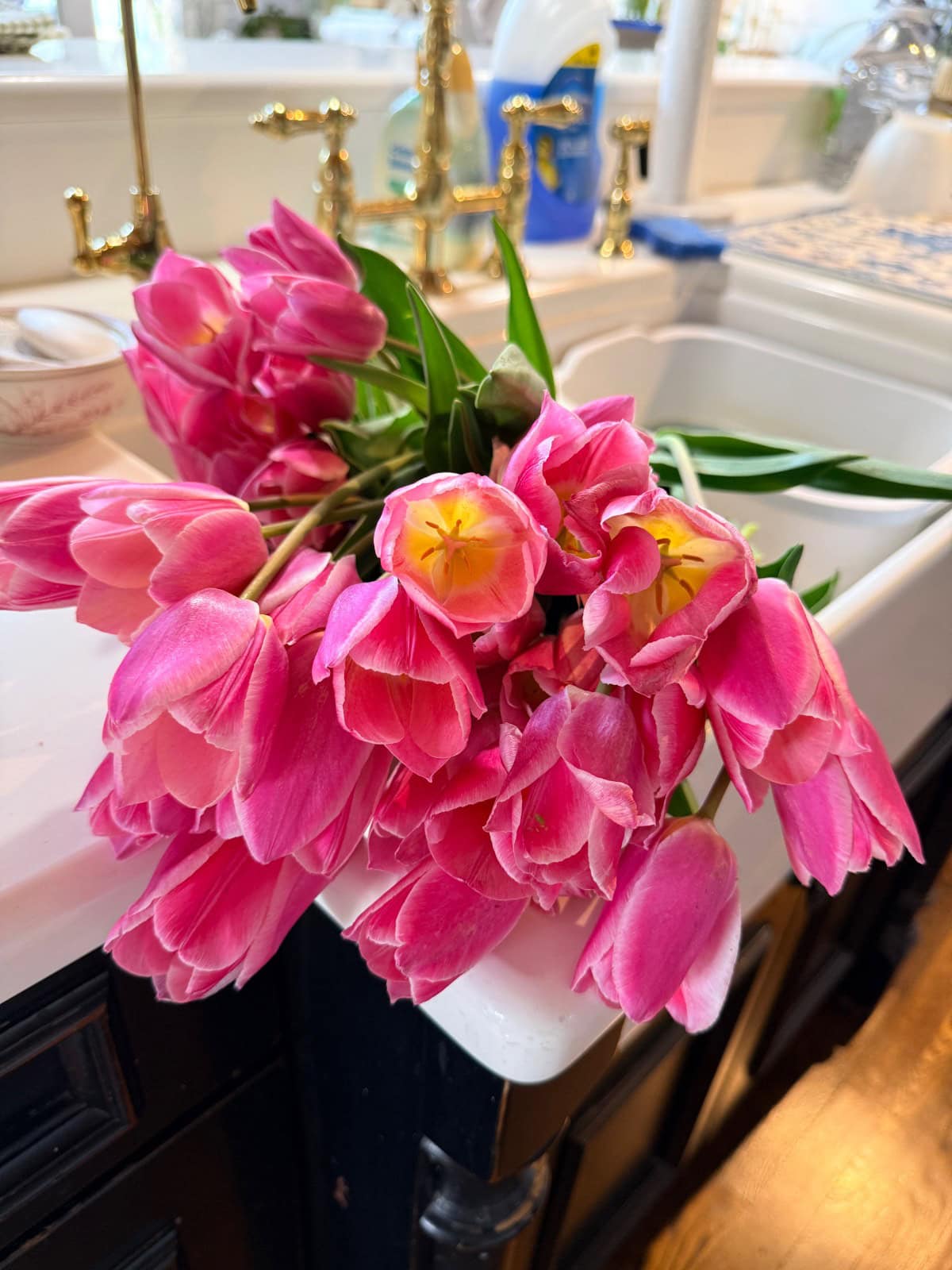
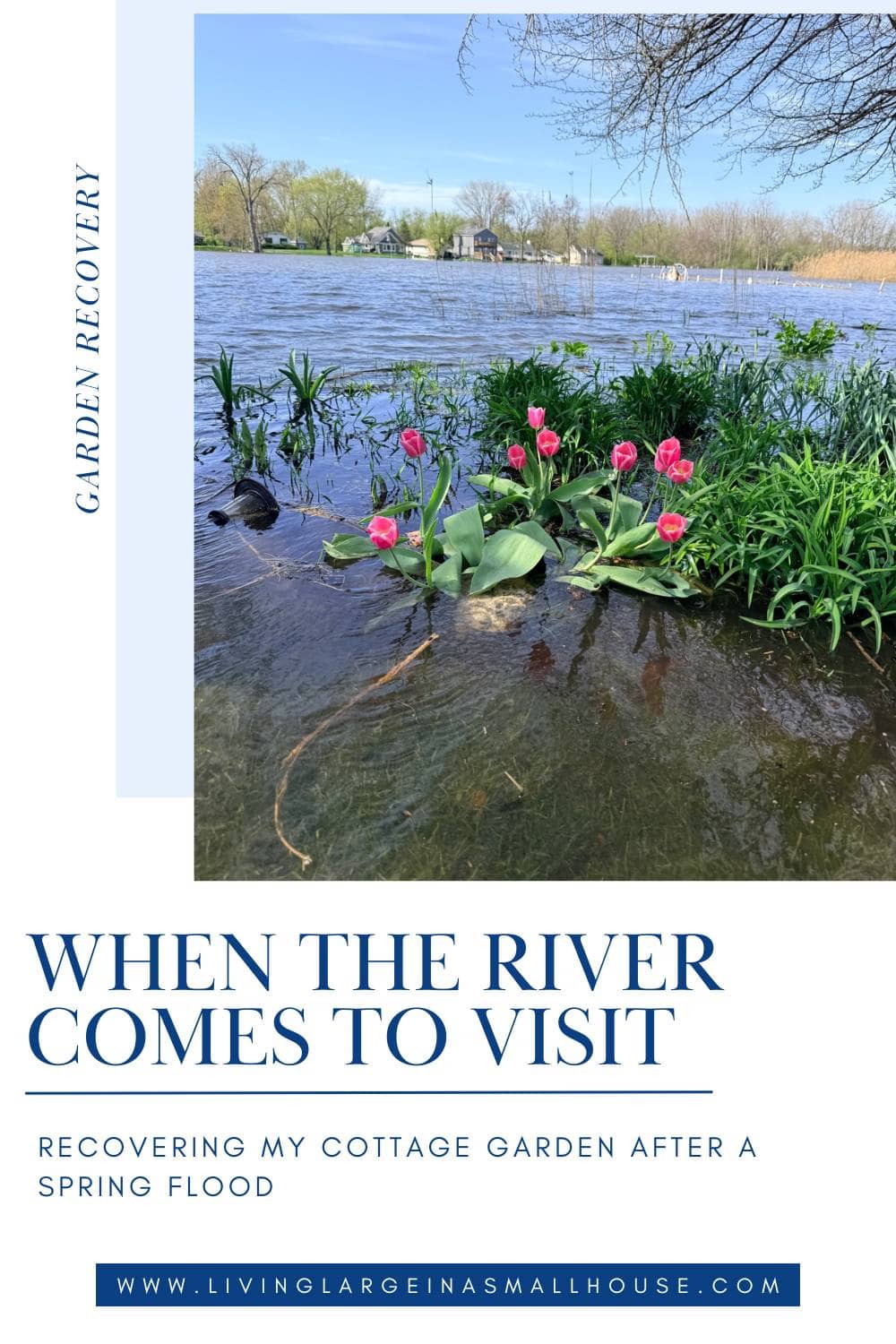
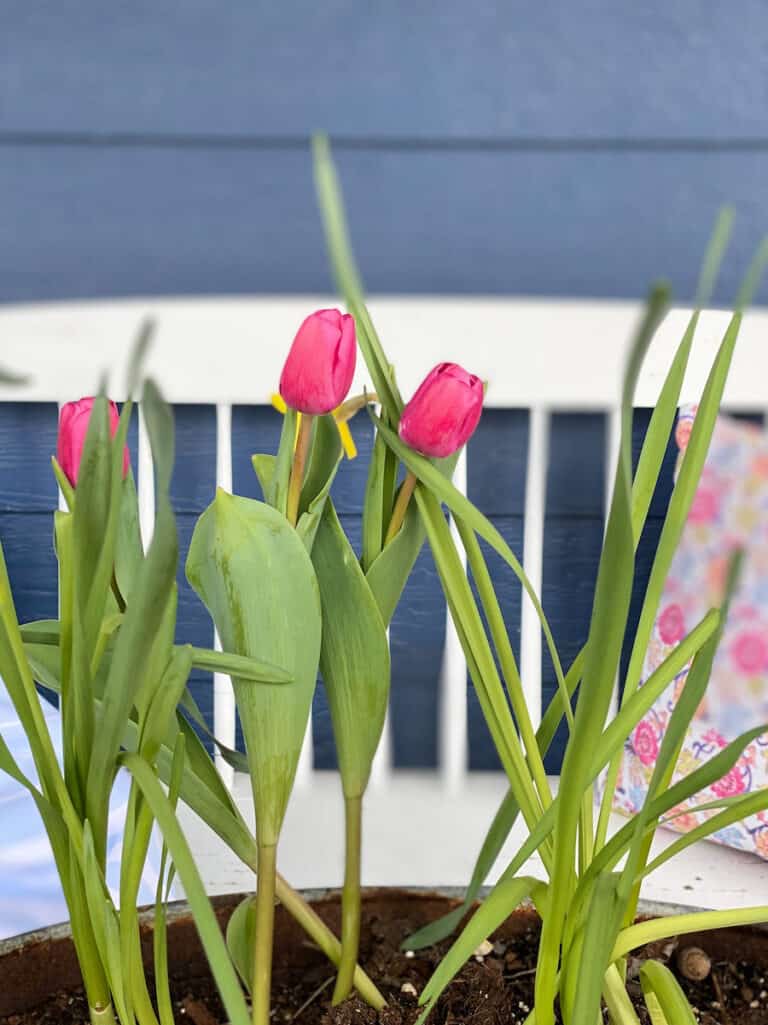
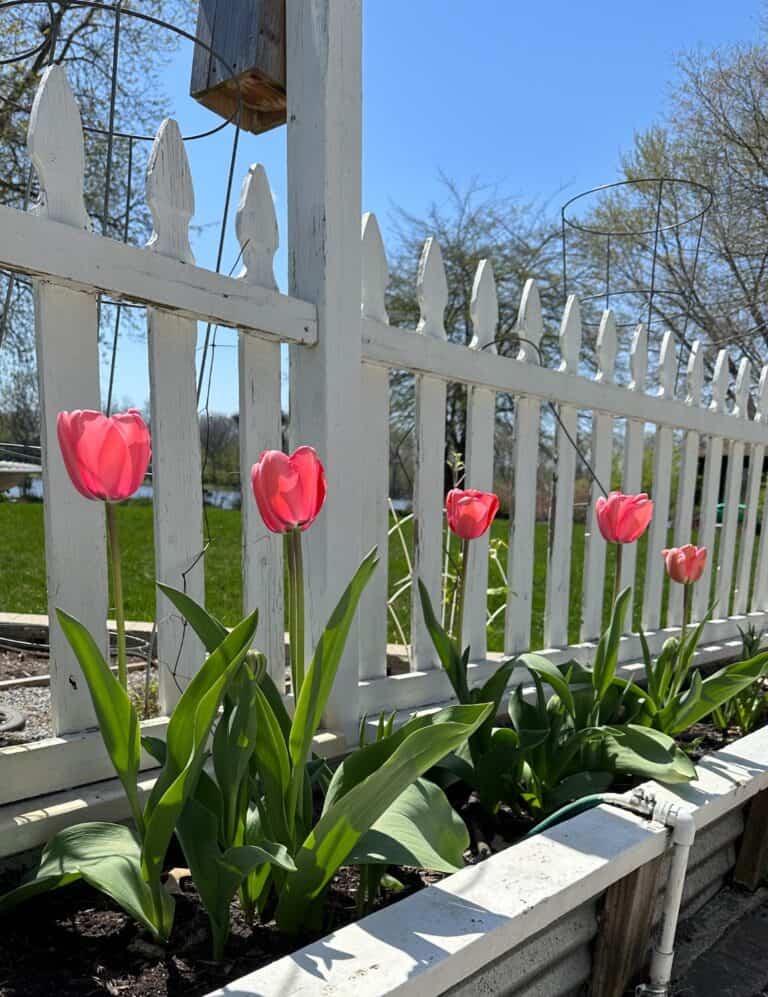
I had managed to keep the deer away from almost all of my tulip blooms, and the garden looked so festive with bunches of pink tulips sprinkled through my gardens. I was so pleased. When the water rose, I rescued all the pink tulips I could and brought them into the house to enjoy. It will be interesting to see if the bulbs flower again next year. My guess is no!
Now the story of my peonies. I have about 10 plants peppering my gardens, and every year I look forward to these blooms the way most people look forward to a vacation. This April, my peonies were just beginning to come alive when the flood hit.
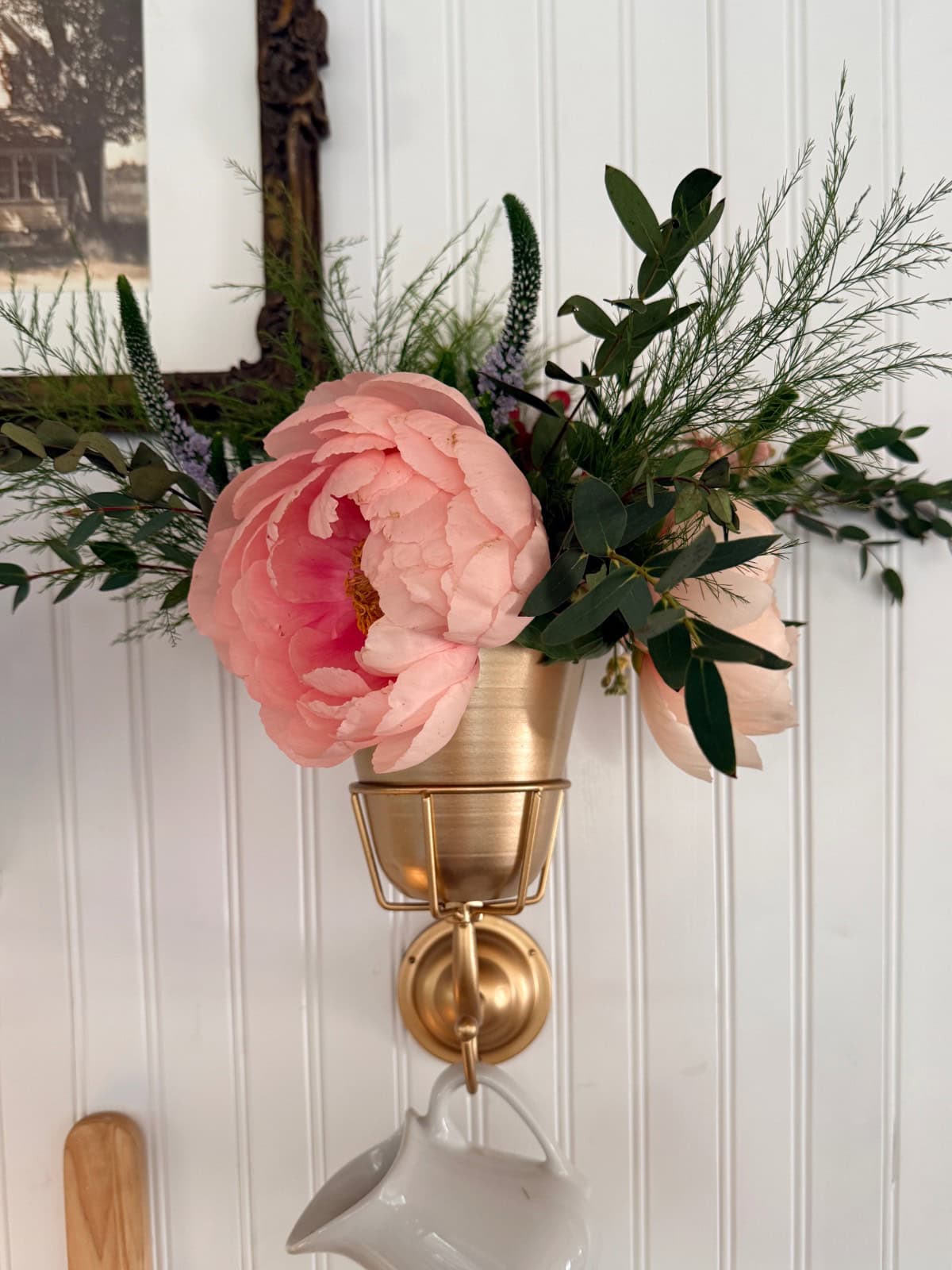
The plants themselves survived. They’re green and look really healthy. But with the exception of one plant that already had buds on the verge of opening when the water came, none of them flowered this year. That one peony bloomed, and it was beautiful; I cut off a few blooms and appreciated them more than I ever have.
The rest won’t bloom again until next spring.
I know it’s a small loss in the grand scheme of things. But a year is a long time to wait for one of your favorite flowers.

What’s Going Back In
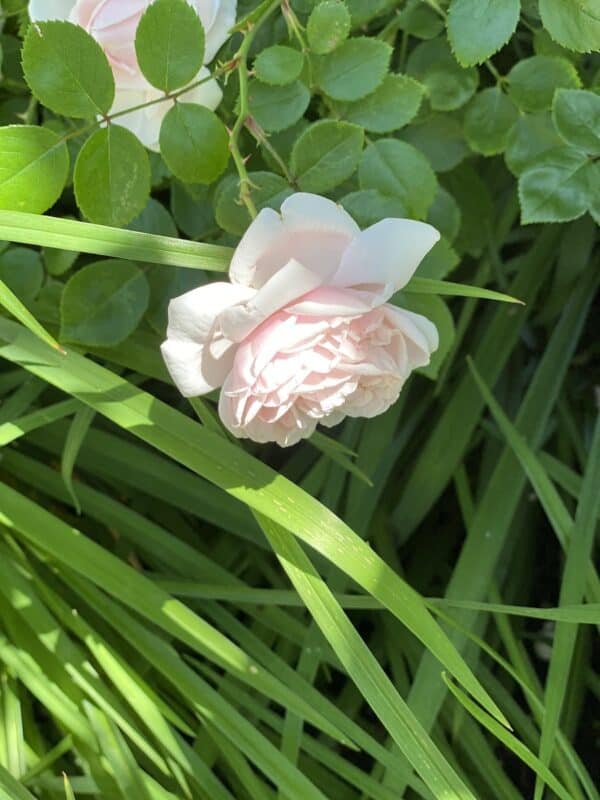
Even knowing what the flood took, I won’t be reimagining these beds from scratch. The plants I lost are the backbone of a cottage garden, and that’s exactly what I’ve been cultivating here for all these years. Rose bushes, lavender, salvia, coneflowers, and bee balm will all be replaced this season. They may not love wet roots, but they belong here, and I’m not ready to give them up.
I’m also starting foxglove from seed. If you garden in Zone 5b, you already know that foxglove is a biennial, meaning it completes its life cycle over two years rather than one. The trick to having them bloom every year is succession planting, starting new seeds each season so you always have both first-year green plants and second-year flowering plants in the ground at the same time. In about a month I should have seedlings ready to go in the ground. It’s a little extra work, but there is nothing quite like a foxglove spike rising up in a cottage garden border, so it’s absolutely worth it.
The Greenhouse: A Work in Progress
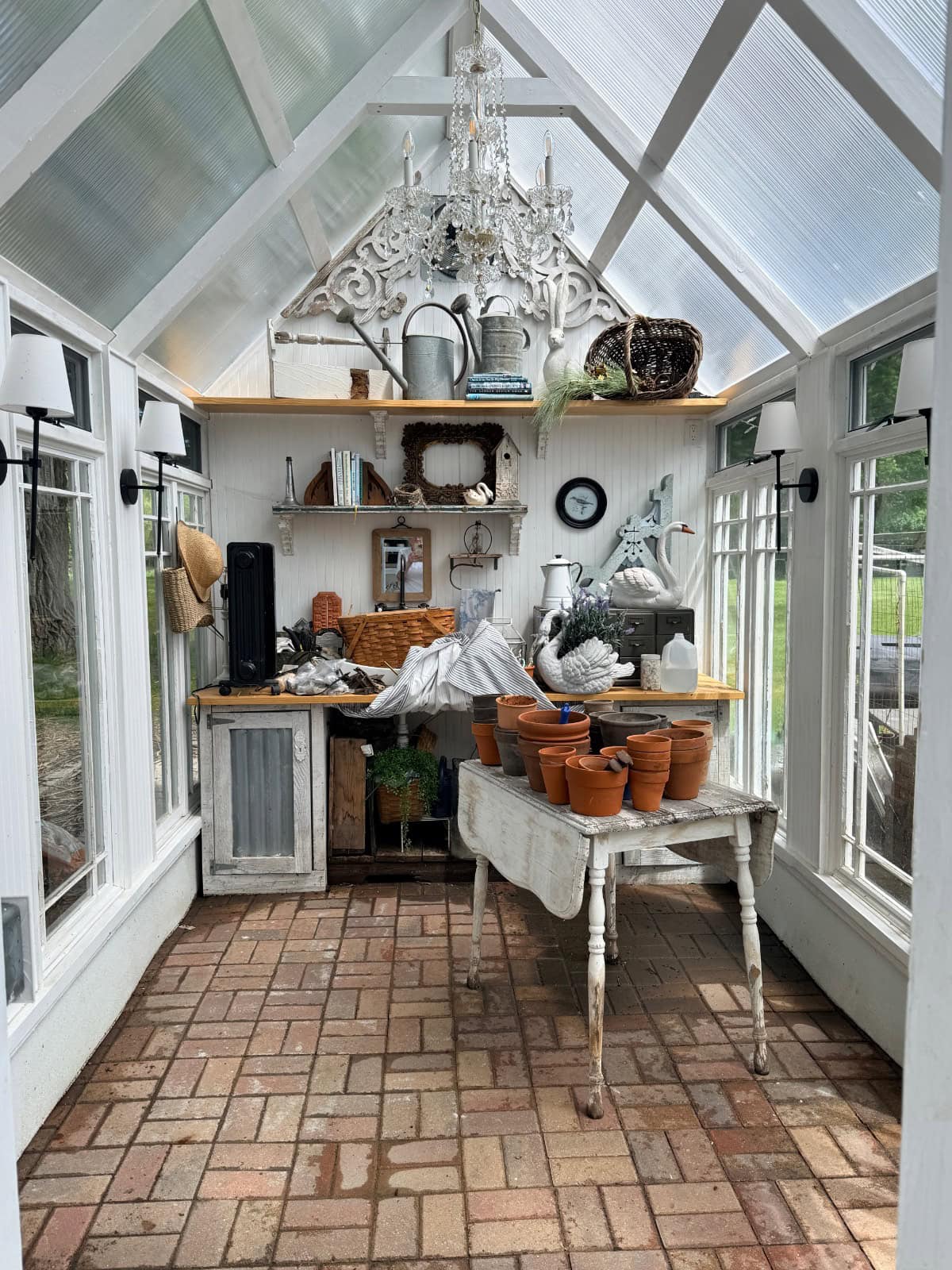
The greenhouse cleanup has been its own project entirely. Nearly a foot of water inside means you’re not just wiping things down. We’ve been power washing, scrubbing, and slowly getting it back to a place where it can actually function again.
What I haven’t told you yet is that this greenhouse is not just a working space. It’s one of my favorite spots on the entire property. The vintage window-inspired space is filled with vintage gardening tools, old architectural elements, and baskets collected over the years and nestled among my clay pots. In the summer, when we have friends over, the sink gets filled with ice and wine bottles. Getting it back to its former self feels personal in a way that goes beyond just cleaning up after a flood.
I’ll be sharing the full greenhouse story soon, once it’s back to looking the way it should. Consider this your official teaser.
Where Things Stand Now
In a normal year, I’m planting by mid-May. This year, I’m just now getting my gardens into shape at the start of June. Two weeks behind, which doesn’t sound like much until you’re a Zone 5b gardener who knows exactly how short our season already is.
But here’s where I’ve landed: the beds are clean and mulched. The soil is in beautiful condition due to all the natural fertilizer. The greenhouse is nearly ready. The chickens are finally outside where they belong. And I’m planting.
Late, yes. But slowly but steadily I’ll get it done.
The river gives, and the river takes. Thirty-three years in, we know that. Ninety-nine percent of the time, living here is everything we ever wanted. This spring was firmly in that other one percent. We sandbagged, we cleaned up, we called for help when we needed it, and we kept going.
That’s river life.

Become a Friend of Living Large
Be the first to see affordable decorating ideas, gardening tips and tricks, along with great organizing, entertaining ideas and easy recipes
Final Thoughts
Thirty-three years on this river have taught me that a home and the gardens around it are never really finished. They’re always in some stage of growing, changing, or recovering. This spring was a setback; there’s no denying that. But as I look at my freshly mulched beds, my resilient hostas and daylilies, my one triumphant peony, and my lilac that refused to give up, I’m reminded that gardens are more forgiving than we give them credit for. The losses hurt, and I won’t pretend otherwise. But there is something quietly satisfying about putting your hands back in the soil and starting again, even when you’re starting later than you planned.
Happy Gardening!



A great way to save this idea is to add it to one of your Pinterest boards. You can find the pin button on the top left of the photo when you click on it. Also, don’t forget to follow me on Pinterest

Meet Me
My name is Lynn. I live in the suburbs of Chicago in a 1,300 sq. ft. home with my Handy husband, Keith.
I’m an open book about my life on my blog. You can find out more about me by visiting my “About Me” page.