Water-Bath vs Pressure Canning Tomatoes: Pros and Cons Explained
Learn the pros and cons of water-bath vs pressure canning tomatoes. Discover which method is safest, easiest, and best for flavor and shelf life.
On my blog Living Large in A Small House, I may sometimes use affiliate links, which means a small commission is earned if you purchase via the link. The price will be the same whether you use the affiliate link or go directly to the vendor’s website using a non-affiliate link. You can find my full Disclosure Policy HERE
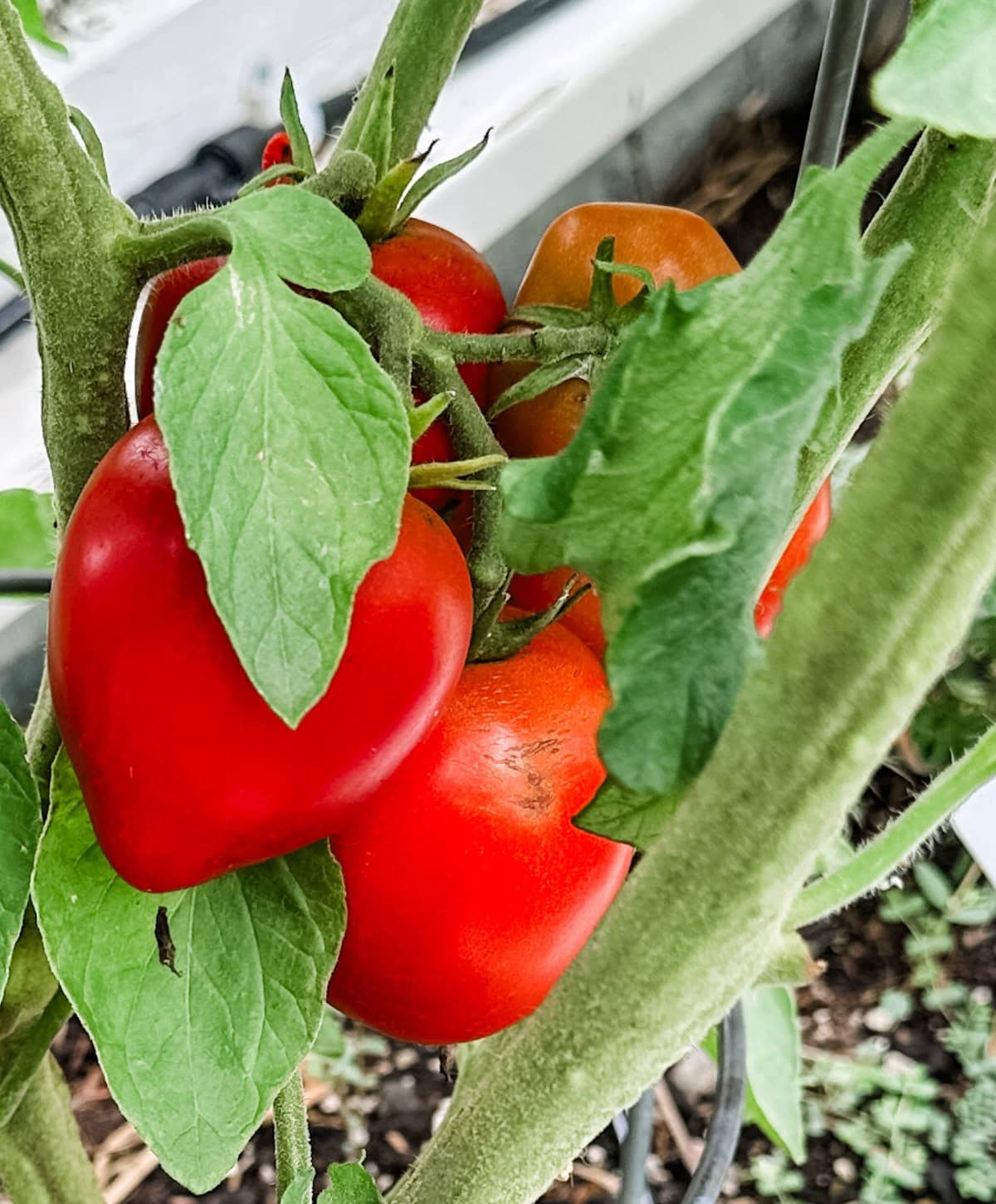
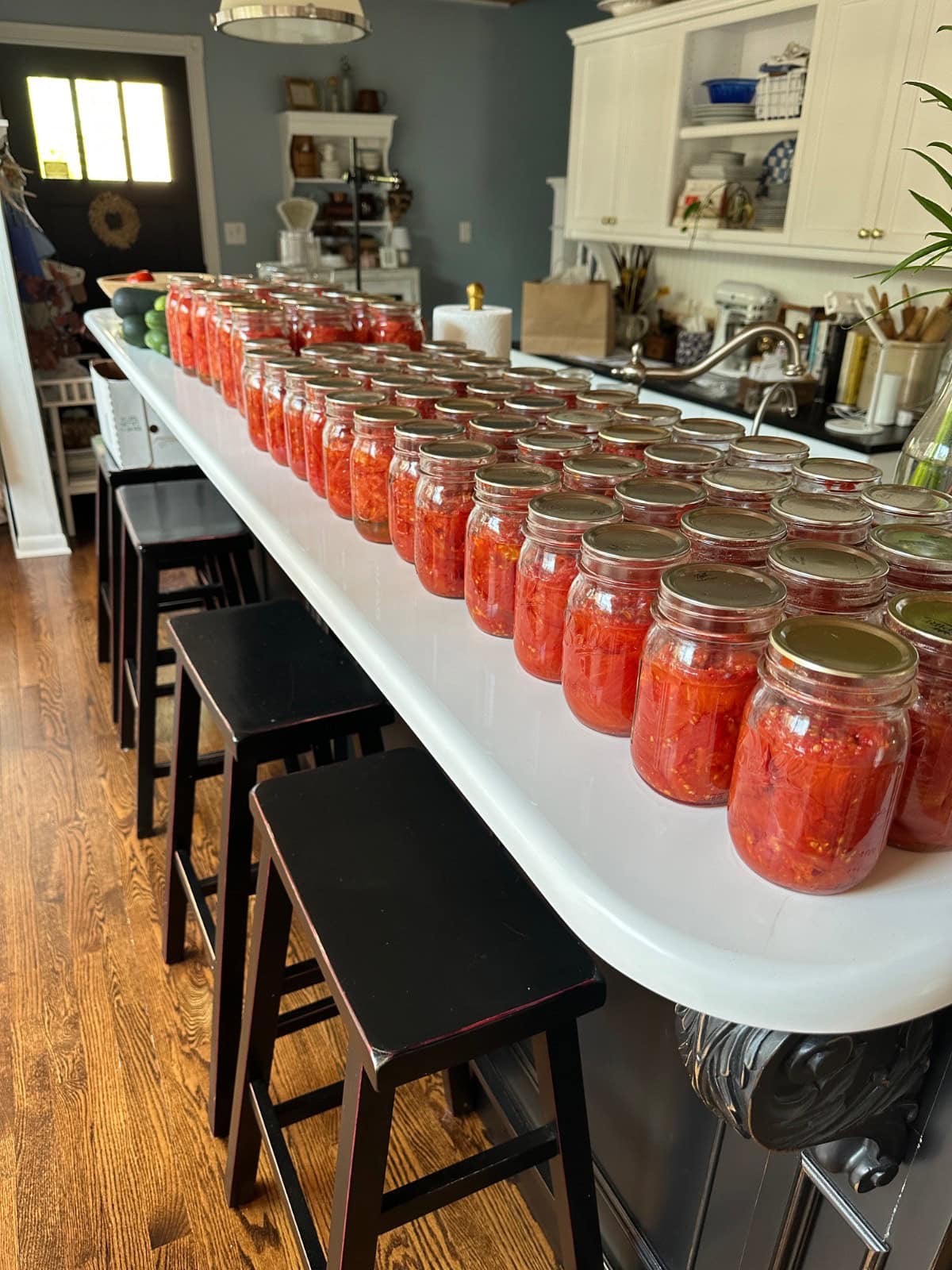
What I Do With All the Tomatoes from My Garden
Canning tomatoes is a time-honored way to preserve summer’s harvest, but choosing between water-bath canning and pressure canning often leaves home preservers scratching their heads.
I’ve used both methods extensively, and in this post, I’ll break down the pros and cons of each—so you can decide which is right for your kitchen, your tomatoes, and your peace of mind.
What is Water-Bath Canning?
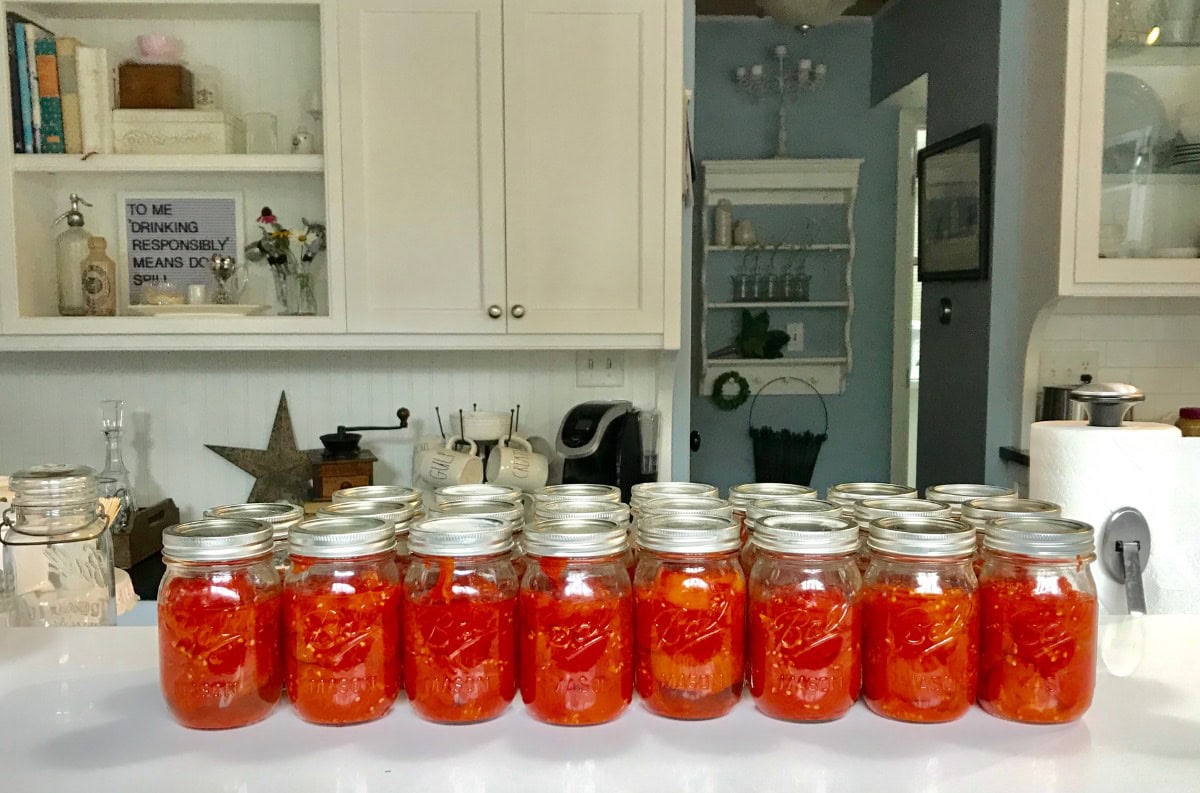
Water-bath canning involves submerging jars of tomatoes in boiling water and then letting them boil for 45 minutes. The heat kills spoilage organisms, and the sealed jars create a vacuum as they cool.
Best for: High-acid foods, jams, jellies, pickles, and acidified tomatoes.

Pros of Water-Bath Canning Tomatoes
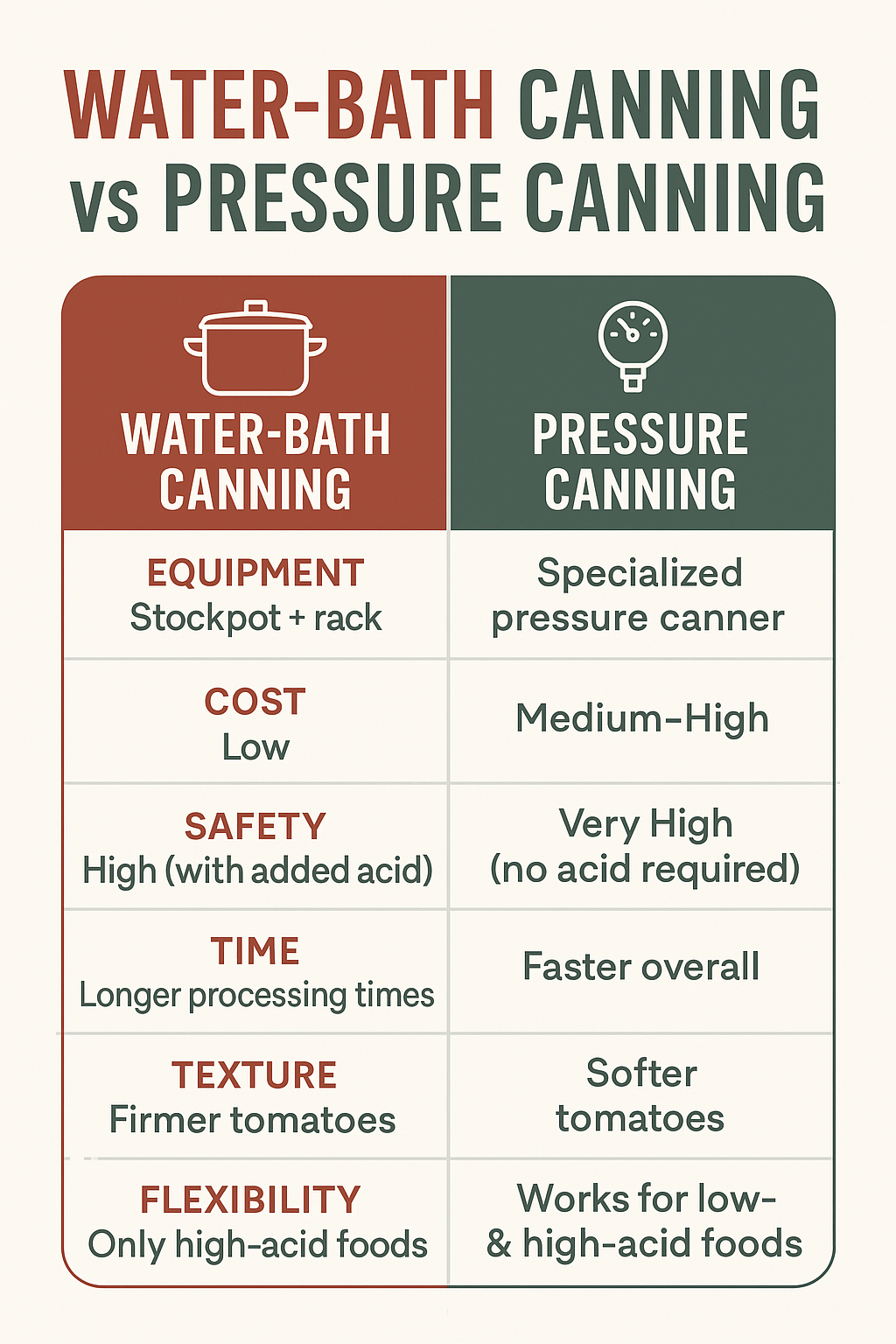
- ✅ Simple equipment: Just a deep pot and a rack; no specialized canner required.
- ✅ Lower upfront cost: Perfect for beginners or occasional canners.
- ✅ Gentle on texture: Tomatoes maintain a firmer bite compared to pressure canning.
- ✅ Widely accessible recipes: Most beginner guides start with water-bath methods.
Cons of Water-Bath Canning Tomatoes
- ❌ Requires added acid: Tomatoes often need lemon juice or citric acid for safety.
- ❌ Longer processing time: Especially if you’re canning large batches.
- ❌ Limited flexibility: Not suitable for low-acid foods like vegetables or meats.
- ❌ Risk if under-acidified: Without proper acid, botulism risk increases.

What is Pressure Canning?
Pressure canning uses a sealed canner that builds steam pressure, allowing temperatures to reach 240–250°F (116–121°C)—hotter than boiling water.
Best for: Low-acid foods like beans, corn, and meats, but also a safe option for tomatoes.

Pros of Pressure Canning Tomatoes
- ✅ No acid needed: Tomatoes can be canned without lemon juice or citric acid.
- ✅ Much faster: Higher temperatures mean reduced processing times.
- ✅ Extremely safe: Virtually eliminates risk of botulism.
- ✅ Versatile: One tool works for tomatoes and low-acid foods.
Cons of Pressure Canning Tomatoes
- ❌ Costlier setup: Requires purchasing a pressure canner.
- ❌ Learning curve: More steps and safety precautions.
- ❌ Softer tomatoes: High heat can break down texture more than water-bath.
- ❌ Heavier equipment: Bulky, not ideal for small kitchens
Which Method Should You Choose?
If you’re a beginner, water-bath canning is a budget-friendly way to preserve tomato flavor and texture. I used the water-bath method for years without issue.
If you want maximum safety, shorter processing times, and the ability to can other low-acid foods, investing in a pressure canner is worth it. I switched over to pressure canning when I started processing more foods. It takes less time and I can fit more jars in my pressure canner.
👉 Personally, I use water-bath for small batches and quick weekend projects, and pressure canning when I want to process a large harvest or skip adding acid.
Final Thoughts
Both water-bath and pressure canning have their pros and cons, and the right method depends on your priorities.
If safety and speed are top concerns, pressure canning wins. It’s the way that I typically do my preserving.
If cost and texture matter most, stick with water-bath. Either way, you’ll enjoy jars of tomatoes ready to brighten your meals all year long. Personally, I can’t tell the difference between the two methods as far as taste and the texture doesn’t much matter to me as I’m adding the tomatoes to a recipe and cooking them.

Become a Friend of Living Large
And be the first to see affordable decorating ideas, easy recipes, gardening tips and tricks, along with great organizing and entertaining ideas.
Enjoy,

FAQ’s
No posts
A great way to save this recipe is to add it to one of your Pinterest boards. You can find the pin button on the top left of the photo when you click on it. Also, don’t forget to follow me on Pinterest.